
Home
Reading Our Minds: The Rise of Big Data Psychiatry
Barnes and Noble
Loading Inventory...
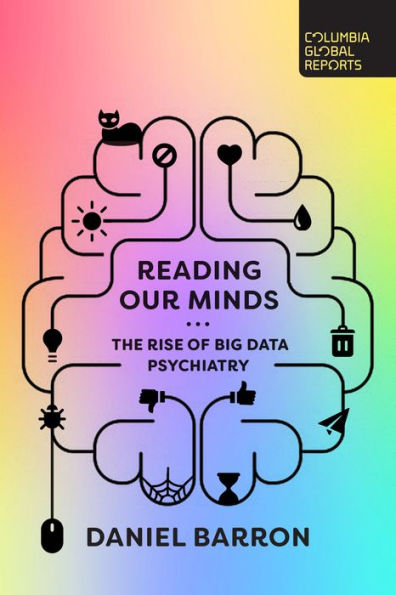
Reading Our Minds: The Rise of Big Data Psychiatry in Chattanooga, TN
Current price: $10.00
Barnes and Noble
Reading Our Minds: The Rise of Big Data Psychiatry in Chattanooga, TN
Current price: $10.00
Loading Inventory...
Size: Audiobook
What is psychiatry and how can we improve it?
In the last hundred years, most of the medical sciences have progressed in immense and unforeseeable ways—except for psychiatry, which has somehow remained immune to this progress. Daniel Barron, a psychiatrist who trained at the Yale School of Medicine, asks an important question: What’s holding psychiatry back?
Reading Our Minds
takes us to a psychiatric hospital, where Barron evaluates a young woman with psychosis, and shows how his exam is limited by his own ability to ask questions and observe, and by his patient’s ability to sense, interpret, and report her experience. Barron shows why psychiatry must move beyond conversation—and how sensors, measurements, and algorithms might progress psychiatric practice. At once pioneering and engaging,
introduces readers to the Big Data technologies that might revolutionize the way we evaluate, diagnose, and treat mental illness and bring psychiatry firmly into the fold of 21st-century medical science.
In the last hundred years, most of the medical sciences have progressed in immense and unforeseeable ways—except for psychiatry, which has somehow remained immune to this progress. Daniel Barron, a psychiatrist who trained at the Yale School of Medicine, asks an important question: What’s holding psychiatry back?
Reading Our Minds
takes us to a psychiatric hospital, where Barron evaluates a young woman with psychosis, and shows how his exam is limited by his own ability to ask questions and observe, and by his patient’s ability to sense, interpret, and report her experience. Barron shows why psychiatry must move beyond conversation—and how sensors, measurements, and algorithms might progress psychiatric practice. At once pioneering and engaging,
introduces readers to the Big Data technologies that might revolutionize the way we evaluate, diagnose, and treat mental illness and bring psychiatry firmly into the fold of 21st-century medical science.
What is psychiatry and how can we improve it?
In the last hundred years, most of the medical sciences have progressed in immense and unforeseeable ways—except for psychiatry, which has somehow remained immune to this progress. Daniel Barron, a psychiatrist who trained at the Yale School of Medicine, asks an important question: What’s holding psychiatry back?
Reading Our Minds
takes us to a psychiatric hospital, where Barron evaluates a young woman with psychosis, and shows how his exam is limited by his own ability to ask questions and observe, and by his patient’s ability to sense, interpret, and report her experience. Barron shows why psychiatry must move beyond conversation—and how sensors, measurements, and algorithms might progress psychiatric practice. At once pioneering and engaging,
introduces readers to the Big Data technologies that might revolutionize the way we evaluate, diagnose, and treat mental illness and bring psychiatry firmly into the fold of 21st-century medical science.
In the last hundred years, most of the medical sciences have progressed in immense and unforeseeable ways—except for psychiatry, which has somehow remained immune to this progress. Daniel Barron, a psychiatrist who trained at the Yale School of Medicine, asks an important question: What’s holding psychiatry back?
Reading Our Minds
takes us to a psychiatric hospital, where Barron evaluates a young woman with psychosis, and shows how his exam is limited by his own ability to ask questions and observe, and by his patient’s ability to sense, interpret, and report her experience. Barron shows why psychiatry must move beyond conversation—and how sensors, measurements, and algorithms might progress psychiatric practice. At once pioneering and engaging,
introduces readers to the Big Data technologies that might revolutionize the way we evaluate, diagnose, and treat mental illness and bring psychiatry firmly into the fold of 21st-century medical science.
You May Also Like














More About Barnes and Noble at Hamilton Place
Barnes & Noble is the world’s largest retail bookseller and a leading retailer of content, digital media and educational products. Our Nook Digital business offers a lineup of NOOK® tablets and e-Readers and an expansive collection of digital reading content through the NOOK Store®. Barnes & Noble’s mission is to operate the best omni-channel specialty retail business in America, helping both our customers and booksellers reach their aspirations, while being a credit to the communities we serve.
2100 Hamilton Pl Blvd, Chattanooga, TN 37421, United States
Find Barnes and Noble at Hamilton Place in Chattanooga, TN
Visit Barnes and Noble at Hamilton Place in Chattanooga, TN
