
Home
Radio Programme, No. 1: Henry Jacobs' Music and Folklore
Barnes and Noble
Loading Inventory...
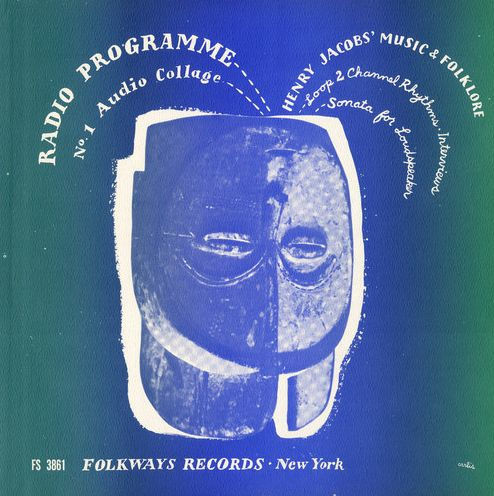
Radio Programme, No. 1: Henry Jacobs' Music and Folklore in Chattanooga, TN
Current price: $19.99
Barnes and Noble
Radio Programme, No. 1: Henry Jacobs' Music and Folklore in Chattanooga, TN
Current price: $19.99
Loading Inventory...
Size: OS
A loop of a voice saying "audio collage" introduces this album-length experiment in tape manipulation and audio verite from
Henry Jacobs
, which appeared on the
Folkways
label in 1955.
Jacobs
assembled the album,
Radio Programme, No. 1
, with excerpts from his radio show,
Music and Folklore
. The result is a miscellany of people talking, bits of
jazz
and world music, and rhythmic loops spliced together into a befuddling array of sounds. The loops are novel, but most of the album consists of interviews with offbeat characters who are only sporadically engaging. The funniest one is
"Interview with Shorty Petterstein,"
in which a square interviewer questions a hipster, resulting in some comedic moments that resemble a
Stan Freberg
skit.
' use of tape technology to manipulate and rearrange the white noise of environmental sounds and pop cultural emanations may not be as intrinsically beguiling today as it was in the early days of tape experimentation, but it is remarkable how similar
is to the works of modern audio manipulators like
Negativland
. The spliced and looped musical creations, like the rhythmic
"Sonata for Loudspeaker,"
will be of more interest to historically-minded listeners than the interviews. ~ Greg Adams
Henry Jacobs
, which appeared on the
Folkways
label in 1955.
Jacobs
assembled the album,
Radio Programme, No. 1
, with excerpts from his radio show,
Music and Folklore
. The result is a miscellany of people talking, bits of
jazz
and world music, and rhythmic loops spliced together into a befuddling array of sounds. The loops are novel, but most of the album consists of interviews with offbeat characters who are only sporadically engaging. The funniest one is
"Interview with Shorty Petterstein,"
in which a square interviewer questions a hipster, resulting in some comedic moments that resemble a
Stan Freberg
skit.
' use of tape technology to manipulate and rearrange the white noise of environmental sounds and pop cultural emanations may not be as intrinsically beguiling today as it was in the early days of tape experimentation, but it is remarkable how similar
is to the works of modern audio manipulators like
Negativland
. The spliced and looped musical creations, like the rhythmic
"Sonata for Loudspeaker,"
will be of more interest to historically-minded listeners than the interviews. ~ Greg Adams
A loop of a voice saying "audio collage" introduces this album-length experiment in tape manipulation and audio verite from
Henry Jacobs
, which appeared on the
Folkways
label in 1955.
Jacobs
assembled the album,
Radio Programme, No. 1
, with excerpts from his radio show,
Music and Folklore
. The result is a miscellany of people talking, bits of
jazz
and world music, and rhythmic loops spliced together into a befuddling array of sounds. The loops are novel, but most of the album consists of interviews with offbeat characters who are only sporadically engaging. The funniest one is
"Interview with Shorty Petterstein,"
in which a square interviewer questions a hipster, resulting in some comedic moments that resemble a
Stan Freberg
skit.
' use of tape technology to manipulate and rearrange the white noise of environmental sounds and pop cultural emanations may not be as intrinsically beguiling today as it was in the early days of tape experimentation, but it is remarkable how similar
is to the works of modern audio manipulators like
Negativland
. The spliced and looped musical creations, like the rhythmic
"Sonata for Loudspeaker,"
will be of more interest to historically-minded listeners than the interviews. ~ Greg Adams
Henry Jacobs
, which appeared on the
Folkways
label in 1955.
Jacobs
assembled the album,
Radio Programme, No. 1
, with excerpts from his radio show,
Music and Folklore
. The result is a miscellany of people talking, bits of
jazz
and world music, and rhythmic loops spliced together into a befuddling array of sounds. The loops are novel, but most of the album consists of interviews with offbeat characters who are only sporadically engaging. The funniest one is
"Interview with Shorty Petterstein,"
in which a square interviewer questions a hipster, resulting in some comedic moments that resemble a
Stan Freberg
skit.
' use of tape technology to manipulate and rearrange the white noise of environmental sounds and pop cultural emanations may not be as intrinsically beguiling today as it was in the early days of tape experimentation, but it is remarkable how similar
is to the works of modern audio manipulators like
Negativland
. The spliced and looped musical creations, like the rhythmic
"Sonata for Loudspeaker,"
will be of more interest to historically-minded listeners than the interviews. ~ Greg Adams
You May Also Like
![World Music Radio [Transparent Black Ice Vinyl] [Barnes & Noble Exclusive]](https://prodimage.images-bn.com/pimages/0602455822956_p0_v1_s600x595.jpg)














More About Barnes and Noble at Hamilton Place
Barnes & Noble is the world’s largest retail bookseller and a leading retailer of content, digital media and educational products. Our Nook Digital business offers a lineup of NOOK® tablets and e-Readers and an expansive collection of digital reading content through the NOOK Store®. Barnes & Noble’s mission is to operate the best omni-channel specialty retail business in America, helping both our customers and booksellers reach their aspirations, while being a credit to the communities we serve.
2100 Hamilton Pl Blvd, Chattanooga, TN 37421, United States
Find Barnes and Noble at Hamilton Place in Chattanooga, TN
Visit Barnes and Noble at Hamilton Place in Chattanooga, TN
