
Home
Quixote: the Novel and World
Barnes and Noble
Loading Inventory...
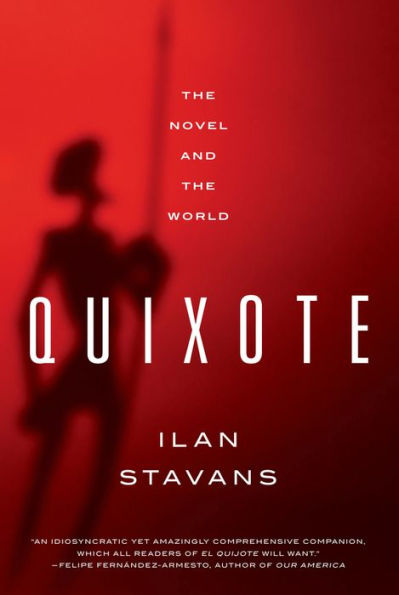
Quixote: the Novel and World in Chattanooga, TN
Current price: $16.95
Barnes and Noble
Quixote: the Novel and World in Chattanooga, TN
Current price: $16.95
Loading Inventory...
Size: Paperback
A groundbreaking cultural history of the most influential, most frequently translated, and most imitated novel in the world.
The year 2015 marks the four hundredth anniversary of the publication of the complete
Don Quixote of La Mancha
—an ageless masterpiece that has proven unusually fertile and endlessly adaptable. Flaubert was inspired to turn Emma Bovary into “a knight in skirts.” Freud studied Quixote’s psyche. Mark Twain was fascinated by it, as were Kafka, Picasso, Nabokov, Borges, and Orson Welles. The novel has spawned ballets and operas, poems and plays, movies and video games, and even shapes the identities of entire nations. Spain uses it as a sort of constitution and travel guide; and the Americas were conquered, then sought their independence, with the knight as a role model.
In
Quixote
, Ilan Stavans, one of today’s preeminent cultural commentators, explores these many manifestations. Training his eye on the tumultuous struggle between logic and dreams, he reveals the ways in which a work of literature is a living thing that influences and is influenced by the world around it.
The year 2015 marks the four hundredth anniversary of the publication of the complete
Don Quixote of La Mancha
—an ageless masterpiece that has proven unusually fertile and endlessly adaptable. Flaubert was inspired to turn Emma Bovary into “a knight in skirts.” Freud studied Quixote’s psyche. Mark Twain was fascinated by it, as were Kafka, Picasso, Nabokov, Borges, and Orson Welles. The novel has spawned ballets and operas, poems and plays, movies and video games, and even shapes the identities of entire nations. Spain uses it as a sort of constitution and travel guide; and the Americas were conquered, then sought their independence, with the knight as a role model.
In
Quixote
, Ilan Stavans, one of today’s preeminent cultural commentators, explores these many manifestations. Training his eye on the tumultuous struggle between logic and dreams, he reveals the ways in which a work of literature is a living thing that influences and is influenced by the world around it.
A groundbreaking cultural history of the most influential, most frequently translated, and most imitated novel in the world.
The year 2015 marks the four hundredth anniversary of the publication of the complete
Don Quixote of La Mancha
—an ageless masterpiece that has proven unusually fertile and endlessly adaptable. Flaubert was inspired to turn Emma Bovary into “a knight in skirts.” Freud studied Quixote’s psyche. Mark Twain was fascinated by it, as were Kafka, Picasso, Nabokov, Borges, and Orson Welles. The novel has spawned ballets and operas, poems and plays, movies and video games, and even shapes the identities of entire nations. Spain uses it as a sort of constitution and travel guide; and the Americas were conquered, then sought their independence, with the knight as a role model.
In
Quixote
, Ilan Stavans, one of today’s preeminent cultural commentators, explores these many manifestations. Training his eye on the tumultuous struggle between logic and dreams, he reveals the ways in which a work of literature is a living thing that influences and is influenced by the world around it.
The year 2015 marks the four hundredth anniversary of the publication of the complete
Don Quixote of La Mancha
—an ageless masterpiece that has proven unusually fertile and endlessly adaptable. Flaubert was inspired to turn Emma Bovary into “a knight in skirts.” Freud studied Quixote’s psyche. Mark Twain was fascinated by it, as were Kafka, Picasso, Nabokov, Borges, and Orson Welles. The novel has spawned ballets and operas, poems and plays, movies and video games, and even shapes the identities of entire nations. Spain uses it as a sort of constitution and travel guide; and the Americas were conquered, then sought their independence, with the knight as a role model.
In
Quixote
, Ilan Stavans, one of today’s preeminent cultural commentators, explores these many manifestations. Training his eye on the tumultuous struggle between logic and dreams, he reveals the ways in which a work of literature is a living thing that influences and is influenced by the world around it.
You May Also Like










More About Barnes and Noble at Hamilton Place
Barnes & Noble is the world’s largest retail bookseller and a leading retailer of content, digital media and educational products. Our Nook Digital business offers a lineup of NOOK® tablets and e-Readers and an expansive collection of digital reading content through the NOOK Store®. Barnes & Noble’s mission is to operate the best omni-channel specialty retail business in America, helping both our customers and booksellers reach their aspirations, while being a credit to the communities we serve.
2100 Hamilton Pl Blvd, Chattanooga, TN 37421, United States
Find Barnes and Noble at Hamilton Place in Chattanooga, TN
Visit Barnes and Noble at Hamilton Place in Chattanooga, TN