
Home
Python for Islamic Astronomy: Modern Computational Approaches to Hijri Calendar, Qibla, and Prayer Times
Barnes and Noble
Loading Inventory...
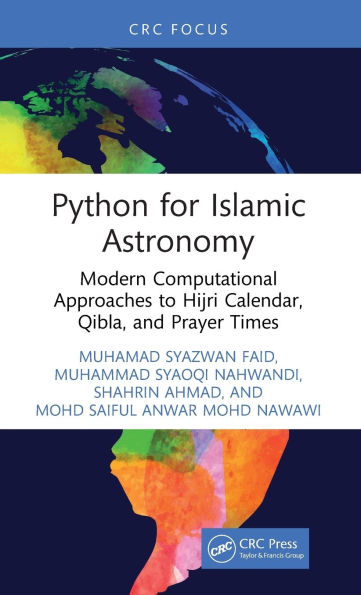
Python for Islamic Astronomy: Modern Computational Approaches to Hijri Calendar, Qibla, and Prayer Times in Chattanooga, TN
Current price: $69.99
Barnes and Noble
Python for Islamic Astronomy: Modern Computational Approaches to Hijri Calendar, Qibla, and Prayer Times in Chattanooga, TN
Current price: $69.99
Loading Inventory...
Size: Hardcover
Python for Islamic Astronomy: Modern Computational Approaches to Hijri Calendar, Qibla, and Prayer Times
responds to the urgent need to improve calculation accuracy and data visualizations in the field of Islamic Astronomy. This field is becoming increasingly complex, leading to mistakes in determining the beginning of the Hijri month, Qibla directions, and prayer times. This book offers a more precise approach by showing how the Python environment can be tailored for astronomical computations and how the mathematical principles behind Qiblah determination can be implemented through elegant Python algorithms. The guide provides detailed methodologies for calculating prayer times with astronomical precision, allowing for accurate scheduling regardless of global location. The book also delves into the science of moonsighting, helping readers learn to compute and analyze observation data critical for Islamic calendar determinations. Advanced visualization chapters bring these calculations to life through practical applications: develop your own Qiblah compass, create visual representations of the sun’s position during prayer times, and generate detailed lunar crescent visibility charts to aid in moon-sighting efforts. Perfect for programmers interested in Islamic Astronomy, religious scholars embracing technology, or anyone seeking to understand the mathematical foundations behind these traditional practices, this guide bridges ancient wisdom with modern computational techniques, making complex astronomical calculations accessible through the power of Python.
Key Features:
The first book to provide practical guidance for using Python, supplemented by an interactive coding website, to solve real-world problems in the field of Islamic Astronomy.
Uses the latest and most-trusted methods in Islamic Astronomy, ensuring all calculations are accurate and based on well-recognized references.
Includes visualizations that help readers understand key topics like Qibla direction, prayer time zones, and lunar crescent visibility, making the content practical and user-friendly.
responds to the urgent need to improve calculation accuracy and data visualizations in the field of Islamic Astronomy. This field is becoming increasingly complex, leading to mistakes in determining the beginning of the Hijri month, Qibla directions, and prayer times. This book offers a more precise approach by showing how the Python environment can be tailored for astronomical computations and how the mathematical principles behind Qiblah determination can be implemented through elegant Python algorithms. The guide provides detailed methodologies for calculating prayer times with astronomical precision, allowing for accurate scheduling regardless of global location. The book also delves into the science of moonsighting, helping readers learn to compute and analyze observation data critical for Islamic calendar determinations. Advanced visualization chapters bring these calculations to life through practical applications: develop your own Qiblah compass, create visual representations of the sun’s position during prayer times, and generate detailed lunar crescent visibility charts to aid in moon-sighting efforts. Perfect for programmers interested in Islamic Astronomy, religious scholars embracing technology, or anyone seeking to understand the mathematical foundations behind these traditional practices, this guide bridges ancient wisdom with modern computational techniques, making complex astronomical calculations accessible through the power of Python.
Key Features:
The first book to provide practical guidance for using Python, supplemented by an interactive coding website, to solve real-world problems in the field of Islamic Astronomy.
Uses the latest and most-trusted methods in Islamic Astronomy, ensuring all calculations are accurate and based on well-recognized references.
Includes visualizations that help readers understand key topics like Qibla direction, prayer time zones, and lunar crescent visibility, making the content practical and user-friendly.
Python for Islamic Astronomy: Modern Computational Approaches to Hijri Calendar, Qibla, and Prayer Times
responds to the urgent need to improve calculation accuracy and data visualizations in the field of Islamic Astronomy. This field is becoming increasingly complex, leading to mistakes in determining the beginning of the Hijri month, Qibla directions, and prayer times. This book offers a more precise approach by showing how the Python environment can be tailored for astronomical computations and how the mathematical principles behind Qiblah determination can be implemented through elegant Python algorithms. The guide provides detailed methodologies for calculating prayer times with astronomical precision, allowing for accurate scheduling regardless of global location. The book also delves into the science of moonsighting, helping readers learn to compute and analyze observation data critical for Islamic calendar determinations. Advanced visualization chapters bring these calculations to life through practical applications: develop your own Qiblah compass, create visual representations of the sun’s position during prayer times, and generate detailed lunar crescent visibility charts to aid in moon-sighting efforts. Perfect for programmers interested in Islamic Astronomy, religious scholars embracing technology, or anyone seeking to understand the mathematical foundations behind these traditional practices, this guide bridges ancient wisdom with modern computational techniques, making complex astronomical calculations accessible through the power of Python.
Key Features:
The first book to provide practical guidance for using Python, supplemented by an interactive coding website, to solve real-world problems in the field of Islamic Astronomy.
Uses the latest and most-trusted methods in Islamic Astronomy, ensuring all calculations are accurate and based on well-recognized references.
Includes visualizations that help readers understand key topics like Qibla direction, prayer time zones, and lunar crescent visibility, making the content practical and user-friendly.
responds to the urgent need to improve calculation accuracy and data visualizations in the field of Islamic Astronomy. This field is becoming increasingly complex, leading to mistakes in determining the beginning of the Hijri month, Qibla directions, and prayer times. This book offers a more precise approach by showing how the Python environment can be tailored for astronomical computations and how the mathematical principles behind Qiblah determination can be implemented through elegant Python algorithms. The guide provides detailed methodologies for calculating prayer times with astronomical precision, allowing for accurate scheduling regardless of global location. The book also delves into the science of moonsighting, helping readers learn to compute and analyze observation data critical for Islamic calendar determinations. Advanced visualization chapters bring these calculations to life through practical applications: develop your own Qiblah compass, create visual representations of the sun’s position during prayer times, and generate detailed lunar crescent visibility charts to aid in moon-sighting efforts. Perfect for programmers interested in Islamic Astronomy, religious scholars embracing technology, or anyone seeking to understand the mathematical foundations behind these traditional practices, this guide bridges ancient wisdom with modern computational techniques, making complex astronomical calculations accessible through the power of Python.
Key Features:
The first book to provide practical guidance for using Python, supplemented by an interactive coding website, to solve real-world problems in the field of Islamic Astronomy.
Uses the latest and most-trusted methods in Islamic Astronomy, ensuring all calculations are accurate and based on well-recognized references.
Includes visualizations that help readers understand key topics like Qibla direction, prayer time zones, and lunar crescent visibility, making the content practical and user-friendly.
You May Also Like

















More About Barnes and Noble at Hamilton Place
Barnes & Noble is the world’s largest retail bookseller and a leading retailer of content, digital media and educational products. Our Nook Digital business offers a lineup of NOOK® tablets and e-Readers and an expansive collection of digital reading content through the NOOK Store®. Barnes & Noble’s mission is to operate the best omni-channel specialty retail business in America, helping both our customers and booksellers reach their aspirations, while being a credit to the communities we serve.
2100 Hamilton Pl Blvd, Chattanooga, TN 37421, United States
Find Barnes and Noble at Hamilton Place in Chattanooga, TN
Visit Barnes and Noble at Hamilton Place in Chattanooga, TN
