
Home
Public Budgeting Search for an Identity: State of the Art and Future Challenges
Barnes and Noble
Loading Inventory...
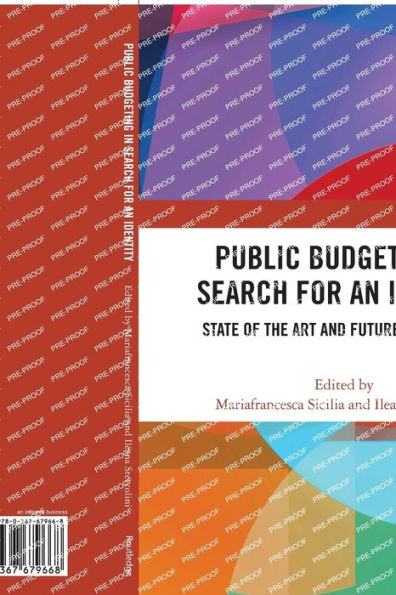
Public Budgeting Search for an Identity: State of the Art and Future Challenges in Chattanooga, TN
Current price: $190.00
Barnes and Noble
Public Budgeting Search for an Identity: State of the Art and Future Challenges in Chattanooga, TN
Current price: $190.00
Loading Inventory...
Size: Hardcover
Public Budgeting in Search for an Identity: State of the Art and Future Challenges
provides a state-of-the-art reflection on current trends in international public budgeting, representing an important pillar in the accumulation of knowledge on public sector budgeting processes, contents, evolutions and critical issues.
Budgeting is central in public sector organizations. It performs a complex variety of functions, being the arena where multiple actors, cultures and professional identities interact, making it an extremely fascinating field and topic of investigation. There is a significant need and scope for exploring budgeting processes in the public sector today, as a consequence of the managerial waves of reforms that have taken place over the last few decades and the implementation of austerity programmes – as well as in light of current trends, including emerging challenges related to community care and wellbeing, rising inequality, people flows, climate change, pandemics, and the persistence of democratic deficits. The chapters in this volume address critical issues on this broad topic, offering new perspectives on current evolutions in public budgeting, including, among others, participatory budgeting, performance budgeting, the budgetary slack resources and the need to ensure balance between budget control and flexibility. These contributions show that public budgeting can, and must remain, the subject of enduring interest in our studies.
The chapters in this book were originally published as a special issue of
Public Management Review
.
provides a state-of-the-art reflection on current trends in international public budgeting, representing an important pillar in the accumulation of knowledge on public sector budgeting processes, contents, evolutions and critical issues.
Budgeting is central in public sector organizations. It performs a complex variety of functions, being the arena where multiple actors, cultures and professional identities interact, making it an extremely fascinating field and topic of investigation. There is a significant need and scope for exploring budgeting processes in the public sector today, as a consequence of the managerial waves of reforms that have taken place over the last few decades and the implementation of austerity programmes – as well as in light of current trends, including emerging challenges related to community care and wellbeing, rising inequality, people flows, climate change, pandemics, and the persistence of democratic deficits. The chapters in this volume address critical issues on this broad topic, offering new perspectives on current evolutions in public budgeting, including, among others, participatory budgeting, performance budgeting, the budgetary slack resources and the need to ensure balance between budget control and flexibility. These contributions show that public budgeting can, and must remain, the subject of enduring interest in our studies.
The chapters in this book were originally published as a special issue of
Public Management Review
.
Public Budgeting in Search for an Identity: State of the Art and Future Challenges
provides a state-of-the-art reflection on current trends in international public budgeting, representing an important pillar in the accumulation of knowledge on public sector budgeting processes, contents, evolutions and critical issues.
Budgeting is central in public sector organizations. It performs a complex variety of functions, being the arena where multiple actors, cultures and professional identities interact, making it an extremely fascinating field and topic of investigation. There is a significant need and scope for exploring budgeting processes in the public sector today, as a consequence of the managerial waves of reforms that have taken place over the last few decades and the implementation of austerity programmes – as well as in light of current trends, including emerging challenges related to community care and wellbeing, rising inequality, people flows, climate change, pandemics, and the persistence of democratic deficits. The chapters in this volume address critical issues on this broad topic, offering new perspectives on current evolutions in public budgeting, including, among others, participatory budgeting, performance budgeting, the budgetary slack resources and the need to ensure balance between budget control and flexibility. These contributions show that public budgeting can, and must remain, the subject of enduring interest in our studies.
The chapters in this book were originally published as a special issue of
Public Management Review
.
provides a state-of-the-art reflection on current trends in international public budgeting, representing an important pillar in the accumulation of knowledge on public sector budgeting processes, contents, evolutions and critical issues.
Budgeting is central in public sector organizations. It performs a complex variety of functions, being the arena where multiple actors, cultures and professional identities interact, making it an extremely fascinating field and topic of investigation. There is a significant need and scope for exploring budgeting processes in the public sector today, as a consequence of the managerial waves of reforms that have taken place over the last few decades and the implementation of austerity programmes – as well as in light of current trends, including emerging challenges related to community care and wellbeing, rising inequality, people flows, climate change, pandemics, and the persistence of democratic deficits. The chapters in this volume address critical issues on this broad topic, offering new perspectives on current evolutions in public budgeting, including, among others, participatory budgeting, performance budgeting, the budgetary slack resources and the need to ensure balance between budget control and flexibility. These contributions show that public budgeting can, and must remain, the subject of enduring interest in our studies.
The chapters in this book were originally published as a special issue of
Public Management Review
.
You May Also Like










More About Barnes and Noble at Hamilton Place
Barnes & Noble is the world’s largest retail bookseller and a leading retailer of content, digital media and educational products. Our Nook Digital business offers a lineup of NOOK® tablets and e-Readers and an expansive collection of digital reading content through the NOOK Store®. Barnes & Noble’s mission is to operate the best omni-channel specialty retail business in America, helping both our customers and booksellers reach their aspirations, while being a credit to the communities we serve.
2100 Hamilton Pl Blvd, Chattanooga, TN 37421, United States
Find Barnes and Noble at Hamilton Place in Chattanooga, TN
Visit Barnes and Noble at Hamilton Place in Chattanooga, TN
