
Home
Psychoanalysis and the Association Experiment
Barnes and Noble
Loading Inventory...
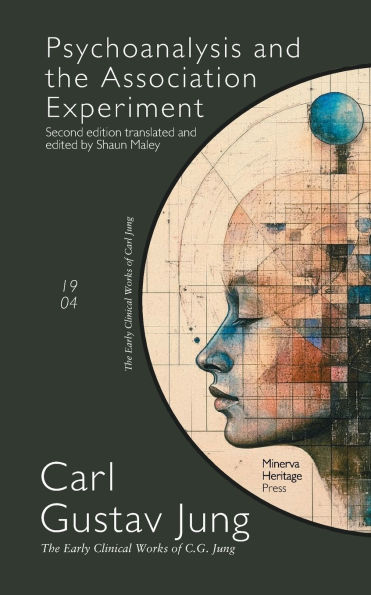
Psychoanalysis and the Association Experiment in Chattanooga, TN
Current price: $14.20
Barnes and Noble
Psychoanalysis and the Association Experiment in Chattanooga, TN
Current price: $14.20
Loading Inventory...
Size: Paperback
Carl Jung's early essay "Psychoanalysis and association experiment" (Psychoanalyse und Assoziationsexperiment) was published in the Journal "Diagnostic Association Studies" in 1904. Here a young Jung, while working at the Bürghölzli psychiatric clinic in Zurich, explores concepts such as the Word Association Test, Identification of Complexes, the Nature of Complexes and Psychotherapeutic implications of these concepts. This essay was published in the Scientific Psychology Journal "Diagnostische Assoziationsstudien" (Diagnostic Association Studies) and it represents one of his earlier forays into experimental psychology. The publication, co-authored with Franz Riklin, aimed to investigate and understand the unconscious processes affecting an individual's conscious responses to stimuli. It marked an important phase in Jung's exploration of the unconscious mind. Through word association tests, he identified the presence of emotionally charged complexes that affect conscious thought, laying the groundwork for many of his later theories. Here we see Jung fully under the influence of Freud's 1901 work "The Psychopathology of Everyday Life". At the time, psychology was evolving from a philosophical discipline into a rigorous scientific field, influenced by figures such as Wilhelm Wundt and Sigmund Freud. Jung's work used the association experiment, a method first developed by Francis Galton and later adapted by Emil Kraepelin and Wilhelm Wundt, to measure reaction times and associative responses to a list of stimulus words. Participants were instructed to respond with the first word that came to mind, while reaction times and physiological responses (such as hesitation or emotional disturbance) were recorded. These data were analyzed to identify patterns that suggested unconscious emotional conflicts.
Carl Jung's early essay "Psychoanalysis and association experiment" (Psychoanalyse und Assoziationsexperiment) was published in the Journal "Diagnostic Association Studies" in 1904. Here a young Jung, while working at the Bürghölzli psychiatric clinic in Zurich, explores concepts such as the Word Association Test, Identification of Complexes, the Nature of Complexes and Psychotherapeutic implications of these concepts. This essay was published in the Scientific Psychology Journal "Diagnostische Assoziationsstudien" (Diagnostic Association Studies) and it represents one of his earlier forays into experimental psychology. The publication, co-authored with Franz Riklin, aimed to investigate and understand the unconscious processes affecting an individual's conscious responses to stimuli. It marked an important phase in Jung's exploration of the unconscious mind. Through word association tests, he identified the presence of emotionally charged complexes that affect conscious thought, laying the groundwork for many of his later theories. Here we see Jung fully under the influence of Freud's 1901 work "The Psychopathology of Everyday Life". At the time, psychology was evolving from a philosophical discipline into a rigorous scientific field, influenced by figures such as Wilhelm Wundt and Sigmund Freud. Jung's work used the association experiment, a method first developed by Francis Galton and later adapted by Emil Kraepelin and Wilhelm Wundt, to measure reaction times and associative responses to a list of stimulus words. Participants were instructed to respond with the first word that came to mind, while reaction times and physiological responses (such as hesitation or emotional disturbance) were recorded. These data were analyzed to identify patterns that suggested unconscious emotional conflicts.
You May Also Like







More About Barnes and Noble at Hamilton Place
Barnes & Noble is the world’s largest retail bookseller and a leading retailer of content, digital media and educational products. Our Nook Digital business offers a lineup of NOOK® tablets and e-Readers and an expansive collection of digital reading content through the NOOK Store®. Barnes & Noble’s mission is to operate the best omni-channel specialty retail business in America, helping both our customers and booksellers reach their aspirations, while being a credit to the communities we serve.
2100 Hamilton Pl Blvd, Chattanooga, TN 37421, United States
Find Barnes and Noble at Hamilton Place in Chattanooga, TN
Visit Barnes and Noble at Hamilton Place in Chattanooga, TN
