
Home
Projecting Race: Postwar America, Civil Rights, and Documentary Film
Barnes and Noble
Loading Inventory...
Projecting Race: Postwar America, Civil Rights, and Documentary Film in Chattanooga, TN
Current price: $32.00
Barnes and Noble
Projecting Race: Postwar America, Civil Rights, and Documentary Film in Chattanooga, TN
Current price: $32.00
Loading Inventory...
Size: Paperback
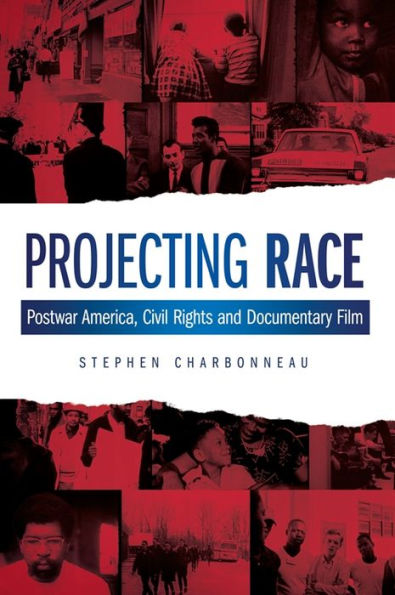
Projecting Race
presents a history of educational documentary filmmaking in the postwar era in light of race relations and the fight for civil rights. Drawing on extensive archival research and textual analyses, the volume tracks the evolution of race-based, nontheatrical cinema from its neorealist roots to its incorporation of new documentary techniques intent on recording reality in real time. The films featured include classic documentaries, such as Sidney Meyers's
The Quiet One
(1948), and a range of familiar and less familiar state-sponsored educational documentaries from George Stoney (
Palmour Street
, 1950;
All My Babies
, 1953; and
The Man in the Middle
, 1966) and the Drew Associates (
Another Way
, 1967). Final chapters highlight community-development films jointly produced by the National Film Board of Canada and the Office of Economic Opportunity (
The Farmersville Project
, 1968;
The Hartford Project
, 1969) in rural and industrial settings. Featuring testimonies from farm workers, activists, and government officials, the films reflect communities in crisis, where organized and politically active racial minorities upended the status quo. Ultimately, this work traces the postwar contours of a liberal racial outlook as government agencies came to grips with profound and inescapable social change.
presents a history of educational documentary filmmaking in the postwar era in light of race relations and the fight for civil rights. Drawing on extensive archival research and textual analyses, the volume tracks the evolution of race-based, nontheatrical cinema from its neorealist roots to its incorporation of new documentary techniques intent on recording reality in real time. The films featured include classic documentaries, such as Sidney Meyers's
The Quiet One
(1948), and a range of familiar and less familiar state-sponsored educational documentaries from George Stoney (
Palmour Street
, 1950;
All My Babies
, 1953; and
The Man in the Middle
, 1966) and the Drew Associates (
Another Way
, 1967). Final chapters highlight community-development films jointly produced by the National Film Board of Canada and the Office of Economic Opportunity (
The Farmersville Project
, 1968;
The Hartford Project
, 1969) in rural and industrial settings. Featuring testimonies from farm workers, activists, and government officials, the films reflect communities in crisis, where organized and politically active racial minorities upended the status quo. Ultimately, this work traces the postwar contours of a liberal racial outlook as government agencies came to grips with profound and inescapable social change.
Projecting Race
presents a history of educational documentary filmmaking in the postwar era in light of race relations and the fight for civil rights. Drawing on extensive archival research and textual analyses, the volume tracks the evolution of race-based, nontheatrical cinema from its neorealist roots to its incorporation of new documentary techniques intent on recording reality in real time. The films featured include classic documentaries, such as Sidney Meyers's
The Quiet One
(1948), and a range of familiar and less familiar state-sponsored educational documentaries from George Stoney (
Palmour Street
, 1950;
All My Babies
, 1953; and
The Man in the Middle
, 1966) and the Drew Associates (
Another Way
, 1967). Final chapters highlight community-development films jointly produced by the National Film Board of Canada and the Office of Economic Opportunity (
The Farmersville Project
, 1968;
The Hartford Project
, 1969) in rural and industrial settings. Featuring testimonies from farm workers, activists, and government officials, the films reflect communities in crisis, where organized and politically active racial minorities upended the status quo. Ultimately, this work traces the postwar contours of a liberal racial outlook as government agencies came to grips with profound and inescapable social change.
presents a history of educational documentary filmmaking in the postwar era in light of race relations and the fight for civil rights. Drawing on extensive archival research and textual analyses, the volume tracks the evolution of race-based, nontheatrical cinema from its neorealist roots to its incorporation of new documentary techniques intent on recording reality in real time. The films featured include classic documentaries, such as Sidney Meyers's
The Quiet One
(1948), and a range of familiar and less familiar state-sponsored educational documentaries from George Stoney (
Palmour Street
, 1950;
All My Babies
, 1953; and
The Man in the Middle
, 1966) and the Drew Associates (
Another Way
, 1967). Final chapters highlight community-development films jointly produced by the National Film Board of Canada and the Office of Economic Opportunity (
The Farmersville Project
, 1968;
The Hartford Project
, 1969) in rural and industrial settings. Featuring testimonies from farm workers, activists, and government officials, the films reflect communities in crisis, where organized and politically active racial minorities upended the status quo. Ultimately, this work traces the postwar contours of a liberal racial outlook as government agencies came to grips with profound and inescapable social change.
You May Also Like












More About Barnes and Noble at Hamilton Place
Barnes & Noble is the world’s largest retail bookseller and a leading retailer of content, digital media and educational products. Our Nook Digital business offers a lineup of NOOK® tablets and e-Readers and an expansive collection of digital reading content through the NOOK Store®. Barnes & Noble’s mission is to operate the best omni-channel specialty retail business in America, helping both our customers and booksellers reach their aspirations, while being a credit to the communities we serve.
2100 Hamilton Pl Blvd, Chattanooga, TN 37421, United States
Find Barnes and Noble at Hamilton Place in Chattanooga, TN
Visit Barnes and Noble at Hamilton Place in Chattanooga, TN
