
Home
Prisms of the People: Power & Organizing Twenty-First-Century America
Barnes and Noble
Loading Inventory...
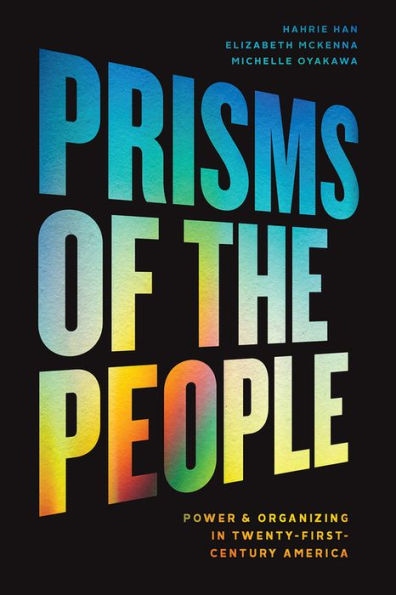
Prisms of the People: Power & Organizing Twenty-First-Century America in Chattanooga, TN
Current price: $115.00
Barnes and Noble
Prisms of the People: Power & Organizing Twenty-First-Century America in Chattanooga, TN
Current price: $115.00
Loading Inventory...
Size: Hardcover
Grassroots organizing and collective action have always been fundamental to American democracy but have been burgeoning since the 2016 election, as people struggle to make their voices heard in this moment of societal upheaval. Unfortunately much of that action has not had the kind of impact participants might want, especially among movements representing the poor and marginalized who often have the most at stake when it comes to rights and equality. Yet, some instances of collective action have succeeded. What’s the difference between a movement that wins victories for its constituents, and one that fails? What are the factors that make collective action powerful?
Prisms of the People
addresses those questions and more. Using data from six movement organizationsincluding a coalition that organized a 104day protest in Phoenix in 2010 and another that helped restore voting rights to the formerly incarcerated in VirginiaHahrie Han, Elizabeth McKenna, and Michelle Oyakawa show that the power of successful movements most often is rooted in their ability to act as “prisms of the people,” turning participation into political power just as prisms transform white light into rainbows. Understanding the organizational design choices that shape the people, their leaders, and their strategies can help us understand how grassroots groups achieve their goals.
Linking strong scholarship to a deep understanding of the needs and outlook of activists,
is the perfect book for our momentfor understanding what’s happening and propelling it forward.
Prisms of the People
addresses those questions and more. Using data from six movement organizationsincluding a coalition that organized a 104day protest in Phoenix in 2010 and another that helped restore voting rights to the formerly incarcerated in VirginiaHahrie Han, Elizabeth McKenna, and Michelle Oyakawa show that the power of successful movements most often is rooted in their ability to act as “prisms of the people,” turning participation into political power just as prisms transform white light into rainbows. Understanding the organizational design choices that shape the people, their leaders, and their strategies can help us understand how grassroots groups achieve their goals.
Linking strong scholarship to a deep understanding of the needs and outlook of activists,
is the perfect book for our momentfor understanding what’s happening and propelling it forward.
Grassroots organizing and collective action have always been fundamental to American democracy but have been burgeoning since the 2016 election, as people struggle to make their voices heard in this moment of societal upheaval. Unfortunately much of that action has not had the kind of impact participants might want, especially among movements representing the poor and marginalized who often have the most at stake when it comes to rights and equality. Yet, some instances of collective action have succeeded. What’s the difference between a movement that wins victories for its constituents, and one that fails? What are the factors that make collective action powerful?
Prisms of the People
addresses those questions and more. Using data from six movement organizationsincluding a coalition that organized a 104day protest in Phoenix in 2010 and another that helped restore voting rights to the formerly incarcerated in VirginiaHahrie Han, Elizabeth McKenna, and Michelle Oyakawa show that the power of successful movements most often is rooted in their ability to act as “prisms of the people,” turning participation into political power just as prisms transform white light into rainbows. Understanding the organizational design choices that shape the people, their leaders, and their strategies can help us understand how grassroots groups achieve their goals.
Linking strong scholarship to a deep understanding of the needs and outlook of activists,
is the perfect book for our momentfor understanding what’s happening and propelling it forward.
Prisms of the People
addresses those questions and more. Using data from six movement organizationsincluding a coalition that organized a 104day protest in Phoenix in 2010 and another that helped restore voting rights to the formerly incarcerated in VirginiaHahrie Han, Elizabeth McKenna, and Michelle Oyakawa show that the power of successful movements most often is rooted in their ability to act as “prisms of the people,” turning participation into political power just as prisms transform white light into rainbows. Understanding the organizational design choices that shape the people, their leaders, and their strategies can help us understand how grassroots groups achieve their goals.
Linking strong scholarship to a deep understanding of the needs and outlook of activists,
is the perfect book for our momentfor understanding what’s happening and propelling it forward.
You May Also Like















More About Barnes and Noble at Hamilton Place
Barnes & Noble is the world’s largest retail bookseller and a leading retailer of content, digital media and educational products. Our Nook Digital business offers a lineup of NOOK® tablets and e-Readers and an expansive collection of digital reading content through the NOOK Store®. Barnes & Noble’s mission is to operate the best omni-channel specialty retail business in America, helping both our customers and booksellers reach their aspirations, while being a credit to the communities we serve.
2100 Hamilton Pl Blvd, Chattanooga, TN 37421, United States
Find Barnes and Noble at Hamilton Place in Chattanooga, TN
Visit Barnes and Noble at Hamilton Place in Chattanooga, TN
