
Home
Princeton and the Gothic Revival: 1870-1930
Barnes and Noble
Loading Inventory...
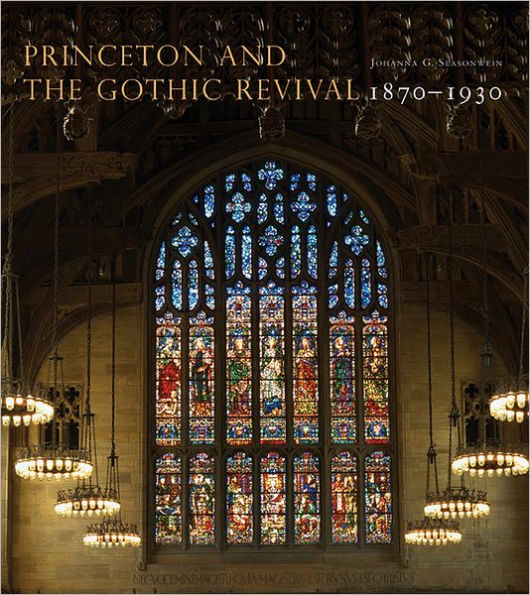
Princeton and the Gothic Revival: 1870-1930 in Chattanooga, TN
Current price: $42.00
Barnes and Noble
Princeton and the Gothic Revival: 1870-1930 in Chattanooga, TN
Current price: $42.00
Loading Inventory...
Size: OS
Princeton and the Gothic Revival
investigates America's changing attitudes toward medieval art around the turn of the twentieth century through the lens of Princeton University and its role as a major patron of Gothic Revival art and architecture. Johanna Seasonwein charts a shift from eclecticism to a more unified, "authentic" approach to medieval art, and examines how the language of medieval forms was used to articulate a new model of American higher education in campus design and the classroom.
The catalog for an exhibition at the Princeton University Art Museum,
breaks new ground by addressing why universities, and Princeton in particular, were so effective at bringing together what had been disparate interests in the Middle Ages. Revivalists and Medievalists were often at odds, yet at Princeton they used the language of the Middle Ages to create a new identity for the American university, one that was steeped in the traditions of Oxford and Cambridge but also embraced the model of the German research university.
provides an overview of Princeton's Romanesque and Gothic Revival architecture and examines the changing approach to the idea of the "Gothic" by looking at three Princeton buildings and their stained glass windows: the Marquand Chapel, Procter Hall at the Graduate College, and the University Chapel.
investigates America's changing attitudes toward medieval art around the turn of the twentieth century through the lens of Princeton University and its role as a major patron of Gothic Revival art and architecture. Johanna Seasonwein charts a shift from eclecticism to a more unified, "authentic" approach to medieval art, and examines how the language of medieval forms was used to articulate a new model of American higher education in campus design and the classroom.
The catalog for an exhibition at the Princeton University Art Museum,
breaks new ground by addressing why universities, and Princeton in particular, were so effective at bringing together what had been disparate interests in the Middle Ages. Revivalists and Medievalists were often at odds, yet at Princeton they used the language of the Middle Ages to create a new identity for the American university, one that was steeped in the traditions of Oxford and Cambridge but also embraced the model of the German research university.
provides an overview of Princeton's Romanesque and Gothic Revival architecture and examines the changing approach to the idea of the "Gothic" by looking at three Princeton buildings and their stained glass windows: the Marquand Chapel, Procter Hall at the Graduate College, and the University Chapel.
Princeton and the Gothic Revival
investigates America's changing attitudes toward medieval art around the turn of the twentieth century through the lens of Princeton University and its role as a major patron of Gothic Revival art and architecture. Johanna Seasonwein charts a shift from eclecticism to a more unified, "authentic" approach to medieval art, and examines how the language of medieval forms was used to articulate a new model of American higher education in campus design and the classroom.
The catalog for an exhibition at the Princeton University Art Museum,
breaks new ground by addressing why universities, and Princeton in particular, were so effective at bringing together what had been disparate interests in the Middle Ages. Revivalists and Medievalists were often at odds, yet at Princeton they used the language of the Middle Ages to create a new identity for the American university, one that was steeped in the traditions of Oxford and Cambridge but also embraced the model of the German research university.
provides an overview of Princeton's Romanesque and Gothic Revival architecture and examines the changing approach to the idea of the "Gothic" by looking at three Princeton buildings and their stained glass windows: the Marquand Chapel, Procter Hall at the Graduate College, and the University Chapel.
investigates America's changing attitudes toward medieval art around the turn of the twentieth century through the lens of Princeton University and its role as a major patron of Gothic Revival art and architecture. Johanna Seasonwein charts a shift from eclecticism to a more unified, "authentic" approach to medieval art, and examines how the language of medieval forms was used to articulate a new model of American higher education in campus design and the classroom.
The catalog for an exhibition at the Princeton University Art Museum,
breaks new ground by addressing why universities, and Princeton in particular, were so effective at bringing together what had been disparate interests in the Middle Ages. Revivalists and Medievalists were often at odds, yet at Princeton they used the language of the Middle Ages to create a new identity for the American university, one that was steeped in the traditions of Oxford and Cambridge but also embraced the model of the German research university.
provides an overview of Princeton's Romanesque and Gothic Revival architecture and examines the changing approach to the idea of the "Gothic" by looking at three Princeton buildings and their stained glass windows: the Marquand Chapel, Procter Hall at the Graduate College, and the University Chapel.
You May Also Like






![After Dark: The Alternative + Gothic Rock Collection [Barnes & Noble Exclusive]](https://prodimage.images-bn.com/pimages/0081227987183_p0_v1_s600x595.jpg)









More About Barnes and Noble at Hamilton Place
Barnes & Noble is the world’s largest retail bookseller and a leading retailer of content, digital media and educational products. Our Nook Digital business offers a lineup of NOOK® tablets and e-Readers and an expansive collection of digital reading content through the NOOK Store®. Barnes & Noble’s mission is to operate the best omni-channel specialty retail business in America, helping both our customers and booksellers reach their aspirations, while being a credit to the communities we serve.
2100 Hamilton Pl Blvd, Chattanooga, TN 37421, United States
Find Barnes and Noble at Hamilton Place in Chattanooga, TN
Visit Barnes and Noble at Hamilton Place in Chattanooga, TN
