
Home
Primate Communication: A Multimodal Approach
Barnes and Noble
Loading Inventory...
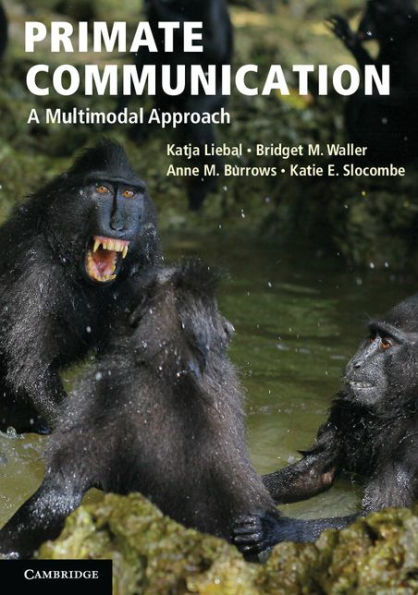
Primate Communication: A Multimodal Approach in Chattanooga, TN
Current price: $95.00
Barnes and Noble
Primate Communication: A Multimodal Approach in Chattanooga, TN
Current price: $95.00
Loading Inventory...
Size: Hardcover
Primates communicate with each other using a wide range of signals: olfactory signals to mark territories, screams to recruit help while fighting, gestures to request food and facial expressions to initiate play. Primate Communication brings together research on all forms of interchange and discusses what we know about primate communication via vocal, gestural, facial, olfactory and integrated multimodal signals in relation to a number of central topics. It explores the morphological, neural and cognitive foundations of primate communication through discussion of cutting-edge research. By considering signals from multiple modalities and taking a unified multimodal approach, the authors offer a uniquely holistic overview of primate communication, discussing what we know, what we don't know and what we may currently misunderstand about communication across these different forms. It is essential reading for researchers interested in primate behaviour, communication and cognition, as well as students of primatology, psychology, anthropology and cognitive sciences.
Primates communicate with each other using a wide range of signals: olfactory signals to mark territories, screams to recruit help while fighting, gestures to request food and facial expressions to initiate play. Primate Communication brings together research on all forms of interchange and discusses what we know about primate communication via vocal, gestural, facial, olfactory and integrated multimodal signals in relation to a number of central topics. It explores the morphological, neural and cognitive foundations of primate communication through discussion of cutting-edge research. By considering signals from multiple modalities and taking a unified multimodal approach, the authors offer a uniquely holistic overview of primate communication, discussing what we know, what we don't know and what we may currently misunderstand about communication across these different forms. It is essential reading for researchers interested in primate behaviour, communication and cognition, as well as students of primatology, psychology, anthropology and cognitive sciences.
You May Also Like












More About Barnes and Noble at Hamilton Place
Barnes & Noble is the world’s largest retail bookseller and a leading retailer of content, digital media and educational products. Our Nook Digital business offers a lineup of NOOK® tablets and e-Readers and an expansive collection of digital reading content through the NOOK Store®. Barnes & Noble’s mission is to operate the best omni-channel specialty retail business in America, helping both our customers and booksellers reach their aspirations, while being a credit to the communities we serve.
2100 Hamilton Pl Blvd, Chattanooga, TN 37421, United States
Find Barnes and Noble at Hamilton Place in Chattanooga, TN
Visit Barnes and Noble at Hamilton Place in Chattanooga, TN
