
Home
Power and Religious Acculturation in Romano-Celtic Society: An Examination of Archaeological Sites in Gloucestershire
Barnes and Noble
Loading Inventory...
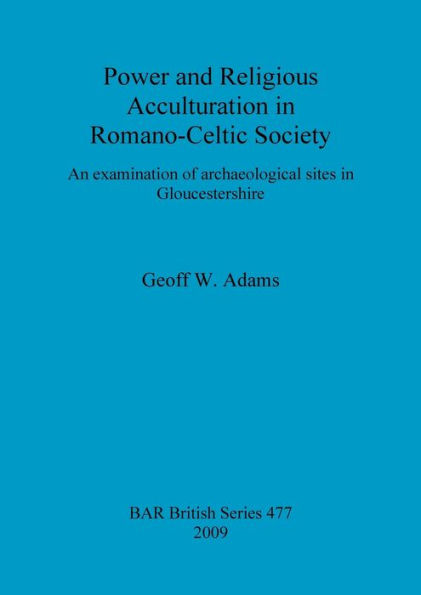
Power and Religious Acculturation in Romano-Celtic Society: An Examination of Archaeological Sites in Gloucestershire in Chattanooga, TN
Current price: $112.50
Barnes and Noble
Power and Religious Acculturation in Romano-Celtic Society: An Examination of Archaeological Sites in Gloucestershire in Chattanooga, TN
Current price: $112.50
Loading Inventory...
Size: OS
The intention of the present study is to determine two key elements: to ascertain the extent of Romanisation in the region of Gloucestershire (south-west England), and to examine the dominating profile of the native élites within this acculturation process. Both the villas and the Romano-Celtic temples provide insight into these elements, but in different sociological spheres. However, if a connection between the two types of structures can be drawn then the possibility for understanding the romanitas of such constructions is improved exponentially. In many ways, both the villas and Romano-Celtic temples epitomise the social dominance of the local aristocracy and their social expression of affiliation with the provincial administration. There are several aspects to be discussed throughout this investigation, but the central focus has been upon the native aristocracy and their response to Rome. This has revealed that the Romanised buildings erected by the native nobility have created an appearance of Romanisation, with little significance for the nature of society in Britain as a whole. To support this hypothesis, it is also helpful to consider the elements of this apparent Romanisation, namely the archaeological evidence for rural Romano-Celtic temples and Romanised villas in Britain. Some examination of the urban centres has been undertaken, but the reason for this is to gain a clear picture of all the social conditions during the occupation. Temples of the Romano-Celtic style were one of the features of the landscape in Britain during the Roman occupation, but it has been argued in this study that the continuation of these temples has produced a false representation of the religion and the Romanisation of the period. This is an attempt, therefore, to determine the extent of the social and religious impact of Rome on the native population, and on those who accepted Roman beliefs.
The intention of the present study is to determine two key elements: to ascertain the extent of Romanisation in the region of Gloucestershire (south-west England), and to examine the dominating profile of the native élites within this acculturation process. Both the villas and the Romano-Celtic temples provide insight into these elements, but in different sociological spheres. However, if a connection between the two types of structures can be drawn then the possibility for understanding the romanitas of such constructions is improved exponentially. In many ways, both the villas and Romano-Celtic temples epitomise the social dominance of the local aristocracy and their social expression of affiliation with the provincial administration. There are several aspects to be discussed throughout this investigation, but the central focus has been upon the native aristocracy and their response to Rome. This has revealed that the Romanised buildings erected by the native nobility have created an appearance of Romanisation, with little significance for the nature of society in Britain as a whole. To support this hypothesis, it is also helpful to consider the elements of this apparent Romanisation, namely the archaeological evidence for rural Romano-Celtic temples and Romanised villas in Britain. Some examination of the urban centres has been undertaken, but the reason for this is to gain a clear picture of all the social conditions during the occupation. Temples of the Romano-Celtic style were one of the features of the landscape in Britain during the Roman occupation, but it has been argued in this study that the continuation of these temples has produced a false representation of the religion and the Romanisation of the period. This is an attempt, therefore, to determine the extent of the social and religious impact of Rome on the native population, and on those who accepted Roman beliefs.
You May Also Like









More About Barnes and Noble at Hamilton Place
Barnes & Noble is the world’s largest retail bookseller and a leading retailer of content, digital media and educational products. Our Nook Digital business offers a lineup of NOOK® tablets and e-Readers and an expansive collection of digital reading content through the NOOK Store®. Barnes & Noble’s mission is to operate the best omni-channel specialty retail business in America, helping both our customers and booksellers reach their aspirations, while being a credit to the communities we serve.
2100 Hamilton Pl Blvd, Chattanooga, TN 37421, United States
Find Barnes and Noble at Hamilton Place in Chattanooga, TN
Visit Barnes and Noble at Hamilton Place in Chattanooga, TN