
Home
Political Affairs of the Heart: Female Travel Writers, Sentimental Travelogue, and Revolution, 1775-1800
Barnes and Noble
Loading Inventory...
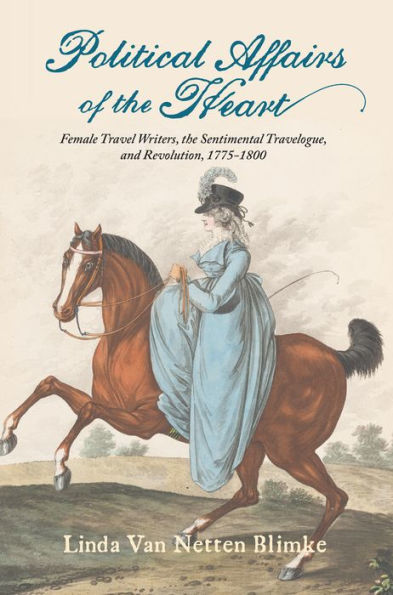
Political Affairs of the Heart: Female Travel Writers, Sentimental Travelogue, and Revolution, 1775-1800 in Chattanooga, TN
Current price: $37.95
Barnes and Noble
Political Affairs of the Heart: Female Travel Writers, Sentimental Travelogue, and Revolution, 1775-1800 in Chattanooga, TN
Current price: $37.95
Loading Inventory...
Size: Paperback
Richly researched and engagingly written,
Political Affairs of the Heart
traces the emergence of female sentimental travel writing in late eighteenth-century Britain, and posits its centrality to women’s engagement with national and gender politics. This study examines four travel narratives written by women between 1774 and 1795, convincingly arguing that they effectively deploy the discourse of sensibility to engage with debates around Britain’s national identity during the French and American Revolutions. Van Netten Blimke contends that Laurence Sterne’s
A Sentimental Journey
(1768)which first introduced sentimental discourse to the traveloguefacilitated women’s gradual inclusion into this previously male-dominated genre, effectively paving the way for women to influence the country’s sociopolitical transformation. These four previously understudied works successfully combine eyewitness authority with the language of sensibility to mount impassioned interventions in their nation’s perception and practice of revolutionary politics, at a time when its national identity was most in flux.
Political Affairs of the Heart
traces the emergence of female sentimental travel writing in late eighteenth-century Britain, and posits its centrality to women’s engagement with national and gender politics. This study examines four travel narratives written by women between 1774 and 1795, convincingly arguing that they effectively deploy the discourse of sensibility to engage with debates around Britain’s national identity during the French and American Revolutions. Van Netten Blimke contends that Laurence Sterne’s
A Sentimental Journey
(1768)which first introduced sentimental discourse to the traveloguefacilitated women’s gradual inclusion into this previously male-dominated genre, effectively paving the way for women to influence the country’s sociopolitical transformation. These four previously understudied works successfully combine eyewitness authority with the language of sensibility to mount impassioned interventions in their nation’s perception and practice of revolutionary politics, at a time when its national identity was most in flux.
Richly researched and engagingly written,
Political Affairs of the Heart
traces the emergence of female sentimental travel writing in late eighteenth-century Britain, and posits its centrality to women’s engagement with national and gender politics. This study examines four travel narratives written by women between 1774 and 1795, convincingly arguing that they effectively deploy the discourse of sensibility to engage with debates around Britain’s national identity during the French and American Revolutions. Van Netten Blimke contends that Laurence Sterne’s
A Sentimental Journey
(1768)which first introduced sentimental discourse to the traveloguefacilitated women’s gradual inclusion into this previously male-dominated genre, effectively paving the way for women to influence the country’s sociopolitical transformation. These four previously understudied works successfully combine eyewitness authority with the language of sensibility to mount impassioned interventions in their nation’s perception and practice of revolutionary politics, at a time when its national identity was most in flux.
Political Affairs of the Heart
traces the emergence of female sentimental travel writing in late eighteenth-century Britain, and posits its centrality to women’s engagement with national and gender politics. This study examines four travel narratives written by women between 1774 and 1795, convincingly arguing that they effectively deploy the discourse of sensibility to engage with debates around Britain’s national identity during the French and American Revolutions. Van Netten Blimke contends that Laurence Sterne’s
A Sentimental Journey
(1768)which first introduced sentimental discourse to the traveloguefacilitated women’s gradual inclusion into this previously male-dominated genre, effectively paving the way for women to influence the country’s sociopolitical transformation. These four previously understudied works successfully combine eyewitness authority with the language of sensibility to mount impassioned interventions in their nation’s perception and practice of revolutionary politics, at a time when its national identity was most in flux.
You May Also Like















More About Barnes and Noble at Hamilton Place
Barnes & Noble is the world’s largest retail bookseller and a leading retailer of content, digital media and educational products. Our Nook Digital business offers a lineup of NOOK® tablets and e-Readers and an expansive collection of digital reading content through the NOOK Store®. Barnes & Noble’s mission is to operate the best omni-channel specialty retail business in America, helping both our customers and booksellers reach their aspirations, while being a credit to the communities we serve.
2100 Hamilton Pl Blvd, Chattanooga, TN 37421, United States
Find Barnes and Noble at Hamilton Place in Chattanooga, TN
Visit Barnes and Noble at Hamilton Place in Chattanooga, TN
