
Home
Pluralism, Property, and Radical Transformation
Barnes and Noble
Loading Inventory...
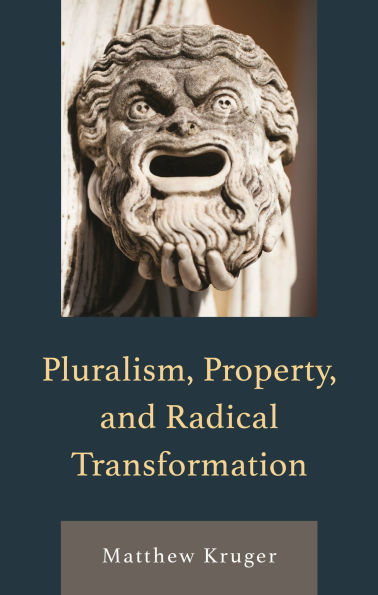
Pluralism, Property, and Radical Transformation in Chattanooga, TN
Current price: $130.00
Barnes and Noble
Pluralism, Property, and Radical Transformation in Chattanooga, TN
Current price: $130.00
Loading Inventory...
Size: Hardcover
Property theorythe justification for who has access to which resources, for what ends, and whenlies at the heart of political, social and legal thought. Yet from Locke to Bentham, Hayek, Hegel, Marx, and up to the present, thinkers on this subject have taken for granted that there is one right answer to the question: What is Man?
Pluralism, Property, and Radical Transformation offers a novel property theory that rejects this assumption. Drawing on intellectual history, ethics, and political economy, Matthew Kruger argues that we must seriously consider the fact that life is constituted by tragic conflicts between goods. Instead of designing a prescriptive model based on a single anthropology, theory must limit its work to descriptions of what can be done. It must identify goods that give life meaning, the objectrelations that form them, and the rights needed to facilitate themand leave the decision on 'What is to be done' in light of their inevitable conflicts to politics and law.
Demonstrating the practical relevance of this theory, the book concludes with an analysis of how South Africa's Constitution embraces it, along with its democratic implications and radical and transformative potential.
Pluralism, Property, and Radical Transformation offers a novel property theory that rejects this assumption. Drawing on intellectual history, ethics, and political economy, Matthew Kruger argues that we must seriously consider the fact that life is constituted by tragic conflicts between goods. Instead of designing a prescriptive model based on a single anthropology, theory must limit its work to descriptions of what can be done. It must identify goods that give life meaning, the objectrelations that form them, and the rights needed to facilitate themand leave the decision on 'What is to be done' in light of their inevitable conflicts to politics and law.
Demonstrating the practical relevance of this theory, the book concludes with an analysis of how South Africa's Constitution embraces it, along with its democratic implications and radical and transformative potential.
Property theorythe justification for who has access to which resources, for what ends, and whenlies at the heart of political, social and legal thought. Yet from Locke to Bentham, Hayek, Hegel, Marx, and up to the present, thinkers on this subject have taken for granted that there is one right answer to the question: What is Man?
Pluralism, Property, and Radical Transformation offers a novel property theory that rejects this assumption. Drawing on intellectual history, ethics, and political economy, Matthew Kruger argues that we must seriously consider the fact that life is constituted by tragic conflicts between goods. Instead of designing a prescriptive model based on a single anthropology, theory must limit its work to descriptions of what can be done. It must identify goods that give life meaning, the objectrelations that form them, and the rights needed to facilitate themand leave the decision on 'What is to be done' in light of their inevitable conflicts to politics and law.
Demonstrating the practical relevance of this theory, the book concludes with an analysis of how South Africa's Constitution embraces it, along with its democratic implications and radical and transformative potential.
Pluralism, Property, and Radical Transformation offers a novel property theory that rejects this assumption. Drawing on intellectual history, ethics, and political economy, Matthew Kruger argues that we must seriously consider the fact that life is constituted by tragic conflicts between goods. Instead of designing a prescriptive model based on a single anthropology, theory must limit its work to descriptions of what can be done. It must identify goods that give life meaning, the objectrelations that form them, and the rights needed to facilitate themand leave the decision on 'What is to be done' in light of their inevitable conflicts to politics and law.
Demonstrating the practical relevance of this theory, the book concludes with an analysis of how South Africa's Constitution embraces it, along with its democratic implications and radical and transformative potential.
You May Also Like










More About Barnes and Noble at Hamilton Place
Barnes & Noble is the world’s largest retail bookseller and a leading retailer of content, digital media and educational products. Our Nook Digital business offers a lineup of NOOK® tablets and e-Readers and an expansive collection of digital reading content through the NOOK Store®. Barnes & Noble’s mission is to operate the best omni-channel specialty retail business in America, helping both our customers and booksellers reach their aspirations, while being a credit to the communities we serve.
2100 Hamilton Pl Blvd, Chattanooga, TN 37421, United States
Find Barnes and Noble at Hamilton Place in Chattanooga, TN
Visit Barnes and Noble at Hamilton Place in Chattanooga, TN