
Home
Placing Names: Enriching and Integrating Gazetteers
Barnes and Noble
Loading Inventory...
Placing Names: Enriching and Integrating Gazetteers in Chattanooga, TN
Current price: $50.00
Barnes and Noble
Placing Names: Enriching and Integrating Gazetteers in Chattanooga, TN
Current price: $50.00
Loading Inventory...
Size: Hardcover
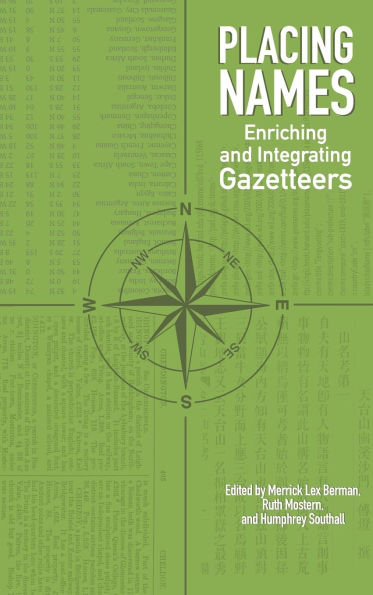
Well before the innovation of maps, gazetteers served as the main geographic referencing system for hundreds of years. Consisting of a specialized index of place names, gazetteers traditionally linked descriptive elements with topographic features and coordinates.
Placing Names
is inspired by that tradition of discursive place-making and by contemporary approaches to digital data management that have revived the gazetteer and guided its development in recent decades. Adopted by researchers in the Digital Humanities and Spatial Sciences, gazetteers provide a way to model the kind of complex cultural, vernacular, and perspectival ideas of place that can be located in texts and expanded into an interconnected framework of naming history. This volume brings together leading and emergent scholars to examine the history of the gazetteer, its important role in geographic information science, and its use to further the reach and impact of spatial reasoning into the digital age.
Placing Names
is inspired by that tradition of discursive place-making and by contemporary approaches to digital data management that have revived the gazetteer and guided its development in recent decades. Adopted by researchers in the Digital Humanities and Spatial Sciences, gazetteers provide a way to model the kind of complex cultural, vernacular, and perspectival ideas of place that can be located in texts and expanded into an interconnected framework of naming history. This volume brings together leading and emergent scholars to examine the history of the gazetteer, its important role in geographic information science, and its use to further the reach and impact of spatial reasoning into the digital age.
Well before the innovation of maps, gazetteers served as the main geographic referencing system for hundreds of years. Consisting of a specialized index of place names, gazetteers traditionally linked descriptive elements with topographic features and coordinates.
Placing Names
is inspired by that tradition of discursive place-making and by contemporary approaches to digital data management that have revived the gazetteer and guided its development in recent decades. Adopted by researchers in the Digital Humanities and Spatial Sciences, gazetteers provide a way to model the kind of complex cultural, vernacular, and perspectival ideas of place that can be located in texts and expanded into an interconnected framework of naming history. This volume brings together leading and emergent scholars to examine the history of the gazetteer, its important role in geographic information science, and its use to further the reach and impact of spatial reasoning into the digital age.
Placing Names
is inspired by that tradition of discursive place-making and by contemporary approaches to digital data management that have revived the gazetteer and guided its development in recent decades. Adopted by researchers in the Digital Humanities and Spatial Sciences, gazetteers provide a way to model the kind of complex cultural, vernacular, and perspectival ideas of place that can be located in texts and expanded into an interconnected framework of naming history. This volume brings together leading and emergent scholars to examine the history of the gazetteer, its important role in geographic information science, and its use to further the reach and impact of spatial reasoning into the digital age.
You May Also Like













More About Barnes and Noble at Hamilton Place
Barnes & Noble is the world’s largest retail bookseller and a leading retailer of content, digital media and educational products. Our Nook Digital business offers a lineup of NOOK® tablets and e-Readers and an expansive collection of digital reading content through the NOOK Store®. Barnes & Noble’s mission is to operate the best omni-channel specialty retail business in America, helping both our customers and booksellers reach their aspirations, while being a credit to the communities we serve.
2100 Hamilton Pl Blvd, Chattanooga, TN 37421, United States
Find Barnes and Noble at Hamilton Place in Chattanooga, TN
Visit Barnes and Noble at Hamilton Place in Chattanooga, TN
