
Home
Philosophers at Table: On Food and Being Human
Barnes and Noble
Loading Inventory...
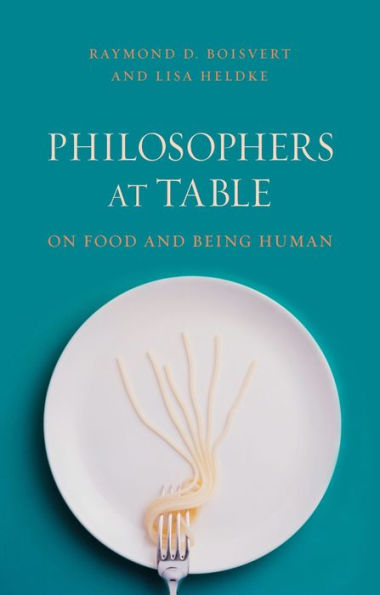
Philosophers at Table: On Food and Being Human in Chattanooga, TN
Current price: $29.00
Barnes and Noble
Philosophers at Table: On Food and Being Human in Chattanooga, TN
Current price: $29.00
Loading Inventory...
Size: OS
When you boil it down, one of the most important things we do each day is eat. The question of eatingwhat, and howmay seem simple at first, but it is dense with complex meanings, reflecting myriad roles that food plays and has played over the centuries. In fact, as Raymond D. Boisvert and Lisa Heldke show in this book, it’s difficult to imagine a more philosophically charged act than eating.
Philosophers at Table
explores the philosophical scaffolding that supports this crucial aspect of everyday life, showing that we are not just creatures with minds, but also with stomachs.
Examining a cornucopia of literary works, myths, histories, and filmnot to mention philosophical ideasthe authors make the case for a bona fide philosophy of food. They look at
Babette’s Feast
as an argument for hospitality as a central ethical virtue. They compare fast food in Accra to the molecular gastronomy of Spain as a way of considering the nature of food as art. And they bite into a slugwhich is, unsurprisingly, completely grossto explore tasting as a learning tool, a way of knowing. A surprising, original take on something we have not philosophically savored enough,
invites readers to think in fresh ways about the simple and important act of eating.
Philosophers at Table
explores the philosophical scaffolding that supports this crucial aspect of everyday life, showing that we are not just creatures with minds, but also with stomachs.
Examining a cornucopia of literary works, myths, histories, and filmnot to mention philosophical ideasthe authors make the case for a bona fide philosophy of food. They look at
Babette’s Feast
as an argument for hospitality as a central ethical virtue. They compare fast food in Accra to the molecular gastronomy of Spain as a way of considering the nature of food as art. And they bite into a slugwhich is, unsurprisingly, completely grossto explore tasting as a learning tool, a way of knowing. A surprising, original take on something we have not philosophically savored enough,
invites readers to think in fresh ways about the simple and important act of eating.
When you boil it down, one of the most important things we do each day is eat. The question of eatingwhat, and howmay seem simple at first, but it is dense with complex meanings, reflecting myriad roles that food plays and has played over the centuries. In fact, as Raymond D. Boisvert and Lisa Heldke show in this book, it’s difficult to imagine a more philosophically charged act than eating.
Philosophers at Table
explores the philosophical scaffolding that supports this crucial aspect of everyday life, showing that we are not just creatures with minds, but also with stomachs.
Examining a cornucopia of literary works, myths, histories, and filmnot to mention philosophical ideasthe authors make the case for a bona fide philosophy of food. They look at
Babette’s Feast
as an argument for hospitality as a central ethical virtue. They compare fast food in Accra to the molecular gastronomy of Spain as a way of considering the nature of food as art. And they bite into a slugwhich is, unsurprisingly, completely grossto explore tasting as a learning tool, a way of knowing. A surprising, original take on something we have not philosophically savored enough,
invites readers to think in fresh ways about the simple and important act of eating.
Philosophers at Table
explores the philosophical scaffolding that supports this crucial aspect of everyday life, showing that we are not just creatures with minds, but also with stomachs.
Examining a cornucopia of literary works, myths, histories, and filmnot to mention philosophical ideasthe authors make the case for a bona fide philosophy of food. They look at
Babette’s Feast
as an argument for hospitality as a central ethical virtue. They compare fast food in Accra to the molecular gastronomy of Spain as a way of considering the nature of food as art. And they bite into a slugwhich is, unsurprisingly, completely grossto explore tasting as a learning tool, a way of knowing. A surprising, original take on something we have not philosophically savored enough,
invites readers to think in fresh ways about the simple and important act of eating.
You May Also Like










More About Barnes and Noble at Hamilton Place
Barnes & Noble is the world’s largest retail bookseller and a leading retailer of content, digital media and educational products. Our Nook Digital business offers a lineup of NOOK® tablets and e-Readers and an expansive collection of digital reading content through the NOOK Store®. Barnes & Noble’s mission is to operate the best omni-channel specialty retail business in America, helping both our customers and booksellers reach their aspirations, while being a credit to the communities we serve.
2100 Hamilton Pl Blvd, Chattanooga, TN 37421, United States
Find Barnes and Noble at Hamilton Place in Chattanooga, TN
Visit Barnes and Noble at Hamilton Place in Chattanooga, TN
