
Home
Pharmacopoeias, Drug Regulation, and Empires: Making Medicines Official Britain's Imperial World, 1618-1968
Barnes and Noble
Loading Inventory...
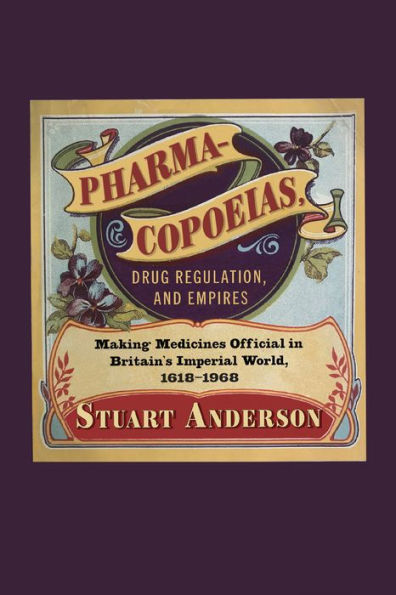
Pharmacopoeias, Drug Regulation, and Empires: Making Medicines Official Britain's Imperial World, 1618-1968 in Chattanooga, TN
Current price: $44.95
Barnes and Noble
Pharmacopoeias, Drug Regulation, and Empires: Making Medicines Official Britain's Imperial World, 1618-1968 in Chattanooga, TN
Current price: $44.95
Loading Inventory...
Size: Paperback
The word "pharmacopoeia" has come to have many meanings, although it is commonly understood to be a book describing approved compositions and standards for drugs. In 1813 the Royal College of Physicians of London considered a proposal to develop an imperial British pharmacopoeia – at a time when separate official pharmacopoeias existed for England, Scotland, and Ireland. A unified British pharmacopoeia was published in 1864, and by 1914 it was considered suitable for the whole Empire. Pharmacopoeias, Drug Regulation, and Empires traces the 350-year development of officially sanctioned pharmacopoeias across the British Empire, first from local to national pharmacopoeias, and later to a standardized pharmacopoeia that would apply throughout Britain’s imperial world. The evolution of British pharmacopoeias and the professionalization of medicine saw developments including a transition from Galenic principles to germ theory, and a shift from plant-based to chemical medicines. While other colonial powers in Europe usually imposed metropolitan pharmacopoeias across their colonies, Britain consulted with practitioners throughout its Empire. As the scope of the pharmacopoeia widened, the process of agreeing upon drug standardization became more complex and fraught. A wide range of issues was exposed, from bioprospecting and the inclusion of indigenous medicines in pharmacopoeias, to adulteration and demands for the substitution of pharmacopoeial drugs with locally available ones. Pharmacopoeias, Drug Regulation, and Empires uses the evolution of an imperial pharmacopoeia in Britain as a vehicle for exploring the hegemonic power of European colonial powers in the medical field, and the meaning of pharmacopoeia more broadly.
The word "pharmacopoeia" has come to have many meanings, although it is commonly understood to be a book describing approved compositions and standards for drugs. In 1813 the Royal College of Physicians of London considered a proposal to develop an imperial British pharmacopoeia – at a time when separate official pharmacopoeias existed for England, Scotland, and Ireland. A unified British pharmacopoeia was published in 1864, and by 1914 it was considered suitable for the whole Empire. Pharmacopoeias, Drug Regulation, and Empires traces the 350-year development of officially sanctioned pharmacopoeias across the British Empire, first from local to national pharmacopoeias, and later to a standardized pharmacopoeia that would apply throughout Britain’s imperial world. The evolution of British pharmacopoeias and the professionalization of medicine saw developments including a transition from Galenic principles to germ theory, and a shift from plant-based to chemical medicines. While other colonial powers in Europe usually imposed metropolitan pharmacopoeias across their colonies, Britain consulted with practitioners throughout its Empire. As the scope of the pharmacopoeia widened, the process of agreeing upon drug standardization became more complex and fraught. A wide range of issues was exposed, from bioprospecting and the inclusion of indigenous medicines in pharmacopoeias, to adulteration and demands for the substitution of pharmacopoeial drugs with locally available ones. Pharmacopoeias, Drug Regulation, and Empires uses the evolution of an imperial pharmacopoeia in Britain as a vehicle for exploring the hegemonic power of European colonial powers in the medical field, and the meaning of pharmacopoeia more broadly.
You May Also Like









More About Barnes and Noble at Hamilton Place
Barnes & Noble is the world’s largest retail bookseller and a leading retailer of content, digital media and educational products. Our Nook Digital business offers a lineup of NOOK® tablets and e-Readers and an expansive collection of digital reading content through the NOOK Store®. Barnes & Noble’s mission is to operate the best omni-channel specialty retail business in America, helping both our customers and booksellers reach their aspirations, while being a credit to the communities we serve.
2100 Hamilton Pl Blvd, Chattanooga, TN 37421, United States
Find Barnes and Noble at Hamilton Place in Chattanooga, TN
Visit Barnes and Noble at Hamilton Place in Chattanooga, TN
