
Home
Pharaoh Akhenaten, The God of Light
Barnes and Noble
Loading Inventory...
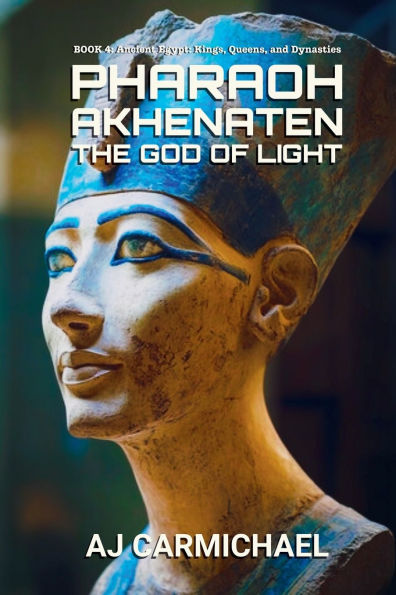
Pharaoh Akhenaten, The God of Light in Chattanooga, TN
Current price: $4.99
Barnes and Noble
Pharaoh Akhenaten, The God of Light in Chattanooga, TN
Current price: $4.99
Loading Inventory...
Size: Audiobook
For over two millennia, the gods of Egypt ruled in harmonious plurality-Amun, Re, Ptah, and countless others sustaining the rhythms of life along the Nile. Then came Akhenaten. He dared to do what no Egyptian king had attempted: to silence the chorus of gods and proclaim one god alone, Aten, the radiant sun disk. His vision reshaped religion, art, politics, and even the cityscape itself, with the founding of a dazzling new capital, Amarna. Yet his revolution burned bright and brief. Within a generation, his god was cast down, his temples dismantled, and his memory cursed.
This book explores the drama of Akhenaten's reign in all its facets-his inheritance from Amenhotep III's golden age, his clash with the powerful priesthood of Amun, the radical art and theology of Amarna, and the swift collapse of Atenism after his death. Drawing on archaeology, history, and cultural memory, it reveals how Akhenaten's bold experiment stands as both precursor and warning to later monotheisms.
Was he a visionary prophet, a tyrant blinded by zeal, or simply a dreamer undone by his own exclusivity?
Akhenaten's Revolution
examines one of history's most fascinating figures, whose shadow still lingers in debates about faith, power, and the fragile balance between tradition and change.
This book explores the drama of Akhenaten's reign in all its facets-his inheritance from Amenhotep III's golden age, his clash with the powerful priesthood of Amun, the radical art and theology of Amarna, and the swift collapse of Atenism after his death. Drawing on archaeology, history, and cultural memory, it reveals how Akhenaten's bold experiment stands as both precursor and warning to later monotheisms.
Was he a visionary prophet, a tyrant blinded by zeal, or simply a dreamer undone by his own exclusivity?
Akhenaten's Revolution
examines one of history's most fascinating figures, whose shadow still lingers in debates about faith, power, and the fragile balance between tradition and change.
For over two millennia, the gods of Egypt ruled in harmonious plurality-Amun, Re, Ptah, and countless others sustaining the rhythms of life along the Nile. Then came Akhenaten. He dared to do what no Egyptian king had attempted: to silence the chorus of gods and proclaim one god alone, Aten, the radiant sun disk. His vision reshaped religion, art, politics, and even the cityscape itself, with the founding of a dazzling new capital, Amarna. Yet his revolution burned bright and brief. Within a generation, his god was cast down, his temples dismantled, and his memory cursed.
This book explores the drama of Akhenaten's reign in all its facets-his inheritance from Amenhotep III's golden age, his clash with the powerful priesthood of Amun, the radical art and theology of Amarna, and the swift collapse of Atenism after his death. Drawing on archaeology, history, and cultural memory, it reveals how Akhenaten's bold experiment stands as both precursor and warning to later monotheisms.
Was he a visionary prophet, a tyrant blinded by zeal, or simply a dreamer undone by his own exclusivity?
Akhenaten's Revolution
examines one of history's most fascinating figures, whose shadow still lingers in debates about faith, power, and the fragile balance between tradition and change.
This book explores the drama of Akhenaten's reign in all its facets-his inheritance from Amenhotep III's golden age, his clash with the powerful priesthood of Amun, the radical art and theology of Amarna, and the swift collapse of Atenism after his death. Drawing on archaeology, history, and cultural memory, it reveals how Akhenaten's bold experiment stands as both precursor and warning to later monotheisms.
Was he a visionary prophet, a tyrant blinded by zeal, or simply a dreamer undone by his own exclusivity?
Akhenaten's Revolution
examines one of history's most fascinating figures, whose shadow still lingers in debates about faith, power, and the fragile balance between tradition and change.
You May Also Like











More About Barnes and Noble at Hamilton Place
Barnes & Noble is the world’s largest retail bookseller and a leading retailer of content, digital media and educational products. Our Nook Digital business offers a lineup of NOOK® tablets and e-Readers and an expansive collection of digital reading content through the NOOK Store®. Barnes & Noble’s mission is to operate the best omni-channel specialty retail business in America, helping both our customers and booksellers reach their aspirations, while being a credit to the communities we serve.
2100 Hamilton Pl Blvd, Chattanooga, TN 37421, United States
Find Barnes and Noble at Hamilton Place in Chattanooga, TN
Visit Barnes and Noble at Hamilton Place in Chattanooga, TN