
Home
Peace by the Holy Spirit and Holy Anger: An Exegetical Study of Ephesians 4:26
Barnes and Noble
Loading Inventory...
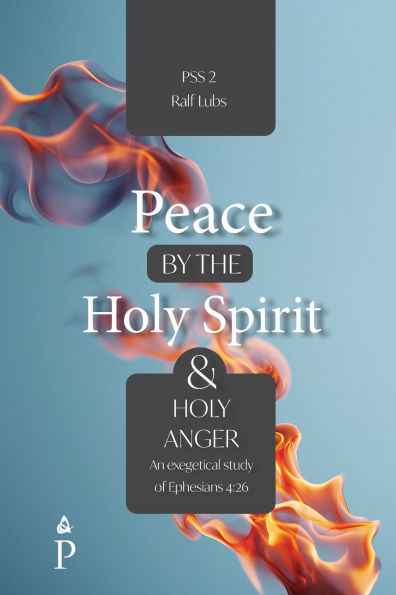
Peace by the Holy Spirit and Holy Anger: An Exegetical Study of Ephesians 4:26 in Chattanooga, TN
Current price: $17.99
Barnes and Noble
Peace by the Holy Spirit and Holy Anger: An Exegetical Study of Ephesians 4:26 in Chattanooga, TN
Current price: $17.99
Loading Inventory...
Size: OS
Be angry, and yet do not sin;
do not let the sun go down on your anger.
A problem passage. How to understand Paul's communication in Ephesians 4:26? Why does he say, "Be angry" in verse 26 and in verse 31 of the same chapter, "Get rid of all anger"? Does Paul give an order to be angry f irst and says the opposite later? Is anger always sin or is it not sin "until the sun goes down"?
This verse has widely been understood as to imply that getting angry is not sin if it is 'righteous' or 'holy' anger. Thus, many conflicts caused by Christians in different relationships have been justified by this label.
On the other hand, identifying all anger as sinful has led to lots of frustration, even depression, projected anger, and other psychological effects of suppressed anger.
A sound biblical exegesis of Ephesians 4:26 leads to an understanding of what Paul, under the inspiration of the Holy Spirit, probably meant. It contributes to find ways to avoid harmful attitudes and behaviour of Christians. This in turn works thus for the health of the church and the individual Christian in his social surrounding for the progress of the gospel and God's glory.
Hypotheses
1. Orgizesthe/ὀργίζεσθε is not an indicative, but an imperative, having the function of a challenge.
2. Paul does not change David's intention in Psalm 4:5 but communicates its very message by applying the underlying principle to his audience, a use that may be labelled here as historical correspondence.
3. Ephesians 4:26 flows perfectly well within its literary and NT theological contexts.
4. Paul's use of the term 'anger' does not refer to the secondary emotion, but, according to the usus loquendi, to its destructive expression.
5. Paul's advice is theologically, pastorally, and therapeutically sound and may be applied effectively today.
do not let the sun go down on your anger.
A problem passage. How to understand Paul's communication in Ephesians 4:26? Why does he say, "Be angry" in verse 26 and in verse 31 of the same chapter, "Get rid of all anger"? Does Paul give an order to be angry f irst and says the opposite later? Is anger always sin or is it not sin "until the sun goes down"?
This verse has widely been understood as to imply that getting angry is not sin if it is 'righteous' or 'holy' anger. Thus, many conflicts caused by Christians in different relationships have been justified by this label.
On the other hand, identifying all anger as sinful has led to lots of frustration, even depression, projected anger, and other psychological effects of suppressed anger.
A sound biblical exegesis of Ephesians 4:26 leads to an understanding of what Paul, under the inspiration of the Holy Spirit, probably meant. It contributes to find ways to avoid harmful attitudes and behaviour of Christians. This in turn works thus for the health of the church and the individual Christian in his social surrounding for the progress of the gospel and God's glory.
Hypotheses
1. Orgizesthe/ὀργίζεσθε is not an indicative, but an imperative, having the function of a challenge.
2. Paul does not change David's intention in Psalm 4:5 but communicates its very message by applying the underlying principle to his audience, a use that may be labelled here as historical correspondence.
3. Ephesians 4:26 flows perfectly well within its literary and NT theological contexts.
4. Paul's use of the term 'anger' does not refer to the secondary emotion, but, according to the usus loquendi, to its destructive expression.
5. Paul's advice is theologically, pastorally, and therapeutically sound and may be applied effectively today.
Be angry, and yet do not sin;
do not let the sun go down on your anger.
A problem passage. How to understand Paul's communication in Ephesians 4:26? Why does he say, "Be angry" in verse 26 and in verse 31 of the same chapter, "Get rid of all anger"? Does Paul give an order to be angry f irst and says the opposite later? Is anger always sin or is it not sin "until the sun goes down"?
This verse has widely been understood as to imply that getting angry is not sin if it is 'righteous' or 'holy' anger. Thus, many conflicts caused by Christians in different relationships have been justified by this label.
On the other hand, identifying all anger as sinful has led to lots of frustration, even depression, projected anger, and other psychological effects of suppressed anger.
A sound biblical exegesis of Ephesians 4:26 leads to an understanding of what Paul, under the inspiration of the Holy Spirit, probably meant. It contributes to find ways to avoid harmful attitudes and behaviour of Christians. This in turn works thus for the health of the church and the individual Christian in his social surrounding for the progress of the gospel and God's glory.
Hypotheses
1. Orgizesthe/ὀργίζεσθε is not an indicative, but an imperative, having the function of a challenge.
2. Paul does not change David's intention in Psalm 4:5 but communicates its very message by applying the underlying principle to his audience, a use that may be labelled here as historical correspondence.
3. Ephesians 4:26 flows perfectly well within its literary and NT theological contexts.
4. Paul's use of the term 'anger' does not refer to the secondary emotion, but, according to the usus loquendi, to its destructive expression.
5. Paul's advice is theologically, pastorally, and therapeutically sound and may be applied effectively today.
do not let the sun go down on your anger.
A problem passage. How to understand Paul's communication in Ephesians 4:26? Why does he say, "Be angry" in verse 26 and in verse 31 of the same chapter, "Get rid of all anger"? Does Paul give an order to be angry f irst and says the opposite later? Is anger always sin or is it not sin "until the sun goes down"?
This verse has widely been understood as to imply that getting angry is not sin if it is 'righteous' or 'holy' anger. Thus, many conflicts caused by Christians in different relationships have been justified by this label.
On the other hand, identifying all anger as sinful has led to lots of frustration, even depression, projected anger, and other psychological effects of suppressed anger.
A sound biblical exegesis of Ephesians 4:26 leads to an understanding of what Paul, under the inspiration of the Holy Spirit, probably meant. It contributes to find ways to avoid harmful attitudes and behaviour of Christians. This in turn works thus for the health of the church and the individual Christian in his social surrounding for the progress of the gospel and God's glory.
Hypotheses
1. Orgizesthe/ὀργίζεσθε is not an indicative, but an imperative, having the function of a challenge.
2. Paul does not change David's intention in Psalm 4:5 but communicates its very message by applying the underlying principle to his audience, a use that may be labelled here as historical correspondence.
3. Ephesians 4:26 flows perfectly well within its literary and NT theological contexts.
4. Paul's use of the term 'anger' does not refer to the secondary emotion, but, according to the usus loquendi, to its destructive expression.
5. Paul's advice is theologically, pastorally, and therapeutically sound and may be applied effectively today.
You May Also Like












More About Barnes and Noble at Hamilton Place
Barnes & Noble is the world’s largest retail bookseller and a leading retailer of content, digital media and educational products. Our Nook Digital business offers a lineup of NOOK® tablets and e-Readers and an expansive collection of digital reading content through the NOOK Store®. Barnes & Noble’s mission is to operate the best omni-channel specialty retail business in America, helping both our customers and booksellers reach their aspirations, while being a credit to the communities we serve.
2100 Hamilton Pl Blvd, Chattanooga, TN 37421, United States
Find Barnes and Noble at Hamilton Place in Chattanooga, TN
Visit Barnes and Noble at Hamilton Place in Chattanooga, TN
