
Home
Pauline Style and Renaissance Literary Culture
Barnes and Noble
Loading Inventory...
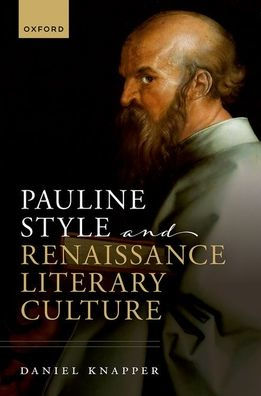
Pauline Style and Renaissance Literary Culture in Chattanooga, TN
Current price: $100.00
Barnes and Noble
Pauline Style and Renaissance Literary Culture in Chattanooga, TN
Current price: $100.00
Loading Inventory...
Size: Hardcover
As a major source of debate on theological topics such as the resurrection of body and soul, justification by faith, and predestination, the New Testament epistles of Saint Paul played a central role in the development of religious thought and practice across Reformation Europe. But in a period when Christian belief and Biblical knowledge permeated every aspect of human life, how did Paul's epistles inform Europe's literary and rhetorical cultures? How did scholars and artists respond, not just to Paul's provocative ideas, but also to his provocative manner of expressing them?
Pauline Style and Renaissance Literary Culture
is the first critical history of Saint Paul's rhetorical style in the Renaissance, 1500-1700. It explores critical and creative responses to Paul's style across a wide range of mediums and genres, at a time when two powerful and confluent cultural forcesHumanism and Protestantismprofoundly altered conceptions of Biblical writing. Daniel Knapper argues that Paul's style developed into one of the most theoretically productive and artistically provocative styles of the Renaissance primarily because of its controversial reception among European Biblical humanists, who struggled to define and assess its volatile features, qualities, and expressive functions. This theoretical discourse directly impacted literary activity in England, shaping how and why English writers imitated Paul's style in their literary works. From the plays of William Shakespeare, to the devotional poetry of John Donne, to the courtly sermons of Lancelot Andrewes, to the polemical prose and epic poetry of John Milton, English writers imitated Paul's styleor, more precisely, a set of critically and culturally determined aspects of Paul's styleto produce specific aesthetic effects, reflect on pressing theological problems, and engage in heated religious controversies.
In tracing the reception of Paul's style in Renaissance literary culture, this groundbreaking study reveals how and why English writers drew on Biblical models to develop their literary practices, even as it reveals how issues of style and rhetoric shaped Biblical interpretation and theological discourse in the contentious religious crucible of Reformation Europe.
Pauline Style and Renaissance Literary Culture
is the first critical history of Saint Paul's rhetorical style in the Renaissance, 1500-1700. It explores critical and creative responses to Paul's style across a wide range of mediums and genres, at a time when two powerful and confluent cultural forcesHumanism and Protestantismprofoundly altered conceptions of Biblical writing. Daniel Knapper argues that Paul's style developed into one of the most theoretically productive and artistically provocative styles of the Renaissance primarily because of its controversial reception among European Biblical humanists, who struggled to define and assess its volatile features, qualities, and expressive functions. This theoretical discourse directly impacted literary activity in England, shaping how and why English writers imitated Paul's style in their literary works. From the plays of William Shakespeare, to the devotional poetry of John Donne, to the courtly sermons of Lancelot Andrewes, to the polemical prose and epic poetry of John Milton, English writers imitated Paul's styleor, more precisely, a set of critically and culturally determined aspects of Paul's styleto produce specific aesthetic effects, reflect on pressing theological problems, and engage in heated religious controversies.
In tracing the reception of Paul's style in Renaissance literary culture, this groundbreaking study reveals how and why English writers drew on Biblical models to develop their literary practices, even as it reveals how issues of style and rhetoric shaped Biblical interpretation and theological discourse in the contentious religious crucible of Reformation Europe.
As a major source of debate on theological topics such as the resurrection of body and soul, justification by faith, and predestination, the New Testament epistles of Saint Paul played a central role in the development of religious thought and practice across Reformation Europe. But in a period when Christian belief and Biblical knowledge permeated every aspect of human life, how did Paul's epistles inform Europe's literary and rhetorical cultures? How did scholars and artists respond, not just to Paul's provocative ideas, but also to his provocative manner of expressing them?
Pauline Style and Renaissance Literary Culture
is the first critical history of Saint Paul's rhetorical style in the Renaissance, 1500-1700. It explores critical and creative responses to Paul's style across a wide range of mediums and genres, at a time when two powerful and confluent cultural forcesHumanism and Protestantismprofoundly altered conceptions of Biblical writing. Daniel Knapper argues that Paul's style developed into one of the most theoretically productive and artistically provocative styles of the Renaissance primarily because of its controversial reception among European Biblical humanists, who struggled to define and assess its volatile features, qualities, and expressive functions. This theoretical discourse directly impacted literary activity in England, shaping how and why English writers imitated Paul's style in their literary works. From the plays of William Shakespeare, to the devotional poetry of John Donne, to the courtly sermons of Lancelot Andrewes, to the polemical prose and epic poetry of John Milton, English writers imitated Paul's styleor, more precisely, a set of critically and culturally determined aspects of Paul's styleto produce specific aesthetic effects, reflect on pressing theological problems, and engage in heated religious controversies.
In tracing the reception of Paul's style in Renaissance literary culture, this groundbreaking study reveals how and why English writers drew on Biblical models to develop their literary practices, even as it reveals how issues of style and rhetoric shaped Biblical interpretation and theological discourse in the contentious religious crucible of Reformation Europe.
Pauline Style and Renaissance Literary Culture
is the first critical history of Saint Paul's rhetorical style in the Renaissance, 1500-1700. It explores critical and creative responses to Paul's style across a wide range of mediums and genres, at a time when two powerful and confluent cultural forcesHumanism and Protestantismprofoundly altered conceptions of Biblical writing. Daniel Knapper argues that Paul's style developed into one of the most theoretically productive and artistically provocative styles of the Renaissance primarily because of its controversial reception among European Biblical humanists, who struggled to define and assess its volatile features, qualities, and expressive functions. This theoretical discourse directly impacted literary activity in England, shaping how and why English writers imitated Paul's style in their literary works. From the plays of William Shakespeare, to the devotional poetry of John Donne, to the courtly sermons of Lancelot Andrewes, to the polemical prose and epic poetry of John Milton, English writers imitated Paul's styleor, more precisely, a set of critically and culturally determined aspects of Paul's styleto produce specific aesthetic effects, reflect on pressing theological problems, and engage in heated religious controversies.
In tracing the reception of Paul's style in Renaissance literary culture, this groundbreaking study reveals how and why English writers drew on Biblical models to develop their literary practices, even as it reveals how issues of style and rhetoric shaped Biblical interpretation and theological discourse in the contentious religious crucible of Reformation Europe.
You May Also Like









More About Barnes and Noble at Hamilton Place
Barnes & Noble is the world’s largest retail bookseller and a leading retailer of content, digital media and educational products. Our Nook Digital business offers a lineup of NOOK® tablets and e-Readers and an expansive collection of digital reading content through the NOOK Store®. Barnes & Noble’s mission is to operate the best omni-channel specialty retail business in America, helping both our customers and booksellers reach their aspirations, while being a credit to the communities we serve.
2100 Hamilton Pl Blvd, Chattanooga, TN 37421, United States
Find Barnes and Noble at Hamilton Place in Chattanooga, TN
Visit Barnes and Noble at Hamilton Place in Chattanooga, TN
