
Home
Pakistan's Nuclear Policy: A Minimum Credible Deterrence
Barnes and Noble
Loading Inventory...
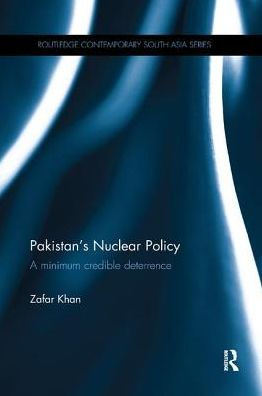
Pakistan's Nuclear Policy: A Minimum Credible Deterrence in Chattanooga, TN
Current price: $42.99
Barnes and Noble
Pakistan's Nuclear Policy: A Minimum Credible Deterrence in Chattanooga, TN
Current price: $42.99
Loading Inventory...
Size: Paperback
In May 1998, in reaction to India’s nuclear weapons tests, Pakistan tested six nuclear weapons. Following this, the country opted for a policy of minimum deterrence, and within a year Pakistan had altered its policy stance by adding the modifier of minimum ‘credible’ deterrence. This book looks at how this seemingly innocuous shift seriously impacted on Pakistan’s nuclear policy direction and whether the concept of minimum has lost its significance in the South Asian region’s changed/changing strategic environment.
After providing a brief historical background exploring why and how Pakistan carried out the nuclear development program, the book questions why Pakistan could not sustain the minimum deterrence that it had conceptualized in the immediate aftermath of the 1998 test. It examines the conceptual theoretical framework of the essentials of minimum deterrence in order to question whether Pakistan’s nuclear policy remained consistent with this, as well as to discover the rudimentary factors that are responsible for the inconsistencies with regard to minimum deterrence conceived in this study. The book goes on to look at the policy options that Pakistan had after acquiring the nuclear capability, and what the rationale was for selecting minimum deterrence. The book not only highlights Pakistan deterrent force building, but also analyzes closely Pakistan’s doctrinal posture of first use option. Furthermore, it examines the policy towards arms control and disarmament, and discusses whether these individual policy orientations are consistent with the minimum deterrence.
Conceptually providing a deeper understanding of Pakistan’s post-1998 nuclear policy, this book critically examines whether the minimum deterrence conceived could be sustained both at the theoretical and operational levels. It will be a useful contribution in the field of Nuclear Policy, Security Studies, Asian Politics, Proliferation/Non-Proliferation Studies, and Peace Studies. This book will be of interest to policy makers, scholars, and students of nuclear policy, nuclear proliferation and arms control related research.
After providing a brief historical background exploring why and how Pakistan carried out the nuclear development program, the book questions why Pakistan could not sustain the minimum deterrence that it had conceptualized in the immediate aftermath of the 1998 test. It examines the conceptual theoretical framework of the essentials of minimum deterrence in order to question whether Pakistan’s nuclear policy remained consistent with this, as well as to discover the rudimentary factors that are responsible for the inconsistencies with regard to minimum deterrence conceived in this study. The book goes on to look at the policy options that Pakistan had after acquiring the nuclear capability, and what the rationale was for selecting minimum deterrence. The book not only highlights Pakistan deterrent force building, but also analyzes closely Pakistan’s doctrinal posture of first use option. Furthermore, it examines the policy towards arms control and disarmament, and discusses whether these individual policy orientations are consistent with the minimum deterrence.
Conceptually providing a deeper understanding of Pakistan’s post-1998 nuclear policy, this book critically examines whether the minimum deterrence conceived could be sustained both at the theoretical and operational levels. It will be a useful contribution in the field of Nuclear Policy, Security Studies, Asian Politics, Proliferation/Non-Proliferation Studies, and Peace Studies. This book will be of interest to policy makers, scholars, and students of nuclear policy, nuclear proliferation and arms control related research.
In May 1998, in reaction to India’s nuclear weapons tests, Pakistan tested six nuclear weapons. Following this, the country opted for a policy of minimum deterrence, and within a year Pakistan had altered its policy stance by adding the modifier of minimum ‘credible’ deterrence. This book looks at how this seemingly innocuous shift seriously impacted on Pakistan’s nuclear policy direction and whether the concept of minimum has lost its significance in the South Asian region’s changed/changing strategic environment.
After providing a brief historical background exploring why and how Pakistan carried out the nuclear development program, the book questions why Pakistan could not sustain the minimum deterrence that it had conceptualized in the immediate aftermath of the 1998 test. It examines the conceptual theoretical framework of the essentials of minimum deterrence in order to question whether Pakistan’s nuclear policy remained consistent with this, as well as to discover the rudimentary factors that are responsible for the inconsistencies with regard to minimum deterrence conceived in this study. The book goes on to look at the policy options that Pakistan had after acquiring the nuclear capability, and what the rationale was for selecting minimum deterrence. The book not only highlights Pakistan deterrent force building, but also analyzes closely Pakistan’s doctrinal posture of first use option. Furthermore, it examines the policy towards arms control and disarmament, and discusses whether these individual policy orientations are consistent with the minimum deterrence.
Conceptually providing a deeper understanding of Pakistan’s post-1998 nuclear policy, this book critically examines whether the minimum deterrence conceived could be sustained both at the theoretical and operational levels. It will be a useful contribution in the field of Nuclear Policy, Security Studies, Asian Politics, Proliferation/Non-Proliferation Studies, and Peace Studies. This book will be of interest to policy makers, scholars, and students of nuclear policy, nuclear proliferation and arms control related research.
After providing a brief historical background exploring why and how Pakistan carried out the nuclear development program, the book questions why Pakistan could not sustain the minimum deterrence that it had conceptualized in the immediate aftermath of the 1998 test. It examines the conceptual theoretical framework of the essentials of minimum deterrence in order to question whether Pakistan’s nuclear policy remained consistent with this, as well as to discover the rudimentary factors that are responsible for the inconsistencies with regard to minimum deterrence conceived in this study. The book goes on to look at the policy options that Pakistan had after acquiring the nuclear capability, and what the rationale was for selecting minimum deterrence. The book not only highlights Pakistan deterrent force building, but also analyzes closely Pakistan’s doctrinal posture of first use option. Furthermore, it examines the policy towards arms control and disarmament, and discusses whether these individual policy orientations are consistent with the minimum deterrence.
Conceptually providing a deeper understanding of Pakistan’s post-1998 nuclear policy, this book critically examines whether the minimum deterrence conceived could be sustained both at the theoretical and operational levels. It will be a useful contribution in the field of Nuclear Policy, Security Studies, Asian Politics, Proliferation/Non-Proliferation Studies, and Peace Studies. This book will be of interest to policy makers, scholars, and students of nuclear policy, nuclear proliferation and arms control related research.
You May Also Like











More About Barnes and Noble at Hamilton Place
Barnes & Noble is the world’s largest retail bookseller and a leading retailer of content, digital media and educational products. Our Nook Digital business offers a lineup of NOOK® tablets and e-Readers and an expansive collection of digital reading content through the NOOK Store®. Barnes & Noble’s mission is to operate the best omni-channel specialty retail business in America, helping both our customers and booksellers reach their aspirations, while being a credit to the communities we serve.
2100 Hamilton Pl Blvd, Chattanooga, TN 37421, United States
Find Barnes and Noble at Hamilton Place in Chattanooga, TN
Visit Barnes and Noble at Hamilton Place in Chattanooga, TN
