
Home
Our Family
Barnes and Noble
Loading Inventory...
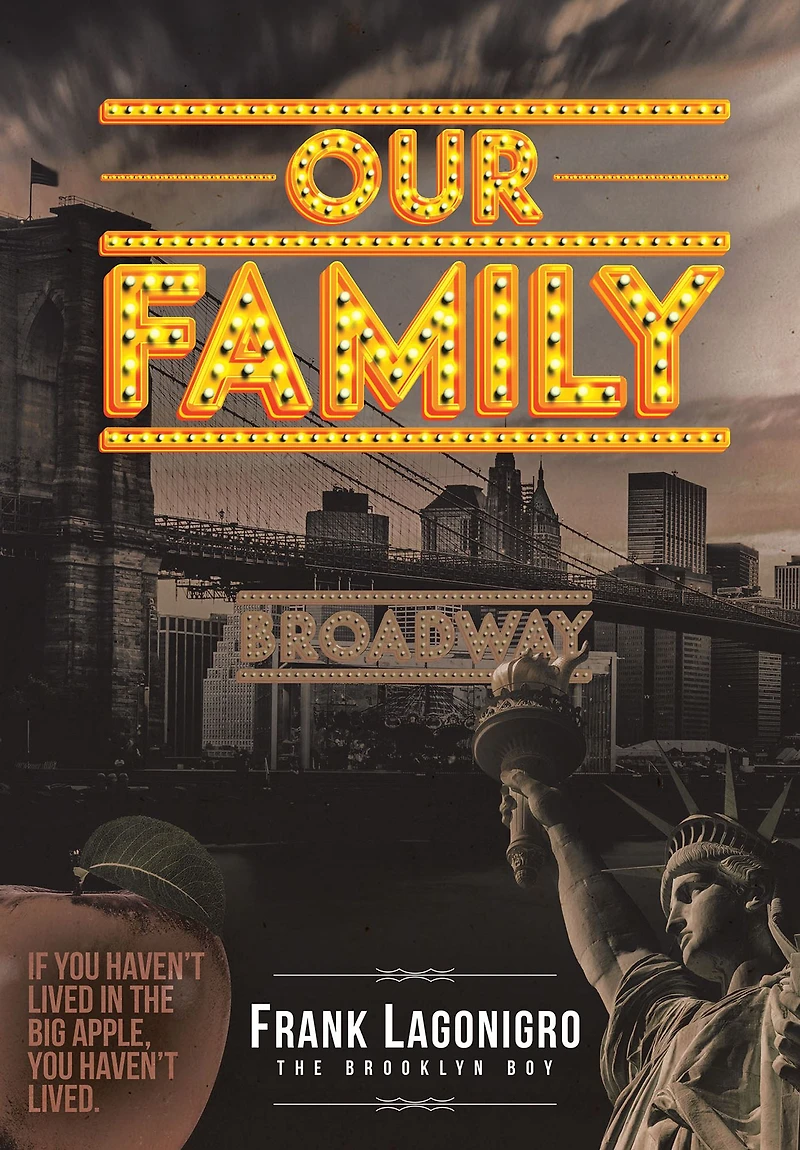
Our Family in Chattanooga, TN
By Barnes & Noble
Current price: $9.99
Barnes and Noble
Our Family in Chattanooga, TN
By Barnes & Noble
Current price: $9.99
Loading Inventory...
Size: EBook
In this his first novel, Frank Lagonigro describes the events and history of his family from his date of birth in 1928 through the Great Depression, the terrible wars, the brief interval of peace under President Dwight D. Eisenhower and the years that followed until the present time. Living in Brooklyn, New York, during the Great Depression was a distressing and an unforgettable experience for our parents. Most children didn't realize the gravity of the era until they read about it in their history books.It was an age before many of the modern amenities such as indoor bathrooms, heating systems, air-conditioning, television, elevators, computers, and other modern-day conveniences. In New York City, the Big Apple, the chief modes of transportation were trolley cars, buses, subway trains, and elevated trains. For a five-cent fare and a two-cent pass, a person could travel through the entire city, from borough to borough using one or several means of travel. The fare on the Staten Island Ferry was a nickel.Mailing a first-class letter required a three-cent stamp, and homes received mail deliveries each morning and afternoon. Bleacher seats at the three baseball stadiums sold for fifty-five cents, and the stars gave freely of their autographs. Long before supermarkets, credit cards, and online transactions, various ethnic groups were employed in specific jobs or as proprietors of specific businesses. Irish people were policemen or firemen. Many German and Italian people labored as sanitation personnel. Jewish people owned candy stores, groceries, and delicatessens. Italians provided haircuts, magazines, bay rum, and gossip in barbershops. And the Chinese were mavens of the hand laundries. Neighborhood saloons were in abundance and managed by the Germans and the Irish.Because the tenement apartments were small and uninsulated, they were hot in the summer and cold during the winter. Boys lived their lives on the streets, playing the simple and inexpensive games such as stickball and touch football. Men worked whenever possible; and their wives cooked, washed, mended clothes, and raised the family. Girls helped their mothers and, when free, played jacks and potsie. The general population were patriotic and God-fearing people. It was the worst and the best of times.
In this his first novel, Frank Lagonigro describes the events and history of his family from his date of birth in 1928 through the Great Depression, the terrible wars, the brief interval of peace under President Dwight D. Eisenhower and the years that followed until the present time. Living in Brooklyn, New York, during the Great Depression was a distressing and an unforgettable experience for our parents. Most children didn't realize the gravity of the era until they read about it in their history books.It was an age before many of the modern amenities such as indoor bathrooms, heating systems, air-conditioning, television, elevators, computers, and other modern-day conveniences. In New York City, the Big Apple, the chief modes of transportation were trolley cars, buses, subway trains, and elevated trains. For a five-cent fare and a two-cent pass, a person could travel through the entire city, from borough to borough using one or several means of travel. The fare on the Staten Island Ferry was a nickel.Mailing a first-class letter required a three-cent stamp, and homes received mail deliveries each morning and afternoon. Bleacher seats at the three baseball stadiums sold for fifty-five cents, and the stars gave freely of their autographs. Long before supermarkets, credit cards, and online transactions, various ethnic groups were employed in specific jobs or as proprietors of specific businesses. Irish people were policemen or firemen. Many German and Italian people labored as sanitation personnel. Jewish people owned candy stores, groceries, and delicatessens. Italians provided haircuts, magazines, bay rum, and gossip in barbershops. And the Chinese were mavens of the hand laundries. Neighborhood saloons were in abundance and managed by the Germans and the Irish.Because the tenement apartments were small and uninsulated, they were hot in the summer and cold during the winter. Boys lived their lives on the streets, playing the simple and inexpensive games such as stickball and touch football. Men worked whenever possible; and their wives cooked, washed, mended clothes, and raised the family. Girls helped their mothers and, when free, played jacks and potsie. The general population were patriotic and God-fearing people. It was the worst and the best of times.
You May Also Like














More About Barnes and Noble at Hamilton Place
Barnes & Noble is the world’s largest retail bookseller and a leading retailer of content, digital media and educational products. Our Nook Digital business offers a lineup of NOOK® tablets and e-Readers and an expansive collection of digital reading content through the NOOK Store®. Barnes & Noble’s mission is to operate the best omni-channel specialty retail business in America, helping both our customers and booksellers reach their aspirations, while being a credit to the communities we serve.
2100 Hamilton Pl Blvd, Chattanooga, TN 37421, United States
Find Barnes and Noble at Hamilton Place in Chattanooga, TN
Visit Barnes and Noble at Hamilton Place in Chattanooga, TN
