
Home
Ornament, the Novel, and Victorian Real
Barnes and Noble
Loading Inventory...
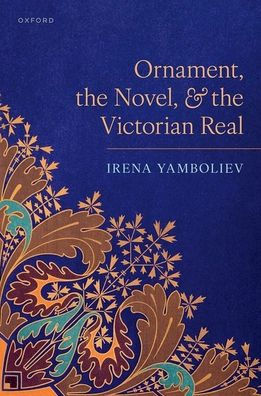
Ornament, the Novel, and Victorian Real in Chattanooga, TN
Current price: $100.00
Barnes and Noble
Ornament, the Novel, and Victorian Real in Chattanooga, TN
Current price: $100.00
Loading Inventory...
Size: Hardcover
"All real art," wrote William Morris, "is ornamental." If Morris is right, then ornament is not, as some would have it, a triviality, a sign of "want," or a crime. Instead,
Ornament, the Novel, and the Victorian Real
argues for the many and varied ways in which the novel is indebted to ornament. Victorians and Victorianist scholars have compared the novel to "fine" arts such as Dutch genre painting or to photography, emphasizing these visual forms' investment in gritty particularity and exhaustive detailing of appearance. But this story loses sight of a key fact that this book recovers: ornament represents a distinct, describable Victorian method of realism, a method for boiling down essentials and making palpable the invisible, fundamental laws that govern form in nature. This book grounds itself historically in Victorian theories and practices of decoration developed in the middle of the nineteenth century, a moment when Victorian designers overhauled the reigning principles of decorative art, and shows the rise of the newly developed theory of ornament to have explanatory power for contemporary novelistic practice too. The compositional principles in ornament—far from trivial, extraneous, or deceptive—furnish a new theory of form, a new concept of the real, and a new method for reading novelistic prose.
Ornament is at work churning away at the heart of the Victorian novel. Wallpaper patterns, hinge-work, stained glass: these visual forms articulate principles of form such contrast, symmetry, flatness, and stylization. And novelists turn these design principles into literary principles, importing them into their narratives as syntax, word by word and phrase by phrase. This book proceeds by way of very close readings that focus on the scale of the sentence and analyzes the rhythm, meter, and repetition of prose. This method allows an appreciation of how, in the hands of George Eliot, Thomas Hardy, A. C. Swinburne, Oscar Wilde, and D. H. Lawrence, ornamental prose opens up representational possibilities not otherwise available. Ornament allows novelists to render the patterning of human minds, the dynamics of relationship, and the intense realities of the more-than-human world.
Ornament, the Novel, and the Victorian Real
argues for the many and varied ways in which the novel is indebted to ornament. Victorians and Victorianist scholars have compared the novel to "fine" arts such as Dutch genre painting or to photography, emphasizing these visual forms' investment in gritty particularity and exhaustive detailing of appearance. But this story loses sight of a key fact that this book recovers: ornament represents a distinct, describable Victorian method of realism, a method for boiling down essentials and making palpable the invisible, fundamental laws that govern form in nature. This book grounds itself historically in Victorian theories and practices of decoration developed in the middle of the nineteenth century, a moment when Victorian designers overhauled the reigning principles of decorative art, and shows the rise of the newly developed theory of ornament to have explanatory power for contemporary novelistic practice too. The compositional principles in ornament—far from trivial, extraneous, or deceptive—furnish a new theory of form, a new concept of the real, and a new method for reading novelistic prose.
Ornament is at work churning away at the heart of the Victorian novel. Wallpaper patterns, hinge-work, stained glass: these visual forms articulate principles of form such contrast, symmetry, flatness, and stylization. And novelists turn these design principles into literary principles, importing them into their narratives as syntax, word by word and phrase by phrase. This book proceeds by way of very close readings that focus on the scale of the sentence and analyzes the rhythm, meter, and repetition of prose. This method allows an appreciation of how, in the hands of George Eliot, Thomas Hardy, A. C. Swinburne, Oscar Wilde, and D. H. Lawrence, ornamental prose opens up representational possibilities not otherwise available. Ornament allows novelists to render the patterning of human minds, the dynamics of relationship, and the intense realities of the more-than-human world.
"All real art," wrote William Morris, "is ornamental." If Morris is right, then ornament is not, as some would have it, a triviality, a sign of "want," or a crime. Instead,
Ornament, the Novel, and the Victorian Real
argues for the many and varied ways in which the novel is indebted to ornament. Victorians and Victorianist scholars have compared the novel to "fine" arts such as Dutch genre painting or to photography, emphasizing these visual forms' investment in gritty particularity and exhaustive detailing of appearance. But this story loses sight of a key fact that this book recovers: ornament represents a distinct, describable Victorian method of realism, a method for boiling down essentials and making palpable the invisible, fundamental laws that govern form in nature. This book grounds itself historically in Victorian theories and practices of decoration developed in the middle of the nineteenth century, a moment when Victorian designers overhauled the reigning principles of decorative art, and shows the rise of the newly developed theory of ornament to have explanatory power for contemporary novelistic practice too. The compositional principles in ornament—far from trivial, extraneous, or deceptive—furnish a new theory of form, a new concept of the real, and a new method for reading novelistic prose.
Ornament is at work churning away at the heart of the Victorian novel. Wallpaper patterns, hinge-work, stained glass: these visual forms articulate principles of form such contrast, symmetry, flatness, and stylization. And novelists turn these design principles into literary principles, importing them into their narratives as syntax, word by word and phrase by phrase. This book proceeds by way of very close readings that focus on the scale of the sentence and analyzes the rhythm, meter, and repetition of prose. This method allows an appreciation of how, in the hands of George Eliot, Thomas Hardy, A. C. Swinburne, Oscar Wilde, and D. H. Lawrence, ornamental prose opens up representational possibilities not otherwise available. Ornament allows novelists to render the patterning of human minds, the dynamics of relationship, and the intense realities of the more-than-human world.
Ornament, the Novel, and the Victorian Real
argues for the many and varied ways in which the novel is indebted to ornament. Victorians and Victorianist scholars have compared the novel to "fine" arts such as Dutch genre painting or to photography, emphasizing these visual forms' investment in gritty particularity and exhaustive detailing of appearance. But this story loses sight of a key fact that this book recovers: ornament represents a distinct, describable Victorian method of realism, a method for boiling down essentials and making palpable the invisible, fundamental laws that govern form in nature. This book grounds itself historically in Victorian theories and practices of decoration developed in the middle of the nineteenth century, a moment when Victorian designers overhauled the reigning principles of decorative art, and shows the rise of the newly developed theory of ornament to have explanatory power for contemporary novelistic practice too. The compositional principles in ornament—far from trivial, extraneous, or deceptive—furnish a new theory of form, a new concept of the real, and a new method for reading novelistic prose.
Ornament is at work churning away at the heart of the Victorian novel. Wallpaper patterns, hinge-work, stained glass: these visual forms articulate principles of form such contrast, symmetry, flatness, and stylization. And novelists turn these design principles into literary principles, importing them into their narratives as syntax, word by word and phrase by phrase. This book proceeds by way of very close readings that focus on the scale of the sentence and analyzes the rhythm, meter, and repetition of prose. This method allows an appreciation of how, in the hands of George Eliot, Thomas Hardy, A. C. Swinburne, Oscar Wilde, and D. H. Lawrence, ornamental prose opens up representational possibilities not otherwise available. Ornament allows novelists to render the patterning of human minds, the dynamics of relationship, and the intense realities of the more-than-human world.
You May Also Like







More About Barnes and Noble at Hamilton Place
Barnes & Noble is the world’s largest retail bookseller and a leading retailer of content, digital media and educational products. Our Nook Digital business offers a lineup of NOOK® tablets and e-Readers and an expansive collection of digital reading content through the NOOK Store®. Barnes & Noble’s mission is to operate the best omni-channel specialty retail business in America, helping both our customers and booksellers reach their aspirations, while being a credit to the communities we serve.
2100 Hamilton Pl Blvd, Chattanooga, TN 37421, United States
Find Barnes and Noble at Hamilton Place in Chattanooga, TN
Visit Barnes and Noble at Hamilton Place in Chattanooga, TN
