
Home
Optical characteristics of polymer implanted with metal ions
Barnes and Noble
Loading Inventory...
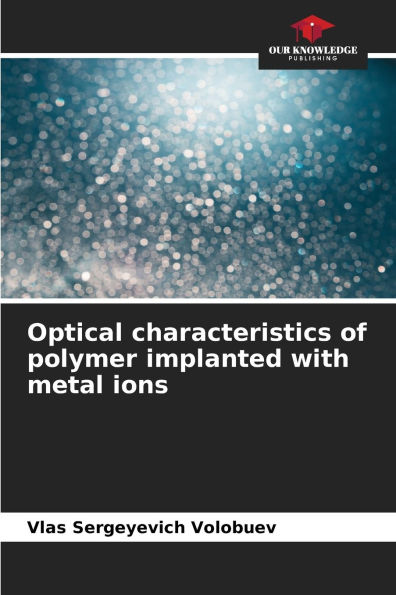
Optical characteristics of polymer implanted with metal ions in Chattanooga, TN
Current price: $42.00
Barnes and Noble
Optical characteristics of polymer implanted with metal ions in Chattanooga, TN
Current price: $42.00
Loading Inventory...
Size: OS
This paper presents an extensive literature review on the electrophysical properties of polymer films subjected to ion implantation. The aim of this work was also to study thin polyethylene terephthalate C22H8O4 films previously subjected to nickel ion implantation at various doses and currents using optical spectroscopy. The results obtained and the optical spectra, both transmission and reflection, are presented. A relationship was found between the increase in dose in these spectra and the decrease in the relative absorption coefficient. The possible manifestation of optical plasmon resonance is considered. The relative shift of the absorption edge observed in a series of spectra with increasing size of π-electron carbon clusters with increasing dose load is explained. This allows, by studying the relative change in optical characteristics, to determine how metal implantation into a polymer affects the change in its internal structure and properties.
This paper presents an extensive literature review on the electrophysical properties of polymer films subjected to ion implantation. The aim of this work was also to study thin polyethylene terephthalate C22H8O4 films previously subjected to nickel ion implantation at various doses and currents using optical spectroscopy. The results obtained and the optical spectra, both transmission and reflection, are presented. A relationship was found between the increase in dose in these spectra and the decrease in the relative absorption coefficient. The possible manifestation of optical plasmon resonance is considered. The relative shift of the absorption edge observed in a series of spectra with increasing size of π-electron carbon clusters with increasing dose load is explained. This allows, by studying the relative change in optical characteristics, to determine how metal implantation into a polymer affects the change in its internal structure and properties.
You May Also Like












More About Barnes and Noble at Hamilton Place
Barnes & Noble is the world’s largest retail bookseller and a leading retailer of content, digital media and educational products. Our Nook Digital business offers a lineup of NOOK® tablets and e-Readers and an expansive collection of digital reading content through the NOOK Store®. Barnes & Noble’s mission is to operate the best omni-channel specialty retail business in America, helping both our customers and booksellers reach their aspirations, while being a credit to the communities we serve.
2100 Hamilton Pl Blvd, Chattanooga, TN 37421, United States
Find Barnes and Noble at Hamilton Place in Chattanooga, TN
Visit Barnes and Noble at Hamilton Place in Chattanooga, TN
