
Home
Operational Lessons Learned in the Korean War
Barnes and Noble
Loading Inventory...
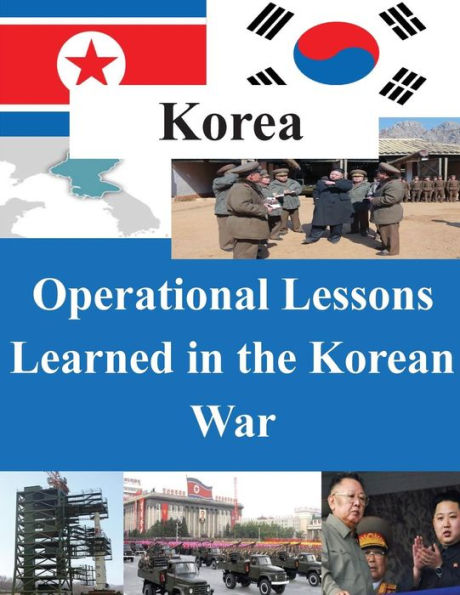
Operational Lessons Learned in the Korean War in Chattanooga, TN
Current price: $14.95
Barnes and Noble
Operational Lessons Learned in the Korean War in Chattanooga, TN
Current price: $14.95
Loading Inventory...
Size: OS
More than 60 years since the outbreak of war on the Korean Peninsula, the United States Armed Forces continue to stand by the soldiers, sailors, airmen, and marines of the Republic of Korea in an effort to deter further North Korean aggression. The purpose of this book is capture operational lessons learned during the Korean War that should be taken into consideration by operational planners as they prepare for future conflict on the peninsula. Looking at the Korean Peninsula's geography, weather and terrain, and place in the world highlight unique challenges operational planners will face. The strategic context of North Korea's proximity and alliance to China is important to understand and take into consideration during any operation in the region. China considers North Korea as a buffer protecting its region of Manchuria. Encroachment of this border by foreign forces is a threat to Chinese sovereignty. China's continued support of the North Korean regime is essential to their survival and must always frame the operational environment. The Korean Peninsula is subject to weather extremes, such as monsoons and harsh winters that have a direct impact on operations. During the winter of 1950-1951, marines and soldiers faced sub-zero temperatures and heavy snowfall that blocked mountain passes and clogged main supply routes. Fifty years later, soldiers and airmen serving in Korea experienced another such harsh winter that limited operations because of heavy snowfall and had an impact their ability to respond to threats from the north. The reason that weather has such an operational impact is because of the restrictive terrain found on the peninsula. The Korean Peninsula is primarily mountainous, with most valleys running north to south, and having limited east west cross mobility corridors. In the north, limited infrastructure, such as road networks and expressways, compounds the problem. Add to this, population centers based around crossroads along the valley floors, and the terrain becomes even more restrictive to ground maneuvers. By examining combat operations during the Korean War, it becomes apparent that operational planners must consider force structure. The allocation of force multipliers to enable independent brigade operations without the possibility of mutually supporting maneuver units is critical in Korea's restrictive terrain.
More than 60 years since the outbreak of war on the Korean Peninsula, the United States Armed Forces continue to stand by the soldiers, sailors, airmen, and marines of the Republic of Korea in an effort to deter further North Korean aggression. The purpose of this book is capture operational lessons learned during the Korean War that should be taken into consideration by operational planners as they prepare for future conflict on the peninsula. Looking at the Korean Peninsula's geography, weather and terrain, and place in the world highlight unique challenges operational planners will face. The strategic context of North Korea's proximity and alliance to China is important to understand and take into consideration during any operation in the region. China considers North Korea as a buffer protecting its region of Manchuria. Encroachment of this border by foreign forces is a threat to Chinese sovereignty. China's continued support of the North Korean regime is essential to their survival and must always frame the operational environment. The Korean Peninsula is subject to weather extremes, such as monsoons and harsh winters that have a direct impact on operations. During the winter of 1950-1951, marines and soldiers faced sub-zero temperatures and heavy snowfall that blocked mountain passes and clogged main supply routes. Fifty years later, soldiers and airmen serving in Korea experienced another such harsh winter that limited operations because of heavy snowfall and had an impact their ability to respond to threats from the north. The reason that weather has such an operational impact is because of the restrictive terrain found on the peninsula. The Korean Peninsula is primarily mountainous, with most valleys running north to south, and having limited east west cross mobility corridors. In the north, limited infrastructure, such as road networks and expressways, compounds the problem. Add to this, population centers based around crossroads along the valley floors, and the terrain becomes even more restrictive to ground maneuvers. By examining combat operations during the Korean War, it becomes apparent that operational planners must consider force structure. The allocation of force multipliers to enable independent brigade operations without the possibility of mutually supporting maneuver units is critical in Korea's restrictive terrain.
You May Also Like














More About Barnes and Noble at Hamilton Place
Barnes & Noble is the world’s largest retail bookseller and a leading retailer of content, digital media and educational products. Our Nook Digital business offers a lineup of NOOK® tablets and e-Readers and an expansive collection of digital reading content through the NOOK Store®. Barnes & Noble’s mission is to operate the best omni-channel specialty retail business in America, helping both our customers and booksellers reach their aspirations, while being a credit to the communities we serve.
2100 Hamilton Pl Blvd, Chattanooga, TN 37421, United States
Find Barnes and Noble at Hamilton Place in Chattanooga, TN
Visit Barnes and Noble at Hamilton Place in Chattanooga, TN
