
Home
Open Secrets: The Popular Fiction of Britain's Occult Revival, 1842-1936
Barnes and Noble
Loading Inventory...
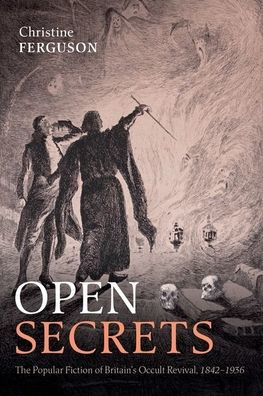
Open Secrets: The Popular Fiction of Britain's Occult Revival, 1842-1936 in Chattanooga, TN
Current price: $99.00
Barnes and Noble
Open Secrets: The Popular Fiction of Britain's Occult Revival, 1842-1936 in Chattanooga, TN
Current price: $99.00
Loading Inventory...
Size: Hardcover
Open Secrets
examines the popular genre fiction produced by leading figures within Britain's occult revival from the 1840s to the 1930s, including Edward Bulwer Lytton, Emma Hardinge Britten, Marie Corelli, Mabel Collins, Arthur Machen, Charles Fort, Aleister Crowley, and Dion Fortune. Ferguson demonstrates how the revival's popular fictional output was always more than just a reflection of, or mode of propaganda for, unorthodox authorial belief or initiatory intention-this fascinating corpus became a charged site for genre innovation and formal experimentation.
The rich spiritual and literary affordances of revival fiction,
reveals, were deeply interlinked and mutually transformative. As embraced by occult revivalists, popular literary genres such as the Bildungsroman, the romance, the new journalistic article, and the detective tale forged narrative routes into the unseen world, ones that alternately championed, tested, and challenged the esoteric philosophies and paranormal theories that inspired them.
examines the popular genre fiction produced by leading figures within Britain's occult revival from the 1840s to the 1930s, including Edward Bulwer Lytton, Emma Hardinge Britten, Marie Corelli, Mabel Collins, Arthur Machen, Charles Fort, Aleister Crowley, and Dion Fortune. Ferguson demonstrates how the revival's popular fictional output was always more than just a reflection of, or mode of propaganda for, unorthodox authorial belief or initiatory intention-this fascinating corpus became a charged site for genre innovation and formal experimentation.
The rich spiritual and literary affordances of revival fiction,
reveals, were deeply interlinked and mutually transformative. As embraced by occult revivalists, popular literary genres such as the Bildungsroman, the romance, the new journalistic article, and the detective tale forged narrative routes into the unseen world, ones that alternately championed, tested, and challenged the esoteric philosophies and paranormal theories that inspired them.
Open Secrets
examines the popular genre fiction produced by leading figures within Britain's occult revival from the 1840s to the 1930s, including Edward Bulwer Lytton, Emma Hardinge Britten, Marie Corelli, Mabel Collins, Arthur Machen, Charles Fort, Aleister Crowley, and Dion Fortune. Ferguson demonstrates how the revival's popular fictional output was always more than just a reflection of, or mode of propaganda for, unorthodox authorial belief or initiatory intention-this fascinating corpus became a charged site for genre innovation and formal experimentation.
The rich spiritual and literary affordances of revival fiction,
reveals, were deeply interlinked and mutually transformative. As embraced by occult revivalists, popular literary genres such as the Bildungsroman, the romance, the new journalistic article, and the detective tale forged narrative routes into the unseen world, ones that alternately championed, tested, and challenged the esoteric philosophies and paranormal theories that inspired them.
examines the popular genre fiction produced by leading figures within Britain's occult revival from the 1840s to the 1930s, including Edward Bulwer Lytton, Emma Hardinge Britten, Marie Corelli, Mabel Collins, Arthur Machen, Charles Fort, Aleister Crowley, and Dion Fortune. Ferguson demonstrates how the revival's popular fictional output was always more than just a reflection of, or mode of propaganda for, unorthodox authorial belief or initiatory intention-this fascinating corpus became a charged site for genre innovation and formal experimentation.
The rich spiritual and literary affordances of revival fiction,
reveals, were deeply interlinked and mutually transformative. As embraced by occult revivalists, popular literary genres such as the Bildungsroman, the romance, the new journalistic article, and the detective tale forged narrative routes into the unseen world, ones that alternately championed, tested, and challenged the esoteric philosophies and paranormal theories that inspired them.
You May Also Like













More About Barnes and Noble at Hamilton Place
Barnes & Noble is the world’s largest retail bookseller and a leading retailer of content, digital media and educational products. Our Nook Digital business offers a lineup of NOOK® tablets and e-Readers and an expansive collection of digital reading content through the NOOK Store®. Barnes & Noble’s mission is to operate the best omni-channel specialty retail business in America, helping both our customers and booksellers reach their aspirations, while being a credit to the communities we serve.
2100 Hamilton Pl Blvd, Chattanooga, TN 37421, United States
Find Barnes and Noble at Hamilton Place in Chattanooga, TN
Visit Barnes and Noble at Hamilton Place in Chattanooga, TN
