
Home
On This Day: The Armenian Church Synaxarion - April
Barnes and Noble
Loading Inventory...
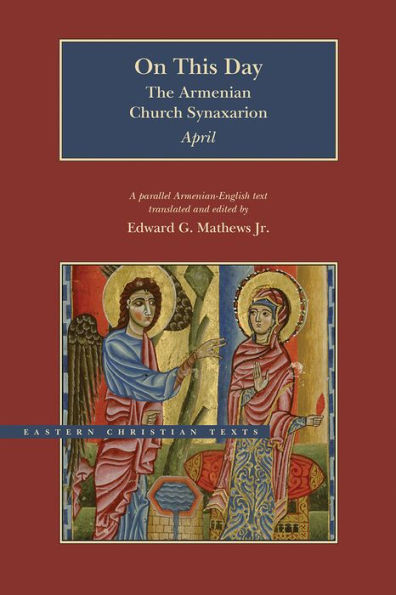
On This Day: The Armenian Church Synaxarion - April in Chattanooga, TN
Current price: $49.95
Barnes and Noble
On This Day: The Armenian Church Synaxarion - April in Chattanooga, TN
Current price: $49.95
Loading Inventory...
Size: OS
The Yaysmawurk‘ is a liturgical collection of brief saints’ lives arranged according to the day on which they were celebrated in the annual church calendar. The name comes from the first words of most of the daily entries: Y-aysm awur, that is, “On this day . . .” The collection was part of the great and varied Armenian liturgical tradition from the turn of the first millennium. The first Yaysmawurk‘ was translated from an existing Greek liturgical collection (the Synaxarion, “where the lives are all collected”). In fact, it is common knowledge that this Greek collection was the basis for nearly all such liturgical collections of the lives of the saints throughout the early Christian world. However, it was not a mere translation. Rather, it constituted a logical culmination of a long and steady development in the Armenian Church of what scholars today like to call the cult of the saints.
The Yaysmawurk‘ is a liturgical collection of brief saints’ lives arranged according to the day on which they were celebrated in the annual church calendar. The name comes from the first words of most of the daily entries: Y-aysm awur, that is, “On this day . . .” The collection was part of the great and varied Armenian liturgical tradition from the turn of the first millennium. The first Yaysmawurk‘ was translated from an existing Greek liturgical collection (the Synaxarion, “where the lives are all collected”). In fact, it is common knowledge that this Greek collection was the basis for nearly all such liturgical collections of the lives of the saints throughout the early Christian world. However, it was not a mere translation. Rather, it constituted a logical culmination of a long and steady development in the Armenian Church of what scholars today like to call the cult of the saints.
You May Also Like
















More About Barnes and Noble at Hamilton Place
Barnes & Noble is the world’s largest retail bookseller and a leading retailer of content, digital media and educational products. Our Nook Digital business offers a lineup of NOOK® tablets and e-Readers and an expansive collection of digital reading content through the NOOK Store®. Barnes & Noble’s mission is to operate the best omni-channel specialty retail business in America, helping both our customers and booksellers reach their aspirations, while being a credit to the communities we serve.
2100 Hamilton Pl Blvd, Chattanooga, TN 37421, United States
Find Barnes and Noble at Hamilton Place in Chattanooga, TN
Visit Barnes and Noble at Hamilton Place in Chattanooga, TN
