
Home
On the Life of Galileo: Viviani's Historical Account and Other Early Biographies
Barnes and Noble
Loading Inventory...
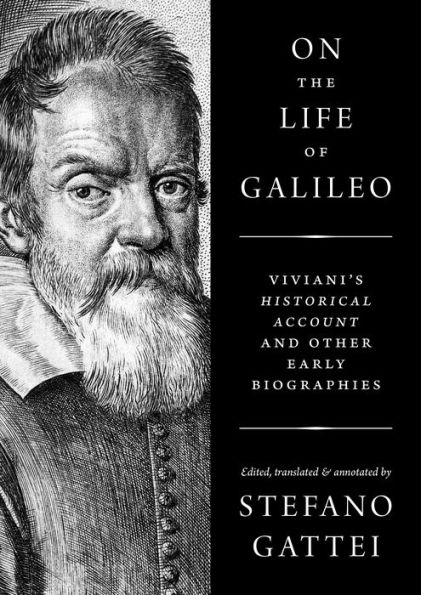
On the Life of Galileo: Viviani's Historical Account and Other Early Biographies in Chattanooga, TN
Current price: $58.00
Barnes and Noble
On the Life of Galileo: Viviani's Historical Account and Other Early Biographies in Chattanooga, TN
Current price: $58.00
Loading Inventory...
Size: Hardcover
The first collection and translation into English of the earliest biographical accounts of Galileo’s life
This unique critical edition presents key early biographical accounts of the life and work of Galileo Galilei (1564–1642), written by his close contemporaries. Collected and translated into English for the first time and supplemented by an introduction and incisive annotations by Stefano Gattei, these documents paint an incomparable firsthand picture of Galileo and offer rare insights into the construction of his public image and the complex intertwining of science, religion, and politics in seventeenth-century Italy.
Here in its entirety is Vincenzo Viviani’s
Historical Account
, an extensive and influential biography of Galileo written in 1654 by his last and most devoted pupil. Viviani’s text is accompanied by his “Letter to Prince Leopoldo de’ Medici on the Application of Pendulum to Clocks” (1659), his 1674 description of Galileo’s later works, and the long inscriptions on the façade of Viviani’s Florentine palace (1702). The collection also includes the “Adulatio perniciosa,” a Latin poem written in 1620 by Cardinal Maffeo Barberini—who, as Pope Urban VIII, would become Galileo’s prosecutor—as well as descriptive accounts that emerged from the Roman court and contemporary European biographers.
Featuring the original texts in Italian, Latin, and French with their English translations on facing pages, this invaluable book shows how Galileo’s pupils, friends, and critics shaped the Galileo myth for centuries to come, and brings together in one volume the primary sources needed to understand the legendary scientist in his time.
This unique critical edition presents key early biographical accounts of the life and work of Galileo Galilei (1564–1642), written by his close contemporaries. Collected and translated into English for the first time and supplemented by an introduction and incisive annotations by Stefano Gattei, these documents paint an incomparable firsthand picture of Galileo and offer rare insights into the construction of his public image and the complex intertwining of science, religion, and politics in seventeenth-century Italy.
Here in its entirety is Vincenzo Viviani’s
Historical Account
, an extensive and influential biography of Galileo written in 1654 by his last and most devoted pupil. Viviani’s text is accompanied by his “Letter to Prince Leopoldo de’ Medici on the Application of Pendulum to Clocks” (1659), his 1674 description of Galileo’s later works, and the long inscriptions on the façade of Viviani’s Florentine palace (1702). The collection also includes the “Adulatio perniciosa,” a Latin poem written in 1620 by Cardinal Maffeo Barberini—who, as Pope Urban VIII, would become Galileo’s prosecutor—as well as descriptive accounts that emerged from the Roman court and contemporary European biographers.
Featuring the original texts in Italian, Latin, and French with their English translations on facing pages, this invaluable book shows how Galileo’s pupils, friends, and critics shaped the Galileo myth for centuries to come, and brings together in one volume the primary sources needed to understand the legendary scientist in his time.
The first collection and translation into English of the earliest biographical accounts of Galileo’s life
This unique critical edition presents key early biographical accounts of the life and work of Galileo Galilei (1564–1642), written by his close contemporaries. Collected and translated into English for the first time and supplemented by an introduction and incisive annotations by Stefano Gattei, these documents paint an incomparable firsthand picture of Galileo and offer rare insights into the construction of his public image and the complex intertwining of science, religion, and politics in seventeenth-century Italy.
Here in its entirety is Vincenzo Viviani’s
Historical Account
, an extensive and influential biography of Galileo written in 1654 by his last and most devoted pupil. Viviani’s text is accompanied by his “Letter to Prince Leopoldo de’ Medici on the Application of Pendulum to Clocks” (1659), his 1674 description of Galileo’s later works, and the long inscriptions on the façade of Viviani’s Florentine palace (1702). The collection also includes the “Adulatio perniciosa,” a Latin poem written in 1620 by Cardinal Maffeo Barberini—who, as Pope Urban VIII, would become Galileo’s prosecutor—as well as descriptive accounts that emerged from the Roman court and contemporary European biographers.
Featuring the original texts in Italian, Latin, and French with their English translations on facing pages, this invaluable book shows how Galileo’s pupils, friends, and critics shaped the Galileo myth for centuries to come, and brings together in one volume the primary sources needed to understand the legendary scientist in his time.
This unique critical edition presents key early biographical accounts of the life and work of Galileo Galilei (1564–1642), written by his close contemporaries. Collected and translated into English for the first time and supplemented by an introduction and incisive annotations by Stefano Gattei, these documents paint an incomparable firsthand picture of Galileo and offer rare insights into the construction of his public image and the complex intertwining of science, religion, and politics in seventeenth-century Italy.
Here in its entirety is Vincenzo Viviani’s
Historical Account
, an extensive and influential biography of Galileo written in 1654 by his last and most devoted pupil. Viviani’s text is accompanied by his “Letter to Prince Leopoldo de’ Medici on the Application of Pendulum to Clocks” (1659), his 1674 description of Galileo’s later works, and the long inscriptions on the façade of Viviani’s Florentine palace (1702). The collection also includes the “Adulatio perniciosa,” a Latin poem written in 1620 by Cardinal Maffeo Barberini—who, as Pope Urban VIII, would become Galileo’s prosecutor—as well as descriptive accounts that emerged from the Roman court and contemporary European biographers.
Featuring the original texts in Italian, Latin, and French with their English translations on facing pages, this invaluable book shows how Galileo’s pupils, friends, and critics shaped the Galileo myth for centuries to come, and brings together in one volume the primary sources needed to understand the legendary scientist in his time.
You May Also Like





![An Historical Account Of The Heroick Life And Magnanimous Actions ... James, Duke Monmouth 1683. Reprinted 1820. [vicars, J.] England's Worthies 1647. Reprinted, 1819. [harris, W.] Critical Hugh Peters](https://prodimage.images-bn.com/pimages/9781024484816_p0_v1_s600x595.jpg)









More About Barnes and Noble at Hamilton Place
Barnes & Noble is the world’s largest retail bookseller and a leading retailer of content, digital media and educational products. Our Nook Digital business offers a lineup of NOOK® tablets and e-Readers and an expansive collection of digital reading content through the NOOK Store®. Barnes & Noble’s mission is to operate the best omni-channel specialty retail business in America, helping both our customers and booksellers reach their aspirations, while being a credit to the communities we serve.
2100 Hamilton Pl Blvd, Chattanooga, TN 37421, United States
Find Barnes and Noble at Hamilton Place in Chattanooga, TN
Visit Barnes and Noble at Hamilton Place in Chattanooga, TN
