
Home
Normalization of Violence: Conceptual Analysis and Reflections from Asia
Barnes and Noble
Loading Inventory...
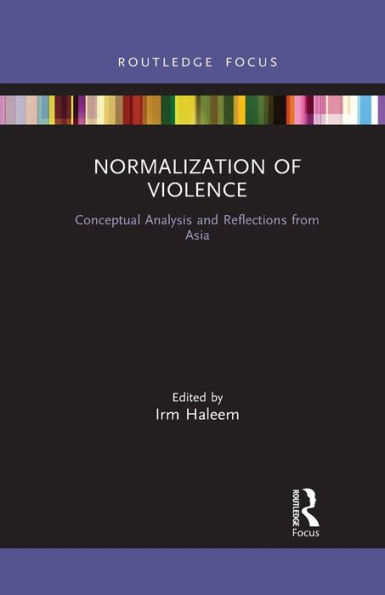
Normalization of Violence: Conceptual Analysis and Reflections from Asia in Chattanooga, TN
Current price: $68.99
Barnes and Noble
Normalization of Violence: Conceptual Analysis and Reflections from Asia in Chattanooga, TN
Current price: $68.99
Loading Inventory...
Size: Hardcover
This book offers both a conceptual and an empirical analysis of how violence is normalized. In its conceptual analysis, Irm Haleem offers a framework of explanation that she argues is universal in its narratives, which she submits is premised on moralizing, legalizing, and popularizing violence. Haleem engages Stathis Kalyvas’s notion of the two stages of violence (process and outcome), and proposes the notion of "metaphysical" violence as distinct from physical violence. Through drawing upon works of scholars such as Hannah Arendt, Noam Chomsky, W.J.T. Mitchell, Michel Foucault, Jacques Derrida, George Kateb, and others, she illustrates why these distinctions (of stages and types of violence) are critical in understanding how violence is normalized.
In its empirical analysis, Naoko Kumada argues that the contemporary changes in narratives and educational curriculum in Japan are intended to moralize the historic glory days of imperial Japan, which, she argues, may subsequently normalize militarism. Stefanie Kam focuses on how China has normalized violence in Xinjiang through narratives of the imperatives of security, thereby both legalizing and moralizing violence. Jennifer Dhanaraj argues how the denial of citizenship to the Rohingya community in Myanmar has provided both the moral and legal justifications for Buddhist extremists and the military to wage a brutal and unbridled war against the Rohingyas. Finally, Abdul Basit examines how the ex-communication of the Ahmadi sectarian minority in Pakistan has criminalized the minority, thus paving the way for unbridled violence against them from extremist mobs that have justified their violence in moral and legal terms. In all the cases in this book, we see how violence is popularized as being either a matter of the will of the people, or as being for the greater good of the people.
In its empirical analysis, Naoko Kumada argues that the contemporary changes in narratives and educational curriculum in Japan are intended to moralize the historic glory days of imperial Japan, which, she argues, may subsequently normalize militarism. Stefanie Kam focuses on how China has normalized violence in Xinjiang through narratives of the imperatives of security, thereby both legalizing and moralizing violence. Jennifer Dhanaraj argues how the denial of citizenship to the Rohingya community in Myanmar has provided both the moral and legal justifications for Buddhist extremists and the military to wage a brutal and unbridled war against the Rohingyas. Finally, Abdul Basit examines how the ex-communication of the Ahmadi sectarian minority in Pakistan has criminalized the minority, thus paving the way for unbridled violence against them from extremist mobs that have justified their violence in moral and legal terms. In all the cases in this book, we see how violence is popularized as being either a matter of the will of the people, or as being for the greater good of the people.
This book offers both a conceptual and an empirical analysis of how violence is normalized. In its conceptual analysis, Irm Haleem offers a framework of explanation that she argues is universal in its narratives, which she submits is premised on moralizing, legalizing, and popularizing violence. Haleem engages Stathis Kalyvas’s notion of the two stages of violence (process and outcome), and proposes the notion of "metaphysical" violence as distinct from physical violence. Through drawing upon works of scholars such as Hannah Arendt, Noam Chomsky, W.J.T. Mitchell, Michel Foucault, Jacques Derrida, George Kateb, and others, she illustrates why these distinctions (of stages and types of violence) are critical in understanding how violence is normalized.
In its empirical analysis, Naoko Kumada argues that the contemporary changes in narratives and educational curriculum in Japan are intended to moralize the historic glory days of imperial Japan, which, she argues, may subsequently normalize militarism. Stefanie Kam focuses on how China has normalized violence in Xinjiang through narratives of the imperatives of security, thereby both legalizing and moralizing violence. Jennifer Dhanaraj argues how the denial of citizenship to the Rohingya community in Myanmar has provided both the moral and legal justifications for Buddhist extremists and the military to wage a brutal and unbridled war against the Rohingyas. Finally, Abdul Basit examines how the ex-communication of the Ahmadi sectarian minority in Pakistan has criminalized the minority, thus paving the way for unbridled violence against them from extremist mobs that have justified their violence in moral and legal terms. In all the cases in this book, we see how violence is popularized as being either a matter of the will of the people, or as being for the greater good of the people.
In its empirical analysis, Naoko Kumada argues that the contemporary changes in narratives and educational curriculum in Japan are intended to moralize the historic glory days of imperial Japan, which, she argues, may subsequently normalize militarism. Stefanie Kam focuses on how China has normalized violence in Xinjiang through narratives of the imperatives of security, thereby both legalizing and moralizing violence. Jennifer Dhanaraj argues how the denial of citizenship to the Rohingya community in Myanmar has provided both the moral and legal justifications for Buddhist extremists and the military to wage a brutal and unbridled war against the Rohingyas. Finally, Abdul Basit examines how the ex-communication of the Ahmadi sectarian minority in Pakistan has criminalized the minority, thus paving the way for unbridled violence against them from extremist mobs that have justified their violence in moral and legal terms. In all the cases in this book, we see how violence is popularized as being either a matter of the will of the people, or as being for the greater good of the people.
You May Also Like

















More About Barnes and Noble at Hamilton Place
Barnes & Noble is the world’s largest retail bookseller and a leading retailer of content, digital media and educational products. Our Nook Digital business offers a lineup of NOOK® tablets and e-Readers and an expansive collection of digital reading content through the NOOK Store®. Barnes & Noble’s mission is to operate the best omni-channel specialty retail business in America, helping both our customers and booksellers reach their aspirations, while being a credit to the communities we serve.
2100 Hamilton Pl Blvd, Chattanooga, TN 37421, United States
Find Barnes and Noble at Hamilton Place in Chattanooga, TN
Visit Barnes and Noble at Hamilton Place in Chattanooga, TN
