
Home
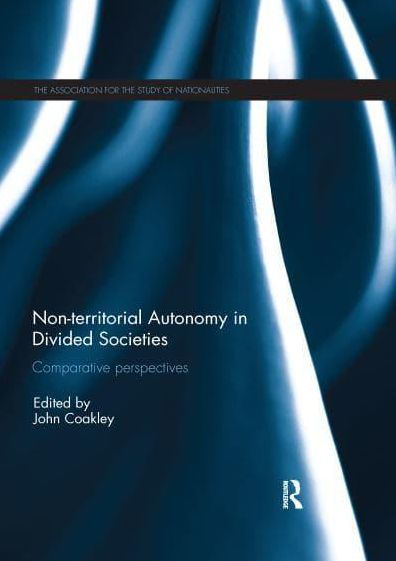
Non-territorial Autonomy in Divided Societies: Comparative Perspectives
Barnes and Noble
Loading Inventory...
Non-territorial Autonomy in Divided Societies: Comparative Perspectives in Chattanooga, TN
Current price: $55.99
Barnes and Noble
Non-territorial Autonomy in Divided Societies: Comparative Perspectives in Chattanooga, TN
Current price: $55.99
Loading Inventory...
Size: OS
Non-territorial autonomy is an unusual method of government based on the notion of the devolution of power to entities within the state which exercise jurisdiction over a population defined by personal features (such as opting for a particular ethnic nationality) rather than by geographical location (such as the region in which they live). Developed theoretically by Karl Renner in the early twentieth century as a mechanism for responding to demands for self-government from dispersed minorities within the Austro-Hungarian empire, it had earlier roots in the Ottoman empire, and later formed the basis for constitutional experiments in Estonia, in Belgium, and in states with sizeable but dispersed minorities. More recently, efforts have been made to apply it in respect of indigenous communities. This approach to the management of ethnic conflict has attracted a small literature, but there is no comprehensive overview of its application. The intention of this volume is to fill this gap, for the first time offering a comparative assessment of the significance of this political institutional device. Authors of case studies follow a common framework.
This book was published as a special issue of
Ethnopolitics
.
This book was published as a special issue of
Ethnopolitics
.
Non-territorial autonomy is an unusual method of government based on the notion of the devolution of power to entities within the state which exercise jurisdiction over a population defined by personal features (such as opting for a particular ethnic nationality) rather than by geographical location (such as the region in which they live). Developed theoretically by Karl Renner in the early twentieth century as a mechanism for responding to demands for self-government from dispersed minorities within the Austro-Hungarian empire, it had earlier roots in the Ottoman empire, and later formed the basis for constitutional experiments in Estonia, in Belgium, and in states with sizeable but dispersed minorities. More recently, efforts have been made to apply it in respect of indigenous communities. This approach to the management of ethnic conflict has attracted a small literature, but there is no comprehensive overview of its application. The intention of this volume is to fill this gap, for the first time offering a comparative assessment of the significance of this political institutional device. Authors of case studies follow a common framework.
This book was published as a special issue of
Ethnopolitics
.
This book was published as a special issue of
Ethnopolitics
.
You May Also Like












More About Barnes and Noble at Hamilton Place
Barnes & Noble is the world’s largest retail bookseller and a leading retailer of content, digital media and educational products. Our Nook Digital business offers a lineup of NOOK® tablets and e-Readers and an expansive collection of digital reading content through the NOOK Store®. Barnes & Noble’s mission is to operate the best omni-channel specialty retail business in America, helping both our customers and booksellers reach their aspirations, while being a credit to the communities we serve.
2100 Hamilton Pl Blvd, Chattanooga, TN 37421, United States
Find Barnes and Noble at Hamilton Place in Chattanooga, TN
Visit Barnes and Noble at Hamilton Place in Chattanooga, TN
