
Home
Nijmegen Bombardment on 22 February 1944
Barnes and Noble
Loading Inventory...
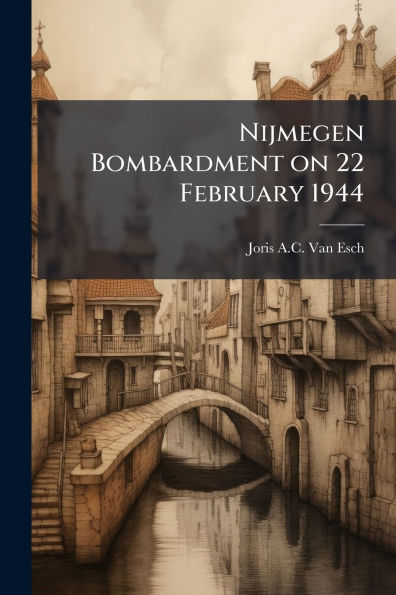
Nijmegen Bombardment on 22 February 1944 in Chattanooga, TN
Current price: $30.95
Barnes and Noble
Nijmegen Bombardment on 22 February 1944 in Chattanooga, TN
Current price: $30.95
Loading Inventory...
Size: Hardcover
A steadfast misbelief in precision bombing evolved into the leading concept for US Army Air Force during the Second World War. This concept envisioned the destruction of the German industrial and economic system as the swiftest path to victory. However, the belief in survivability of bombers through self defense proved incorrect, and the Allies realized that the Luftwaffe had to be defeated first, by attacking the German aircraft industry. On 22 February 1944, Eighth Air Force conducted a mission as part of this offensive. During this mission, the bombers were recalled because of severe weather. On the return trip, the airmen decided not to abandon the mission outright, but to attack targets of opportunity. Because of navigational errors a section of 446 Bombardment Group misidentified the Dutch city Nijmegen as in Germany, and bombed it. Due to aiming errors, the greater part of the bombs missed the designated marshalling yards by a kilometer, and hit the city center instead. The bombardment caused chaos on the ground. It surprised the citizens, ignorant by earlier faulty alarms, and damage caused great difficulties for the provision of aid relief. As a result, the bombardment killed about 800 citizens and destroyed the historic city center.
This work has been selected by scholars as being culturally important, and is part of the knowledge base of civilization as we know it. This work was reproduced from the original artifact, and remains as true to the original work as possible. Therefore, you will see the original copyright references, library stamps (as most of these works have been housed in our most important libraries around the world), and other notations in the work.
This work is in the public domain in the United States of America, and possibly other nations. Within the United States, you may freely copy and distribute this work, as no entity (individual or corporate) has a copyright on the body of the work.
As a reproduction of a historical artifact, this work may contain missing or blurred pages, poor pictures, errant marks, etc. Scholars believe, and we concur, that this work is important enough to be preserved, reproduced, and made generally available to the public. We appreciate your support of the preservation process, and thank you for being an important part of keeping this knowledge alive and relevant.
This work has been selected by scholars as being culturally important, and is part of the knowledge base of civilization as we know it. This work was reproduced from the original artifact, and remains as true to the original work as possible. Therefore, you will see the original copyright references, library stamps (as most of these works have been housed in our most important libraries around the world), and other notations in the work.
This work is in the public domain in the United States of America, and possibly other nations. Within the United States, you may freely copy and distribute this work, as no entity (individual or corporate) has a copyright on the body of the work.
As a reproduction of a historical artifact, this work may contain missing or blurred pages, poor pictures, errant marks, etc. Scholars believe, and we concur, that this work is important enough to be preserved, reproduced, and made generally available to the public. We appreciate your support of the preservation process, and thank you for being an important part of keeping this knowledge alive and relevant.
A steadfast misbelief in precision bombing evolved into the leading concept for US Army Air Force during the Second World War. This concept envisioned the destruction of the German industrial and economic system as the swiftest path to victory. However, the belief in survivability of bombers through self defense proved incorrect, and the Allies realized that the Luftwaffe had to be defeated first, by attacking the German aircraft industry. On 22 February 1944, Eighth Air Force conducted a mission as part of this offensive. During this mission, the bombers were recalled because of severe weather. On the return trip, the airmen decided not to abandon the mission outright, but to attack targets of opportunity. Because of navigational errors a section of 446 Bombardment Group misidentified the Dutch city Nijmegen as in Germany, and bombed it. Due to aiming errors, the greater part of the bombs missed the designated marshalling yards by a kilometer, and hit the city center instead. The bombardment caused chaos on the ground. It surprised the citizens, ignorant by earlier faulty alarms, and damage caused great difficulties for the provision of aid relief. As a result, the bombardment killed about 800 citizens and destroyed the historic city center.
This work has been selected by scholars as being culturally important, and is part of the knowledge base of civilization as we know it. This work was reproduced from the original artifact, and remains as true to the original work as possible. Therefore, you will see the original copyright references, library stamps (as most of these works have been housed in our most important libraries around the world), and other notations in the work.
This work is in the public domain in the United States of America, and possibly other nations. Within the United States, you may freely copy and distribute this work, as no entity (individual or corporate) has a copyright on the body of the work.
As a reproduction of a historical artifact, this work may contain missing or blurred pages, poor pictures, errant marks, etc. Scholars believe, and we concur, that this work is important enough to be preserved, reproduced, and made generally available to the public. We appreciate your support of the preservation process, and thank you for being an important part of keeping this knowledge alive and relevant.
This work has been selected by scholars as being culturally important, and is part of the knowledge base of civilization as we know it. This work was reproduced from the original artifact, and remains as true to the original work as possible. Therefore, you will see the original copyright references, library stamps (as most of these works have been housed in our most important libraries around the world), and other notations in the work.
This work is in the public domain in the United States of America, and possibly other nations. Within the United States, you may freely copy and distribute this work, as no entity (individual or corporate) has a copyright on the body of the work.
As a reproduction of a historical artifact, this work may contain missing or blurred pages, poor pictures, errant marks, etc. Scholars believe, and we concur, that this work is important enough to be preserved, reproduced, and made generally available to the public. We appreciate your support of the preservation process, and thank you for being an important part of keeping this knowledge alive and relevant.
You May Also Like










More About Barnes and Noble at Hamilton Place
Barnes & Noble is the world’s largest retail bookseller and a leading retailer of content, digital media and educational products. Our Nook Digital business offers a lineup of NOOK® tablets and e-Readers and an expansive collection of digital reading content through the NOOK Store®. Barnes & Noble’s mission is to operate the best omni-channel specialty retail business in America, helping both our customers and booksellers reach their aspirations, while being a credit to the communities we serve.
2100 Hamilton Pl Blvd, Chattanooga, TN 37421, United States
Find Barnes and Noble at Hamilton Place in Chattanooga, TN
Visit Barnes and Noble at Hamilton Place in Chattanooga, TN