
Home
New Perspectives on Race and Slavery America: Essays Honor of Kenneth M. Stampp
Barnes and Noble
Loading Inventory...
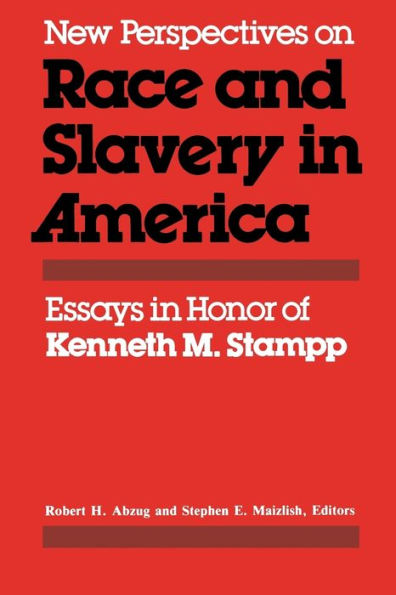
New Perspectives on Race and Slavery America: Essays Honor of Kenneth M. Stampp in Chattanooga, TN
Current price: $35.00
Barnes and Noble
New Perspectives on Race and Slavery America: Essays Honor of Kenneth M. Stampp in Chattanooga, TN
Current price: $35.00
Loading Inventory...
Size: Paperback
For more than three decades race relations have been at the forefront of historical research in America. These new essays on race and slavery—some by highly regarded, awardwinning veterans in the field and others by talented newcomers—point in fresh directions. They address specific areas of contention even as together they survey important questions across four centuries of social, cultural, and political history.
Looking at the institution itself, Robert McColley reconsiders the origins of black slavery in America, while William W. Freehling presents a striking interpretation of the Denmark Vesey slave conspiracy of 1822. In the political arena, William E. Gienapp and Stephen E. Maizlish assess the power of race and slave issues in, respectively, the Republican and Democratic parties of the 1850s.
For the Civil War and Reconstruction eras, Reid Mitchell profiles the consciousness of the average Confederate soldier, while Leon F. Litwack explores the tasks facing freed slaves. Arthur Zilversmit switches the perspective to Washington with a reevaluation of Grant's commitments to the freedmen.
Essays on the twentieth century focus on the South. James Oakes traces the rising fortunes of the supposedly vanquished planter class as it entered this century. Moving to more recent times, John G. Sproat looks at the role of South Carolina's white moderates during the struggle over segregation in the late 1950s and early 1960s and their failure at Orangeburg in 1968. Finally, Joel Williamson assesses what the loss of slavery has meant to southern culture in the 120 years since the end of the Civil War.
A wideranging yet cohesive exploration,
New Perspectives on Race and Slavery
in America takes on added significance as a volume that honors Kenneth M. Stampp, the mentor of all the authors and long considered one of the great modern pioneers in the history of slavery and the Civil War.
Looking at the institution itself, Robert McColley reconsiders the origins of black slavery in America, while William W. Freehling presents a striking interpretation of the Denmark Vesey slave conspiracy of 1822. In the political arena, William E. Gienapp and Stephen E. Maizlish assess the power of race and slave issues in, respectively, the Republican and Democratic parties of the 1850s.
For the Civil War and Reconstruction eras, Reid Mitchell profiles the consciousness of the average Confederate soldier, while Leon F. Litwack explores the tasks facing freed slaves. Arthur Zilversmit switches the perspective to Washington with a reevaluation of Grant's commitments to the freedmen.
Essays on the twentieth century focus on the South. James Oakes traces the rising fortunes of the supposedly vanquished planter class as it entered this century. Moving to more recent times, John G. Sproat looks at the role of South Carolina's white moderates during the struggle over segregation in the late 1950s and early 1960s and their failure at Orangeburg in 1968. Finally, Joel Williamson assesses what the loss of slavery has meant to southern culture in the 120 years since the end of the Civil War.
A wideranging yet cohesive exploration,
New Perspectives on Race and Slavery
in America takes on added significance as a volume that honors Kenneth M. Stampp, the mentor of all the authors and long considered one of the great modern pioneers in the history of slavery and the Civil War.
For more than three decades race relations have been at the forefront of historical research in America. These new essays on race and slavery—some by highly regarded, awardwinning veterans in the field and others by talented newcomers—point in fresh directions. They address specific areas of contention even as together they survey important questions across four centuries of social, cultural, and political history.
Looking at the institution itself, Robert McColley reconsiders the origins of black slavery in America, while William W. Freehling presents a striking interpretation of the Denmark Vesey slave conspiracy of 1822. In the political arena, William E. Gienapp and Stephen E. Maizlish assess the power of race and slave issues in, respectively, the Republican and Democratic parties of the 1850s.
For the Civil War and Reconstruction eras, Reid Mitchell profiles the consciousness of the average Confederate soldier, while Leon F. Litwack explores the tasks facing freed slaves. Arthur Zilversmit switches the perspective to Washington with a reevaluation of Grant's commitments to the freedmen.
Essays on the twentieth century focus on the South. James Oakes traces the rising fortunes of the supposedly vanquished planter class as it entered this century. Moving to more recent times, John G. Sproat looks at the role of South Carolina's white moderates during the struggle over segregation in the late 1950s and early 1960s and their failure at Orangeburg in 1968. Finally, Joel Williamson assesses what the loss of slavery has meant to southern culture in the 120 years since the end of the Civil War.
A wideranging yet cohesive exploration,
New Perspectives on Race and Slavery
in America takes on added significance as a volume that honors Kenneth M. Stampp, the mentor of all the authors and long considered one of the great modern pioneers in the history of slavery and the Civil War.
Looking at the institution itself, Robert McColley reconsiders the origins of black slavery in America, while William W. Freehling presents a striking interpretation of the Denmark Vesey slave conspiracy of 1822. In the political arena, William E. Gienapp and Stephen E. Maizlish assess the power of race and slave issues in, respectively, the Republican and Democratic parties of the 1850s.
For the Civil War and Reconstruction eras, Reid Mitchell profiles the consciousness of the average Confederate soldier, while Leon F. Litwack explores the tasks facing freed slaves. Arthur Zilversmit switches the perspective to Washington with a reevaluation of Grant's commitments to the freedmen.
Essays on the twentieth century focus on the South. James Oakes traces the rising fortunes of the supposedly vanquished planter class as it entered this century. Moving to more recent times, John G. Sproat looks at the role of South Carolina's white moderates during the struggle over segregation in the late 1950s and early 1960s and their failure at Orangeburg in 1968. Finally, Joel Williamson assesses what the loss of slavery has meant to southern culture in the 120 years since the end of the Civil War.
A wideranging yet cohesive exploration,
New Perspectives on Race and Slavery
in America takes on added significance as a volume that honors Kenneth M. Stampp, the mentor of all the authors and long considered one of the great modern pioneers in the history of slavery and the Civil War.
You May Also Like
















More About Barnes and Noble at Hamilton Place
Barnes & Noble is the world’s largest retail bookseller and a leading retailer of content, digital media and educational products. Our Nook Digital business offers a lineup of NOOK® tablets and e-Readers and an expansive collection of digital reading content through the NOOK Store®. Barnes & Noble’s mission is to operate the best omni-channel specialty retail business in America, helping both our customers and booksellers reach their aspirations, while being a credit to the communities we serve.
2100 Hamilton Pl Blvd, Chattanooga, TN 37421, United States
Find Barnes and Noble at Hamilton Place in Chattanooga, TN
Visit Barnes and Noble at Hamilton Place in Chattanooga, TN