
Home
Needlework, Affect and Social Transformation: The Everyday Textures of Feminist Activism
Barnes and Noble
Loading Inventory...
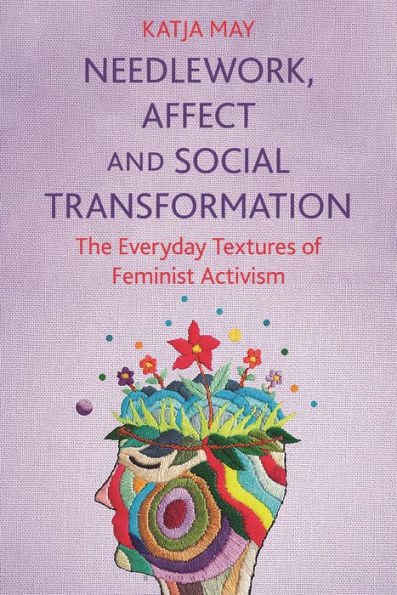
Needlework, Affect and Social Transformation: The Everyday Textures of Feminist Activism in Chattanooga, TN
Current price: $115.00
Barnes and Noble
Needlework, Affect and Social Transformation: The Everyday Textures of Feminist Activism in Chattanooga, TN
Current price: $115.00
Loading Inventory...
Size: Hardcover
Needlework, Affect and Social Transformation
offers an original framework for moving beyond binary discourses that class practices of needlework as either feminist or reactionary. Using transnational, contemporary case studies – such as the Social Justice Sewing Academy, fictionalised Bangladeshi garment workers as well as the famous Pussyhat Project – Katja May suggests a new approach to the interpretation of textile crafts as an affective social practice, and draws on under-represented issues of race.
May connects her study to broader material and social conditions of inequality, allowing for a nuanced and sensitive understanding of the role of needlework in feminist political activism. This broader look at how textile crafts function in the realms of politics and activism conceptualizes quilting, dressmaking, embroidery and knitting as routine activities invested with emotions and entangled with material and social conditions as well as political potential.
offers an original framework for moving beyond binary discourses that class practices of needlework as either feminist or reactionary. Using transnational, contemporary case studies – such as the Social Justice Sewing Academy, fictionalised Bangladeshi garment workers as well as the famous Pussyhat Project – Katja May suggests a new approach to the interpretation of textile crafts as an affective social practice, and draws on under-represented issues of race.
May connects her study to broader material and social conditions of inequality, allowing for a nuanced and sensitive understanding of the role of needlework in feminist political activism. This broader look at how textile crafts function in the realms of politics and activism conceptualizes quilting, dressmaking, embroidery and knitting as routine activities invested with emotions and entangled with material and social conditions as well as political potential.
Needlework, Affect and Social Transformation
offers an original framework for moving beyond binary discourses that class practices of needlework as either feminist or reactionary. Using transnational, contemporary case studies – such as the Social Justice Sewing Academy, fictionalised Bangladeshi garment workers as well as the famous Pussyhat Project – Katja May suggests a new approach to the interpretation of textile crafts as an affective social practice, and draws on under-represented issues of race.
May connects her study to broader material and social conditions of inequality, allowing for a nuanced and sensitive understanding of the role of needlework in feminist political activism. This broader look at how textile crafts function in the realms of politics and activism conceptualizes quilting, dressmaking, embroidery and knitting as routine activities invested with emotions and entangled with material and social conditions as well as political potential.
offers an original framework for moving beyond binary discourses that class practices of needlework as either feminist or reactionary. Using transnational, contemporary case studies – such as the Social Justice Sewing Academy, fictionalised Bangladeshi garment workers as well as the famous Pussyhat Project – Katja May suggests a new approach to the interpretation of textile crafts as an affective social practice, and draws on under-represented issues of race.
May connects her study to broader material and social conditions of inequality, allowing for a nuanced and sensitive understanding of the role of needlework in feminist political activism. This broader look at how textile crafts function in the realms of politics and activism conceptualizes quilting, dressmaking, embroidery and knitting as routine activities invested with emotions and entangled with material and social conditions as well as political potential.
You May Also Like










More About Barnes and Noble at Hamilton Place
Barnes & Noble is the world’s largest retail bookseller and a leading retailer of content, digital media and educational products. Our Nook Digital business offers a lineup of NOOK® tablets and e-Readers and an expansive collection of digital reading content through the NOOK Store®. Barnes & Noble’s mission is to operate the best omni-channel specialty retail business in America, helping both our customers and booksellers reach their aspirations, while being a credit to the communities we serve.
2100 Hamilton Pl Blvd, Chattanooga, TN 37421, United States
Find Barnes and Noble at Hamilton Place in Chattanooga, TN
Visit Barnes and Noble at Hamilton Place in Chattanooga, TN
