
Home
Naval Warfare 1914-1918: From Coronel to the Atlantic and Zeebrugge
Barnes and Noble
Loading Inventory...
Naval Warfare 1914-1918: From Coronel to the Atlantic and Zeebrugge in Chattanooga, TN
Current price: $29.99
Barnes and Noble
Naval Warfare 1914-1918: From Coronel to the Atlantic and Zeebrugge in Chattanooga, TN
Current price: $29.99
Loading Inventory...
Size: OS
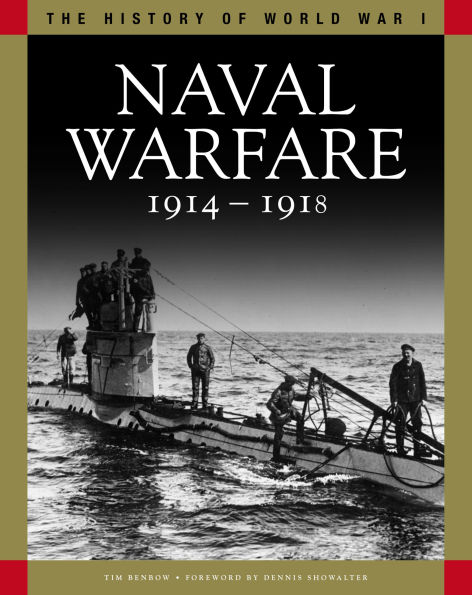
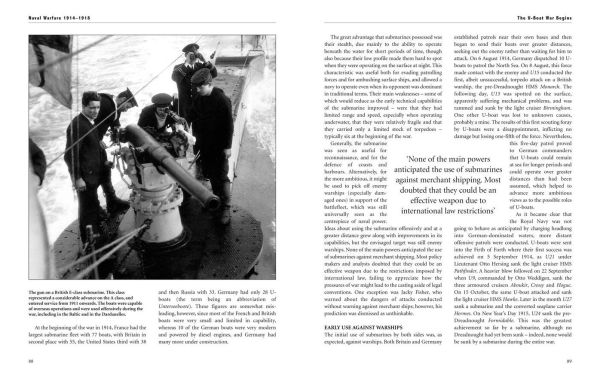
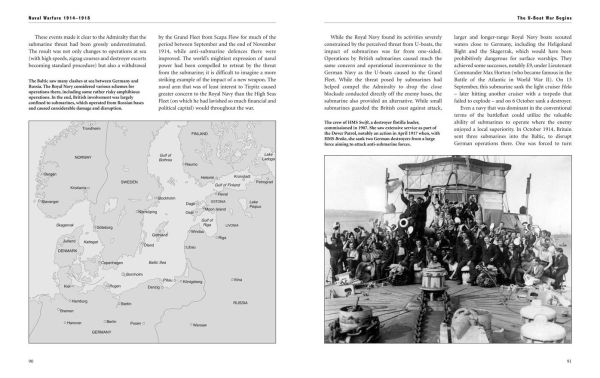
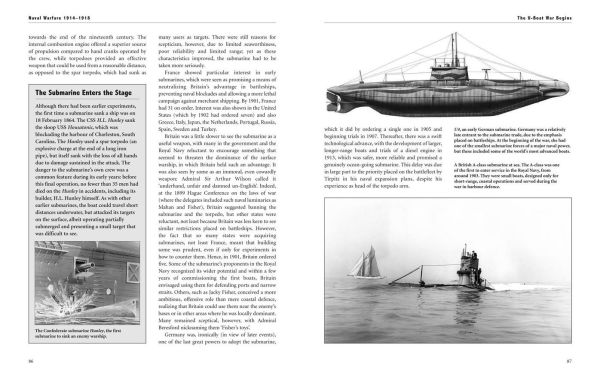
The struggle for naval supremacy and the naval arms race inspired by HMS Dreadnought may have captured the headlines, but the opening stages of the naval war were dominated by the threat from German cruisers stationed outside European waters, until they were hunted down and sunk by the Royal Navy, notably at the Battle of the Falkland Islands in 1914.
Germany switched its focus to the U-boat, seeing it as a weapon capable of winning the war by starving Britain into surrender. Unrestricted submarine warfare led to the sinking of millions of tons of shipping, but it would also force the USA to enter the war on the Allied side in 1917.
In the Mediterranean, the French fleet took the lead, while Austria-Hungary supported German actions. The Allied attempt in 1915 to use maritime power to break the strategic deadlock with an amphibious operation in the Dardanelles ultimately failed, although Allied sea power helped sustain the successful campaigns against the Ottoman Empire in the Middle East.
What would prove to be the decisive naval engagement of the war took place in 1916 at the Battle of Jutland. Whilst the clash itself was inconclusive, the German High Seas Fleet would be all but confined to port for the rest of the war, handing the initiative to the Royal Navy. The resultant command of the seas allowed the Allies to carry fresh American armies and much-needed supplies to Europe in 1917.
However, victory for the Allies was ultimately delivered by the naval economic blockade. By preventing the import of war materials and food, the fighting power and morale of the German armed forces was weakened. It was the mutiny of the High Seas Fleet in October 1918 that prompted the German Revolution and the subsequent abdication of the Kaiser.
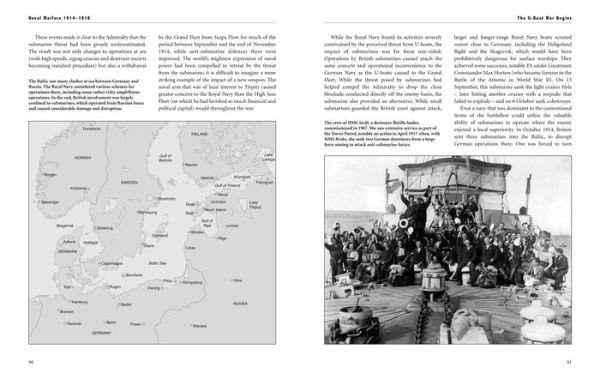
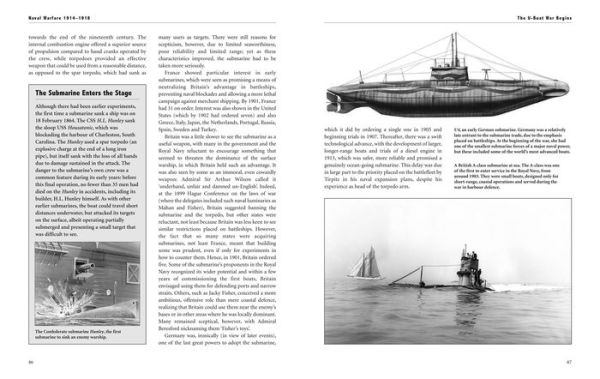
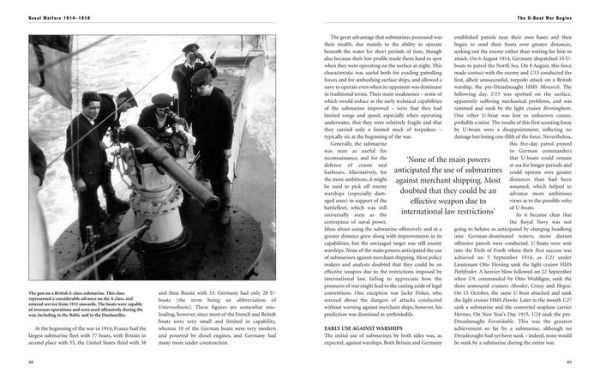
With the aid of over 300 photographs, complemented by full-colour maps,
Naval Warfare
provides a detailed guide to the background and conduct of World War I naval operations, describing the struggle to win control of the high seas around the globe.
Germany switched its focus to the U-boat, seeing it as a weapon capable of winning the war by starving Britain into surrender. Unrestricted submarine warfare led to the sinking of millions of tons of shipping, but it would also force the USA to enter the war on the Allied side in 1917.
In the Mediterranean, the French fleet took the lead, while Austria-Hungary supported German actions. The Allied attempt in 1915 to use maritime power to break the strategic deadlock with an amphibious operation in the Dardanelles ultimately failed, although Allied sea power helped sustain the successful campaigns against the Ottoman Empire in the Middle East.
What would prove to be the decisive naval engagement of the war took place in 1916 at the Battle of Jutland. Whilst the clash itself was inconclusive, the German High Seas Fleet would be all but confined to port for the rest of the war, handing the initiative to the Royal Navy. The resultant command of the seas allowed the Allies to carry fresh American armies and much-needed supplies to Europe in 1917.
However, victory for the Allies was ultimately delivered by the naval economic blockade. By preventing the import of war materials and food, the fighting power and morale of the German armed forces was weakened. It was the mutiny of the High Seas Fleet in October 1918 that prompted the German Revolution and the subsequent abdication of the Kaiser.
With the aid of over 300 photographs, complemented by full-colour maps,
Naval Warfare
provides a detailed guide to the background and conduct of World War I naval operations, describing the struggle to win control of the high seas around the globe.
The struggle for naval supremacy and the naval arms race inspired by HMS Dreadnought may have captured the headlines, but the opening stages of the naval war were dominated by the threat from German cruisers stationed outside European waters, until they were hunted down and sunk by the Royal Navy, notably at the Battle of the Falkland Islands in 1914.
Germany switched its focus to the U-boat, seeing it as a weapon capable of winning the war by starving Britain into surrender. Unrestricted submarine warfare led to the sinking of millions of tons of shipping, but it would also force the USA to enter the war on the Allied side in 1917.
In the Mediterranean, the French fleet took the lead, while Austria-Hungary supported German actions. The Allied attempt in 1915 to use maritime power to break the strategic deadlock with an amphibious operation in the Dardanelles ultimately failed, although Allied sea power helped sustain the successful campaigns against the Ottoman Empire in the Middle East.
What would prove to be the decisive naval engagement of the war took place in 1916 at the Battle of Jutland. Whilst the clash itself was inconclusive, the German High Seas Fleet would be all but confined to port for the rest of the war, handing the initiative to the Royal Navy. The resultant command of the seas allowed the Allies to carry fresh American armies and much-needed supplies to Europe in 1917.
However, victory for the Allies was ultimately delivered by the naval economic blockade. By preventing the import of war materials and food, the fighting power and morale of the German armed forces was weakened. It was the mutiny of the High Seas Fleet in October 1918 that prompted the German Revolution and the subsequent abdication of the Kaiser.
With the aid of over 300 photographs, complemented by full-colour maps,
Naval Warfare
provides a detailed guide to the background and conduct of World War I naval operations, describing the struggle to win control of the high seas around the globe.
Germany switched its focus to the U-boat, seeing it as a weapon capable of winning the war by starving Britain into surrender. Unrestricted submarine warfare led to the sinking of millions of tons of shipping, but it would also force the USA to enter the war on the Allied side in 1917.
In the Mediterranean, the French fleet took the lead, while Austria-Hungary supported German actions. The Allied attempt in 1915 to use maritime power to break the strategic deadlock with an amphibious operation in the Dardanelles ultimately failed, although Allied sea power helped sustain the successful campaigns against the Ottoman Empire in the Middle East.
What would prove to be the decisive naval engagement of the war took place in 1916 at the Battle of Jutland. Whilst the clash itself was inconclusive, the German High Seas Fleet would be all but confined to port for the rest of the war, handing the initiative to the Royal Navy. The resultant command of the seas allowed the Allies to carry fresh American armies and much-needed supplies to Europe in 1917.
However, victory for the Allies was ultimately delivered by the naval economic blockade. By preventing the import of war materials and food, the fighting power and morale of the German armed forces was weakened. It was the mutiny of the High Seas Fleet in October 1918 that prompted the German Revolution and the subsequent abdication of the Kaiser.
With the aid of over 300 photographs, complemented by full-colour maps,
Naval Warfare
provides a detailed guide to the background and conduct of World War I naval operations, describing the struggle to win control of the high seas around the globe.
You May Also Like














More About Barnes and Noble at Hamilton Place
Barnes & Noble is the world’s largest retail bookseller and a leading retailer of content, digital media and educational products. Our Nook Digital business offers a lineup of NOOK® tablets and e-Readers and an expansive collection of digital reading content through the NOOK Store®. Barnes & Noble’s mission is to operate the best omni-channel specialty retail business in America, helping both our customers and booksellers reach their aspirations, while being a credit to the communities we serve.
2100 Hamilton Pl Blvd, Chattanooga, TN 37421, United States
Find Barnes and Noble at Hamilton Place in Chattanooga, TN
Visit Barnes and Noble at Hamilton Place in Chattanooga, TN
