
Home
National Earthquake Resilience: Research, Implementation, and Outreach
Barnes and Noble
Loading Inventory...
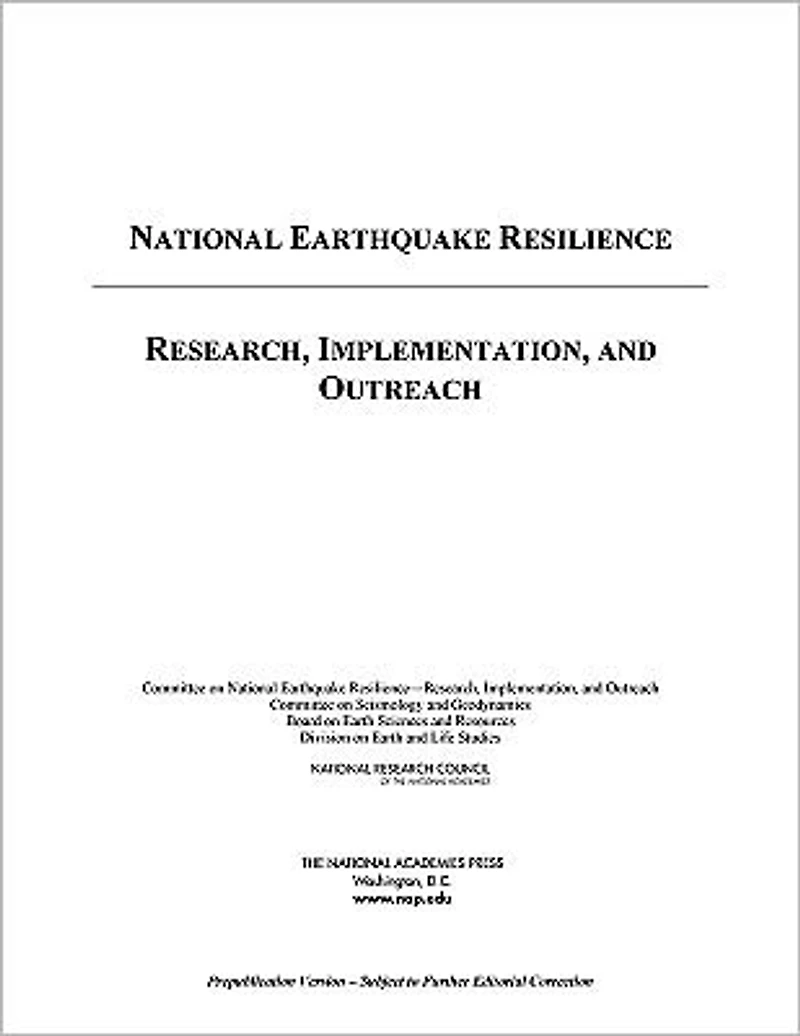
National Earthquake Resilience: Research, Implementation, and Outreach in Chattanooga, TN
By Barnes & Noble
Current price: $40.00
Barnes and Noble
National Earthquake Resilience: Research, Implementation, and Outreach in Chattanooga, TN
By Barnes & Noble
Current price: $40.00
Loading Inventory...
Size: Paperback
The United States will certainly be subject to damaging earthquakes in the future. Some of these earthquakes will occur in highly populated and vulnerable areas. Coping with moderate earthquakes is not a reliable indicator of preparedness for a major earthquake in a populated area. The recent, disastrous, magnitude-9 earthquake that struck northern Japan demonstrates the threat that earthquakes pose. Moreover, the cascading nature of impacts-the earthquake causing a tsunami, cutting electrical power supplies, and stopping the pumps needed to cool nuclear reactors-demonstrates the potential complexity of an earthquake disaster. Such compound disasters can strike any earthquake-prone populated area. National Earthquake Resilience presents a roadmap for increasing our national resilience to earthquakes. The National Earthquake Hazards Reduction Program (NEHRP) is the multi-agency program mandated by Congress to undertake activities to reduce the effects of future earthquakes in the United States. The National Institute of Standards and Technology (NIST)-the lead NEHRP agency-commissioned the National Research Council (NRC) to develop a roadmap for earthquake hazard and risk reduction in the United States that would be based on the goals and objectives for achieving national earthquake resilience described in the 2008 NEHRP Strategic Plan. National Earthquake Resilience does this by assessing the activities and costs that would be required for the nation to achieve earthquake resilience in 20 years. National Earthquake Resilience interprets resilience broadly to incorporate engineering/science (physical), social/economic (behavioral), and institutional (governing) dimensions. Resilience encompasses both pre-disaster preparedness activities and post-disaster response. In combination, these will enhance the robustness of communities in all earthquake-vulnerable regions of our nation so that they can function adequately following damaging earthquakes. While National Earthquake Resilience is written primarily for the NEHRP, it also speaks to a broader audience of policy makers, earth scientists, and emergency managers.
The United States will certainly be subject to damaging earthquakes in the future. Some of these earthquakes will occur in highly populated and vulnerable areas. Coping with moderate earthquakes is not a reliable indicator of preparedness for a major earthquake in a populated area. The recent, disastrous, magnitude-9 earthquake that struck northern Japan demonstrates the threat that earthquakes pose. Moreover, the cascading nature of impacts-the earthquake causing a tsunami, cutting electrical power supplies, and stopping the pumps needed to cool nuclear reactors-demonstrates the potential complexity of an earthquake disaster. Such compound disasters can strike any earthquake-prone populated area. National Earthquake Resilience presents a roadmap for increasing our national resilience to earthquakes. The National Earthquake Hazards Reduction Program (NEHRP) is the multi-agency program mandated by Congress to undertake activities to reduce the effects of future earthquakes in the United States. The National Institute of Standards and Technology (NIST)-the lead NEHRP agency-commissioned the National Research Council (NRC) to develop a roadmap for earthquake hazard and risk reduction in the United States that would be based on the goals and objectives for achieving national earthquake resilience described in the 2008 NEHRP Strategic Plan. National Earthquake Resilience does this by assessing the activities and costs that would be required for the nation to achieve earthquake resilience in 20 years. National Earthquake Resilience interprets resilience broadly to incorporate engineering/science (physical), social/economic (behavioral), and institutional (governing) dimensions. Resilience encompasses both pre-disaster preparedness activities and post-disaster response. In combination, these will enhance the robustness of communities in all earthquake-vulnerable regions of our nation so that they can function adequately following damaging earthquakes. While National Earthquake Resilience is written primarily for the NEHRP, it also speaks to a broader audience of policy makers, earth scientists, and emergency managers.
You May Also Like










More About Barnes and Noble at Hamilton Place
Barnes & Noble is the world’s largest retail bookseller and a leading retailer of content, digital media and educational products. Our Nook Digital business offers a lineup of NOOK® tablets and e-Readers and an expansive collection of digital reading content through the NOOK Store®. Barnes & Noble’s mission is to operate the best omni-channel specialty retail business in America, helping both our customers and booksellers reach their aspirations, while being a credit to the communities we serve.
2100 Hamilton Pl Blvd, Chattanooga, TN 37421, United States
Find Barnes and Noble at Hamilton Place in Chattanooga, TN
Visit Barnes and Noble at Hamilton Place in Chattanooga, TN
