
Home
Narrating Post/Communism: Colonial Discourse and Europe's Borderline Civilization
Barnes and Noble
Loading Inventory...
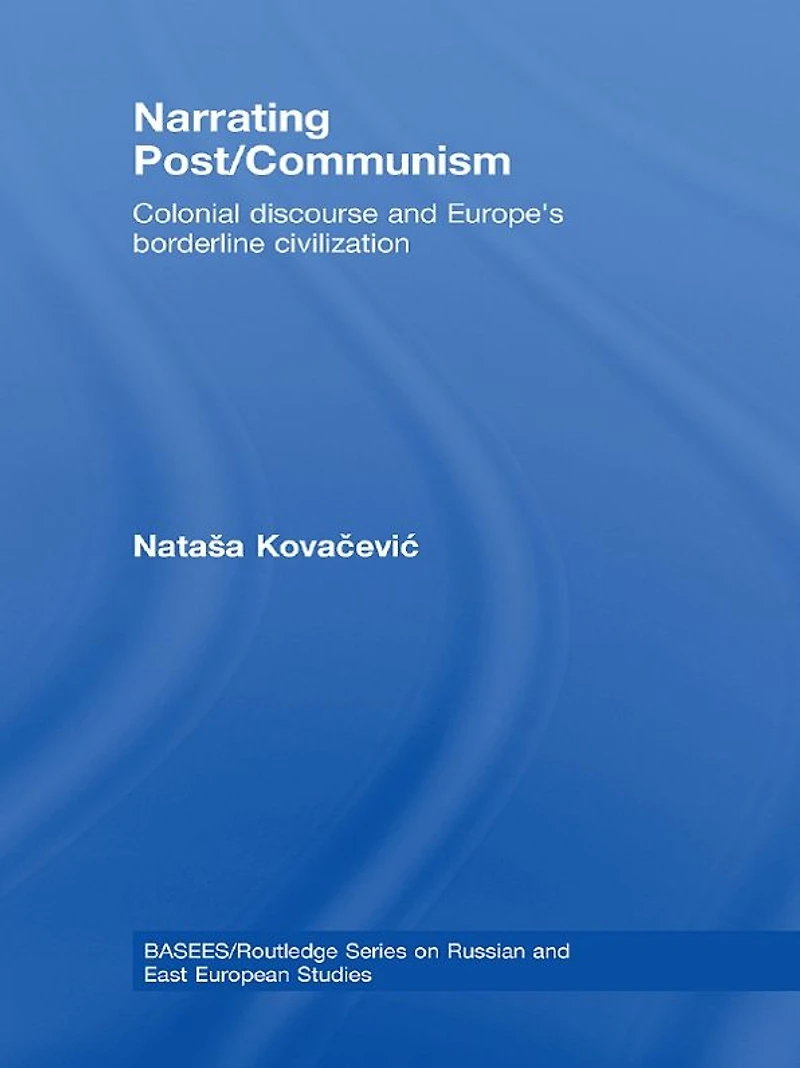
Narrating Post/Communism: Colonial Discourse and Europe's Borderline Civilization in Chattanooga, TN
By Barnes & Noble
Current price: $77.99
Barnes and Noble
Narrating Post/Communism: Colonial Discourse and Europe's Borderline Civilization in Chattanooga, TN
By Barnes & Noble
Current price: $77.99
Loading Inventory...
Size: EBook
The transition of communist Eastern Europe to capitalist democracy post-1989 and in the aftermath of the Yugoslav wars has focused much scholarly attention - in history, political science and literature - on the fostering of new identities across Eastern European countries in the absence of the old communist social and ideological frameworks. This book examines an important, but hitherto largely neglected, part of this story: the ways in which the West has defined its own identity and ideals via the demonization of communist regimes and Eastern European cultures as a totalitarian, barbarian and Orientalist "other". It describes how old Orientalist prejudices resurfaced during the Cold War period, and argues that the establishment of this discourse helped to justify transitions of Eastern European societies to market capitalism and liberal democracy, suppressing Eastern Europe’s communist histories and legacies, whilst perpetuating its dependence on the West as a source of its own sense of identity. It argues that this process of Orientalization was reinforced by the literary narratives of Eastern European and Russian anti-communist dissidents and exiles, including Vladimir Nabokov, Czeslaw Milosz and Milan Kundera, in their attempts to present themselves as native, Eastern European experts and also emancipate themselves – and their homelands – as civilized, enlightened and Westernized. It goes on to suggest that the greatest potential for recognizing and overcoming this self-Orientalization lies in post-communist literary and visual narratives, with their themes of disappointment in the social, economic, or political changes brought on by the transitions, challenge of the unequal discursive power in East-West dialogues where the East is positioned as a disciple or a mimic of the West, and the various guises of nostalgia for communism.
The transition of communist Eastern Europe to capitalist democracy post-1989 and in the aftermath of the Yugoslav wars has focused much scholarly attention - in history, political science and literature - on the fostering of new identities across Eastern European countries in the absence of the old communist social and ideological frameworks. This book examines an important, but hitherto largely neglected, part of this story: the ways in which the West has defined its own identity and ideals via the demonization of communist regimes and Eastern European cultures as a totalitarian, barbarian and Orientalist "other". It describes how old Orientalist prejudices resurfaced during the Cold War period, and argues that the establishment of this discourse helped to justify transitions of Eastern European societies to market capitalism and liberal democracy, suppressing Eastern Europe’s communist histories and legacies, whilst perpetuating its dependence on the West as a source of its own sense of identity. It argues that this process of Orientalization was reinforced by the literary narratives of Eastern European and Russian anti-communist dissidents and exiles, including Vladimir Nabokov, Czeslaw Milosz and Milan Kundera, in their attempts to present themselves as native, Eastern European experts and also emancipate themselves – and their homelands – as civilized, enlightened and Westernized. It goes on to suggest that the greatest potential for recognizing and overcoming this self-Orientalization lies in post-communist literary and visual narratives, with their themes of disappointment in the social, economic, or political changes brought on by the transitions, challenge of the unequal discursive power in East-West dialogues where the East is positioned as a disciple or a mimic of the West, and the various guises of nostalgia for communism.
You May Also Like








More About Barnes and Noble at Hamilton Place
Barnes & Noble is the world’s largest retail bookseller and a leading retailer of content, digital media and educational products. Our Nook Digital business offers a lineup of NOOK® tablets and e-Readers and an expansive collection of digital reading content through the NOOK Store®. Barnes & Noble’s mission is to operate the best omni-channel specialty retail business in America, helping both our customers and booksellers reach their aspirations, while being a credit to the communities we serve.
2100 Hamilton Pl Blvd, Chattanooga, TN 37421, United States
Find Barnes and Noble at Hamilton Place in Chattanooga, TN
Visit Barnes and Noble at Hamilton Place in Chattanooga, TN
