
Home
Narcissus, or The Lover of Himself
Barnes and Noble
Loading Inventory...
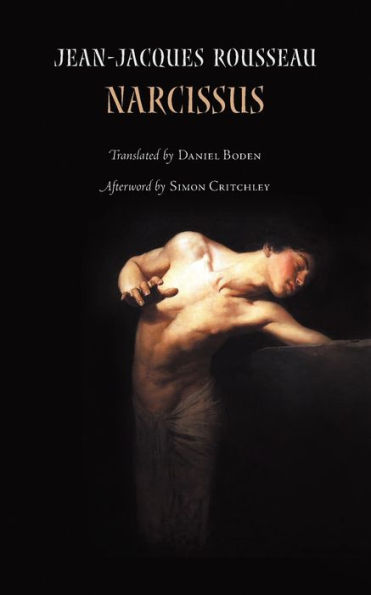
Narcissus, or The Lover of Himself in Chattanooga, TN
Current price: $16.00
Barnes and Noble
Narcissus, or The Lover of Himself in Chattanooga, TN
Current price: $16.00
Loading Inventory...
Size: OS
Narcissus, or The Lover of Himself is a play of staggering mediocrity. Jean-Jacques Rousseau, better known as a social thinker than as a playwright, claims to have written it as a young man of eighteen, some twenty years before it was performed for King Louis XV on December 18, 1752. It flopped and never saw the stage again in Rousseau's lifetime. In his preface to the play, penned after its failed production, Rousseau avows that he kept himself from publishing it for as long as he held onto some regard for his reputation as an author. This is a fairly measured judgment, for a work the caliber of Narcissus would certainly not bolster Rousseau's status. The plot, characters, language, and comedic elements come off as weak or incomplete. Hence, the reader (or spectator) could understandably question the play's merits, and the need to publish it. But had Narcissus never been, neither would its preface. This afterthought, two decades in the making, becomes, in many ways, a much more interesting opening act to the comedy that follows. It is rich in philosophy and criticism, madly buzzing with paranoia, and surprisingly convincing in its proposition that the arts and sciences, the pursuit of knowledge, the cultivation of letters, and all the trappings of civilization are destructive forces, harmful to man's morality. It is an apology for having experimented with writing literature in his foolish youth and, at the same time, a justification for the existence of his art. The preface, in which he writes, "I must, despite my reluctance, speak of myself," is fully narcissistic. Peering over Rousseau's shoulder, we, too, see his reflection: a man with reason on his side, standing against his enemies, his age, and, indeed, the world. Daniel Boden's translation of Narcissus and its preface is true to the voice, times, and incongruities of Rousseau. In the afterword that crowns this edition, Simon Critchley situates the play and preface in their historical context, makes connections to other works by Rousseau, comments on the philosophy put forward in the preface, reflects on what brings the classics to the stage, and proposes, quite simply, that theater is narcissism.
Narcissus, or The Lover of Himself is a play of staggering mediocrity. Jean-Jacques Rousseau, better known as a social thinker than as a playwright, claims to have written it as a young man of eighteen, some twenty years before it was performed for King Louis XV on December 18, 1752. It flopped and never saw the stage again in Rousseau's lifetime. In his preface to the play, penned after its failed production, Rousseau avows that he kept himself from publishing it for as long as he held onto some regard for his reputation as an author. This is a fairly measured judgment, for a work the caliber of Narcissus would certainly not bolster Rousseau's status. The plot, characters, language, and comedic elements come off as weak or incomplete. Hence, the reader (or spectator) could understandably question the play's merits, and the need to publish it. But had Narcissus never been, neither would its preface. This afterthought, two decades in the making, becomes, in many ways, a much more interesting opening act to the comedy that follows. It is rich in philosophy and criticism, madly buzzing with paranoia, and surprisingly convincing in its proposition that the arts and sciences, the pursuit of knowledge, the cultivation of letters, and all the trappings of civilization are destructive forces, harmful to man's morality. It is an apology for having experimented with writing literature in his foolish youth and, at the same time, a justification for the existence of his art. The preface, in which he writes, "I must, despite my reluctance, speak of myself," is fully narcissistic. Peering over Rousseau's shoulder, we, too, see his reflection: a man with reason on his side, standing against his enemies, his age, and, indeed, the world. Daniel Boden's translation of Narcissus and its preface is true to the voice, times, and incongruities of Rousseau. In the afterword that crowns this edition, Simon Critchley situates the play and preface in their historical context, makes connections to other works by Rousseau, comments on the philosophy put forward in the preface, reflects on what brings the classics to the stage, and proposes, quite simply, that theater is narcissism.
You May Also Like


![Songs for Distingué Lovers [Yellow Vinyl] [Barnes & Noble Exclusive]](https://prodimage.images-bn.com/pimages/0602458656831_p0_v2_s600x595.jpg)










More About Barnes and Noble at Hamilton Place
Barnes & Noble is the world’s largest retail bookseller and a leading retailer of content, digital media and educational products. Our Nook Digital business offers a lineup of NOOK® tablets and e-Readers and an expansive collection of digital reading content through the NOOK Store®. Barnes & Noble’s mission is to operate the best omni-channel specialty retail business in America, helping both our customers and booksellers reach their aspirations, while being a credit to the communities we serve.
2100 Hamilton Pl Blvd, Chattanooga, TN 37421, United States
Find Barnes and Noble at Hamilton Place in Chattanooga, TN
Visit Barnes and Noble at Hamilton Place in Chattanooga, TN
