
Home
Music, Piety, and Political Power 17th-Century Salzburg: The Sounds of Good Government
Barnes and Noble
Loading Inventory...
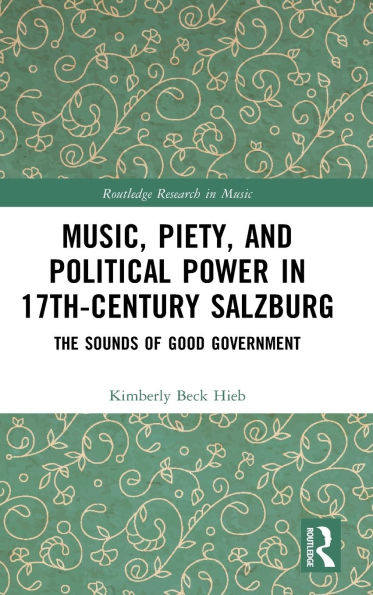
Music, Piety, and Political Power 17th-Century Salzburg: The Sounds of Good Government in Chattanooga, TN
Current price: $190.00
Barnes and Noble
Music, Piety, and Political Power 17th-Century Salzburg: The Sounds of Good Government in Chattanooga, TN
Current price: $190.00
Loading Inventory...
Size: Hardcover
Music, Piety, and Political Power in 17th-Century Salzburg
traces the role of sacred music in the service of politics at the archbishopric of Salzburg, one of many jurisdictions that made up the Holy Roman Empire in the second half of the 17th century.
The author reveals that the use of music to present political, cultural, and religious meanings was not limited to cross-confessional communities, the Imperial capital of Vienna, or other early modern metropolitan centers such as Munich and Paris.
Presenting music as a powerful cultural artifact that informs our understanding of the religious and political relationships shaping the history of central Europe, this study expands our understanding of the history of music, absolutism, and Catholicism in the 17th century and will be of interest to scholars working in those areas.
traces the role of sacred music in the service of politics at the archbishopric of Salzburg, one of many jurisdictions that made up the Holy Roman Empire in the second half of the 17th century.
The author reveals that the use of music to present political, cultural, and religious meanings was not limited to cross-confessional communities, the Imperial capital of Vienna, or other early modern metropolitan centers such as Munich and Paris.
Presenting music as a powerful cultural artifact that informs our understanding of the religious and political relationships shaping the history of central Europe, this study expands our understanding of the history of music, absolutism, and Catholicism in the 17th century and will be of interest to scholars working in those areas.
Music, Piety, and Political Power in 17th-Century Salzburg
traces the role of sacred music in the service of politics at the archbishopric of Salzburg, one of many jurisdictions that made up the Holy Roman Empire in the second half of the 17th century.
The author reveals that the use of music to present political, cultural, and religious meanings was not limited to cross-confessional communities, the Imperial capital of Vienna, or other early modern metropolitan centers such as Munich and Paris.
Presenting music as a powerful cultural artifact that informs our understanding of the religious and political relationships shaping the history of central Europe, this study expands our understanding of the history of music, absolutism, and Catholicism in the 17th century and will be of interest to scholars working in those areas.
traces the role of sacred music in the service of politics at the archbishopric of Salzburg, one of many jurisdictions that made up the Holy Roman Empire in the second half of the 17th century.
The author reveals that the use of music to present political, cultural, and religious meanings was not limited to cross-confessional communities, the Imperial capital of Vienna, or other early modern metropolitan centers such as Munich and Paris.
Presenting music as a powerful cultural artifact that informs our understanding of the religious and political relationships shaping the history of central Europe, this study expands our understanding of the history of music, absolutism, and Catholicism in the 17th century and will be of interest to scholars working in those areas.
You May Also Like












More About Barnes and Noble at Hamilton Place
Barnes & Noble is the world’s largest retail bookseller and a leading retailer of content, digital media and educational products. Our Nook Digital business offers a lineup of NOOK® tablets and e-Readers and an expansive collection of digital reading content through the NOOK Store®. Barnes & Noble’s mission is to operate the best omni-channel specialty retail business in America, helping both our customers and booksellers reach their aspirations, while being a credit to the communities we serve.
2100 Hamilton Pl Blvd, Chattanooga, TN 37421, United States
Find Barnes and Noble at Hamilton Place in Chattanooga, TN
Visit Barnes and Noble at Hamilton Place in Chattanooga, TN