
Home
Museum Informatics: People, Information, and Technology Museums
Barnes and Noble
Loading Inventory...
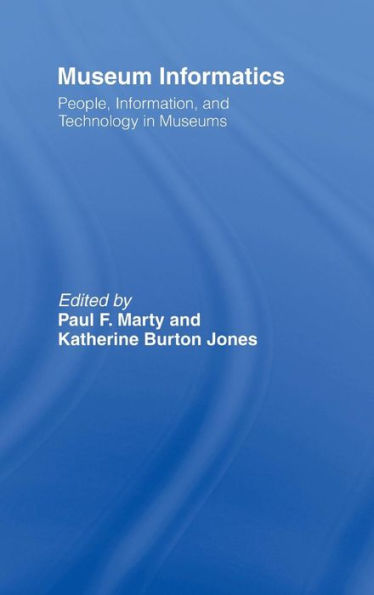
Museum Informatics: People, Information, and Technology Museums in Chattanooga, TN
Current price: $190.00
Barnes and Noble
Museum Informatics: People, Information, and Technology Museums in Chattanooga, TN
Current price: $190.00
Loading Inventory...
Size: Hardcover
Museum Informatics
explores the sociotechnical issues that arise when people, information, and technology interact in museums. It is designed specifically to address the many challenges faced by museums, museum professionals, and museum visitors in the information society. It examines not only applications of new technologies in museums, but how advances in information science and technology have changed the very nature of museums, both what it is to work in one, and what it is to visit one.
To explore these issues,
offers a selection of contributed chapters, written by leading museum researchers and practitioners, each covering significant themes or concepts fundamental to the study of museum informatics and providing practical examples and detailed case studies useful for museum researchers and professionals. In this way,
offers a fresh perspective on the sociotechnical interactions that occur between people, information, and technology in museums, presented in a format accessible to multiple audiences, including researchers, students, museum professionals, and museum visitors.
explores the sociotechnical issues that arise when people, information, and technology interact in museums. It is designed specifically to address the many challenges faced by museums, museum professionals, and museum visitors in the information society. It examines not only applications of new technologies in museums, but how advances in information science and technology have changed the very nature of museums, both what it is to work in one, and what it is to visit one.
To explore these issues,
offers a selection of contributed chapters, written by leading museum researchers and practitioners, each covering significant themes or concepts fundamental to the study of museum informatics and providing practical examples and detailed case studies useful for museum researchers and professionals. In this way,
offers a fresh perspective on the sociotechnical interactions that occur between people, information, and technology in museums, presented in a format accessible to multiple audiences, including researchers, students, museum professionals, and museum visitors.
Museum Informatics
explores the sociotechnical issues that arise when people, information, and technology interact in museums. It is designed specifically to address the many challenges faced by museums, museum professionals, and museum visitors in the information society. It examines not only applications of new technologies in museums, but how advances in information science and technology have changed the very nature of museums, both what it is to work in one, and what it is to visit one.
To explore these issues,
offers a selection of contributed chapters, written by leading museum researchers and practitioners, each covering significant themes or concepts fundamental to the study of museum informatics and providing practical examples and detailed case studies useful for museum researchers and professionals. In this way,
offers a fresh perspective on the sociotechnical interactions that occur between people, information, and technology in museums, presented in a format accessible to multiple audiences, including researchers, students, museum professionals, and museum visitors.
explores the sociotechnical issues that arise when people, information, and technology interact in museums. It is designed specifically to address the many challenges faced by museums, museum professionals, and museum visitors in the information society. It examines not only applications of new technologies in museums, but how advances in information science and technology have changed the very nature of museums, both what it is to work in one, and what it is to visit one.
To explore these issues,
offers a selection of contributed chapters, written by leading museum researchers and practitioners, each covering significant themes or concepts fundamental to the study of museum informatics and providing practical examples and detailed case studies useful for museum researchers and professionals. In this way,
offers a fresh perspective on the sociotechnical interactions that occur between people, information, and technology in museums, presented in a format accessible to multiple audiences, including researchers, students, museum professionals, and museum visitors.
You May Also Like












More About Barnes and Noble at Hamilton Place
Barnes & Noble is the world’s largest retail bookseller and a leading retailer of content, digital media and educational products. Our Nook Digital business offers a lineup of NOOK® tablets and e-Readers and an expansive collection of digital reading content through the NOOK Store®. Barnes & Noble’s mission is to operate the best omni-channel specialty retail business in America, helping both our customers and booksellers reach their aspirations, while being a credit to the communities we serve.
2100 Hamilton Pl Blvd, Chattanooga, TN 37421, United States
Find Barnes and Noble at Hamilton Place in Chattanooga, TN
Visit Barnes and Noble at Hamilton Place in Chattanooga, TN
