
Home
Mothers, Comrades, and Outcasts East German Women's Film
Barnes and Noble
Loading Inventory...
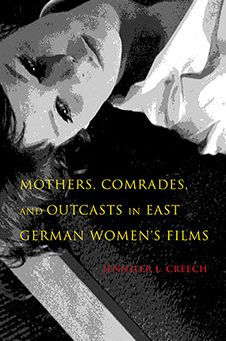
Mothers, Comrades, and Outcasts East German Women's Film in Chattanooga, TN
Current price: $38.00
Barnes and Noble
Mothers, Comrades, and Outcasts East German Women's Film in Chattanooga, TN
Current price: $38.00
Loading Inventory...
Size: Paperback
Mothers, Comrades, and Outcasts in East German Women's Film
merges feminist film theory and cultural history in an investigation of "women's films" that span the last two decades of the former East Germany. Jennifer L. Creech explores the ways in which these films functioned as an alternative public sphere where official ideologies of socialist progress and utopian collectivism could be resisted. Emerging after the infamous cultural freeze of 1965, these women's films reveal a shift from overt political critique to a covert politics located in the intimate, problem-rich experiences of everyday life under socialism. Through an analysis of films that focus on what were perceived as "women's concerns"—marital problems, motherhood, emancipation, and residual patriarchy—Creech argues that the female protagonist served as a crystallization of socialist contradictions. By framing their politics in terms of women's concerns, these films used women's desire and agency to contest the more general problems of social alienation and collectivism, and to re-imagine the possibilities of self-fulfillment under socialism.
merges feminist film theory and cultural history in an investigation of "women's films" that span the last two decades of the former East Germany. Jennifer L. Creech explores the ways in which these films functioned as an alternative public sphere where official ideologies of socialist progress and utopian collectivism could be resisted. Emerging after the infamous cultural freeze of 1965, these women's films reveal a shift from overt political critique to a covert politics located in the intimate, problem-rich experiences of everyday life under socialism. Through an analysis of films that focus on what were perceived as "women's concerns"—marital problems, motherhood, emancipation, and residual patriarchy—Creech argues that the female protagonist served as a crystallization of socialist contradictions. By framing their politics in terms of women's concerns, these films used women's desire and agency to contest the more general problems of social alienation and collectivism, and to re-imagine the possibilities of self-fulfillment under socialism.
Mothers, Comrades, and Outcasts in East German Women's Film
merges feminist film theory and cultural history in an investigation of "women's films" that span the last two decades of the former East Germany. Jennifer L. Creech explores the ways in which these films functioned as an alternative public sphere where official ideologies of socialist progress and utopian collectivism could be resisted. Emerging after the infamous cultural freeze of 1965, these women's films reveal a shift from overt political critique to a covert politics located in the intimate, problem-rich experiences of everyday life under socialism. Through an analysis of films that focus on what were perceived as "women's concerns"—marital problems, motherhood, emancipation, and residual patriarchy—Creech argues that the female protagonist served as a crystallization of socialist contradictions. By framing their politics in terms of women's concerns, these films used women's desire and agency to contest the more general problems of social alienation and collectivism, and to re-imagine the possibilities of self-fulfillment under socialism.
merges feminist film theory and cultural history in an investigation of "women's films" that span the last two decades of the former East Germany. Jennifer L. Creech explores the ways in which these films functioned as an alternative public sphere where official ideologies of socialist progress and utopian collectivism could be resisted. Emerging after the infamous cultural freeze of 1965, these women's films reveal a shift from overt political critique to a covert politics located in the intimate, problem-rich experiences of everyday life under socialism. Through an analysis of films that focus on what were perceived as "women's concerns"—marital problems, motherhood, emancipation, and residual patriarchy—Creech argues that the female protagonist served as a crystallization of socialist contradictions. By framing their politics in terms of women's concerns, these films used women's desire and agency to contest the more general problems of social alienation and collectivism, and to re-imagine the possibilities of self-fulfillment under socialism.
You May Also Like

















More About Barnes and Noble at Hamilton Place
Barnes & Noble is the world’s largest retail bookseller and a leading retailer of content, digital media and educational products. Our Nook Digital business offers a lineup of NOOK® tablets and e-Readers and an expansive collection of digital reading content through the NOOK Store®. Barnes & Noble’s mission is to operate the best omni-channel specialty retail business in America, helping both our customers and booksellers reach their aspirations, while being a credit to the communities we serve.
2100 Hamilton Pl Blvd, Chattanooga, TN 37421, United States
Find Barnes and Noble at Hamilton Place in Chattanooga, TN
Visit Barnes and Noble at Hamilton Place in Chattanooga, TN
