
Home
Morée - A Hidden Duchamp That Reframes History: The Arensberg Circle, a long-lost painting, and a modern art revelation
Barnes and Noble
Loading Inventory...
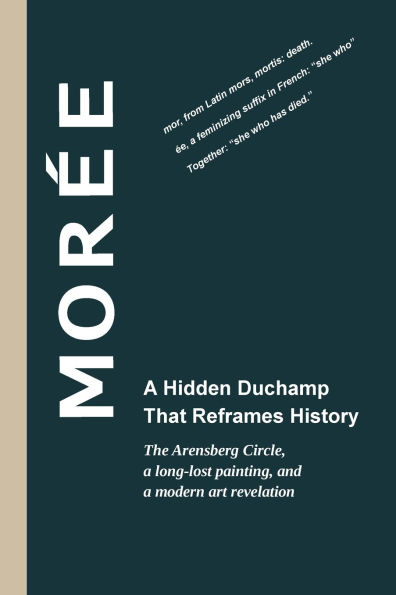
Morée - A Hidden Duchamp That Reframes History: The Arensberg Circle, a long-lost painting, and a modern art revelation in Chattanooga, TN
Current price: $29.95
Barnes and Noble
Morée - A Hidden Duchamp That Reframes History: The Arensberg Circle, a long-lost painting, and a modern art revelation in Chattanooga, TN
Current price: $29.95
Loading Inventory...
Size: OS
Morée: Marcel Duchamp and the Hidden Origin of Dada
Painted ca. 1915-16,
Morée
is a mysterious work that may rewrite the early history of Dada. Its surface-a dramatic theatrical field crossed by acidic drips and suspended pearls-reveals an intelligence at odds with ornament and display. The scraped signature, reading "..Morée..," suggests deliberate concealment: a pseudonym and a clue.
This book presents the first sustained study of
, arguing that it was conceived within Marcel Duchamp's New York circle and functions as a coded experiment in authorship, sabotage, and self-erasure. Through close visual, material, and chronological analysis, it reconstructs the painting's relationship to Duchamp's
Nude Descending a Staircase
, Francis Picabia's
Mistinguett
, and the later culmination of
Étant donnés
.
Drawing on archival evidence and newly documented physical details,
proposes that the painting is not a derivative echo of Dada but its silent precursor-a work designed to remain unrecognized until the right historical moment. It invites readers to consider that modern art's first true act of critique may have been one of disguise.
Painted ca. 1915-16,
Morée
is a mysterious work that may rewrite the early history of Dada. Its surface-a dramatic theatrical field crossed by acidic drips and suspended pearls-reveals an intelligence at odds with ornament and display. The scraped signature, reading "..Morée..," suggests deliberate concealment: a pseudonym and a clue.
This book presents the first sustained study of
, arguing that it was conceived within Marcel Duchamp's New York circle and functions as a coded experiment in authorship, sabotage, and self-erasure. Through close visual, material, and chronological analysis, it reconstructs the painting's relationship to Duchamp's
Nude Descending a Staircase
, Francis Picabia's
Mistinguett
, and the later culmination of
Étant donnés
.
Drawing on archival evidence and newly documented physical details,
proposes that the painting is not a derivative echo of Dada but its silent precursor-a work designed to remain unrecognized until the right historical moment. It invites readers to consider that modern art's first true act of critique may have been one of disguise.
Morée: Marcel Duchamp and the Hidden Origin of Dada
Painted ca. 1915-16,
Morée
is a mysterious work that may rewrite the early history of Dada. Its surface-a dramatic theatrical field crossed by acidic drips and suspended pearls-reveals an intelligence at odds with ornament and display. The scraped signature, reading "..Morée..," suggests deliberate concealment: a pseudonym and a clue.
This book presents the first sustained study of
, arguing that it was conceived within Marcel Duchamp's New York circle and functions as a coded experiment in authorship, sabotage, and self-erasure. Through close visual, material, and chronological analysis, it reconstructs the painting's relationship to Duchamp's
Nude Descending a Staircase
, Francis Picabia's
Mistinguett
, and the later culmination of
Étant donnés
.
Drawing on archival evidence and newly documented physical details,
proposes that the painting is not a derivative echo of Dada but its silent precursor-a work designed to remain unrecognized until the right historical moment. It invites readers to consider that modern art's first true act of critique may have been one of disguise.
Painted ca. 1915-16,
Morée
is a mysterious work that may rewrite the early history of Dada. Its surface-a dramatic theatrical field crossed by acidic drips and suspended pearls-reveals an intelligence at odds with ornament and display. The scraped signature, reading "..Morée..," suggests deliberate concealment: a pseudonym and a clue.
This book presents the first sustained study of
, arguing that it was conceived within Marcel Duchamp's New York circle and functions as a coded experiment in authorship, sabotage, and self-erasure. Through close visual, material, and chronological analysis, it reconstructs the painting's relationship to Duchamp's
Nude Descending a Staircase
, Francis Picabia's
Mistinguett
, and the later culmination of
Étant donnés
.
Drawing on archival evidence and newly documented physical details,
proposes that the painting is not a derivative echo of Dada but its silent precursor-a work designed to remain unrecognized until the right historical moment. It invites readers to consider that modern art's first true act of critique may have been one of disguise.
You May Also Like













More About Barnes and Noble at Hamilton Place
Barnes & Noble is the world’s largest retail bookseller and a leading retailer of content, digital media and educational products. Our Nook Digital business offers a lineup of NOOK® tablets and e-Readers and an expansive collection of digital reading content through the NOOK Store®. Barnes & Noble’s mission is to operate the best omni-channel specialty retail business in America, helping both our customers and booksellers reach their aspirations, while being a credit to the communities we serve.
2100 Hamilton Pl Blvd, Chattanooga, TN 37421, United States
Find Barnes and Noble at Hamilton Place in Chattanooga, TN
Visit Barnes and Noble at Hamilton Place in Chattanooga, TN
