
Home
Money and Politics
Barnes and Noble
Loading Inventory...
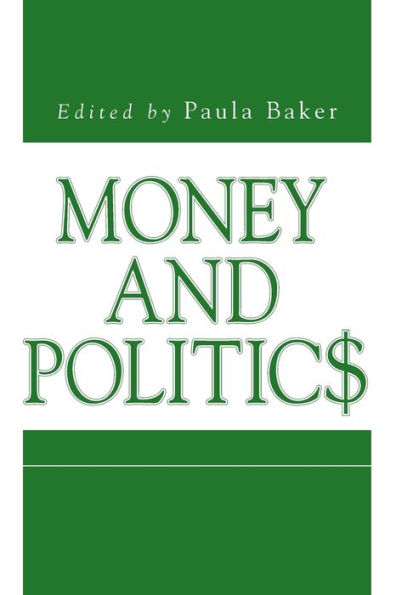
Money and Politics in Chattanooga, TN
Current price: $40.95
Barnes and Noble
Money and Politics in Chattanooga, TN
Current price: $40.95
Loading Inventory...
Size: OS
That large financial contributions distort American politics and American democracy is an idea that stands as a truism in political debate. It has fired reform movements; it has inspired round after round of efforts to limit who can give to candidates and parties, how much they can give, and how much campaigns can spend. The laws have generated constitutional arguments about free speech, a still inconclusive literature on whether contributions actually shape policy, and a great deal of work for lawyers and financial analysts who monitor compliance. In the wake of Enron's collapse and subsequent revelations about that corporation's involvement with policy makers, the public's attention has once again focused on the role that money plays in politics. Little of the scholarly work (and none of the legal work) is historical. Yet history can shed light on the long-running debate about the impact of money on politics and what, if anything, are plausible policy options.
This collection of original essays is a step in that direction. The chapters cover episodes from the early nineteenth century through the 1970s. They illustrate how deep concern about money in politics runs—and how the definition of the problem has changed over time. Through the nineteenth century, the "spoils system" in which party loyalists gained reward for their efforts appeared to be the evil that blocked responsive parties and honest public administration. Party war chests that brought howls of complaint (and great exaggeration) seemed quaint by the middle of the twentieth century. In part because reform had weakened the parties and campaigns required consultants' skills in coordination and in part because television advertising was so expensive, the cost of campaigns rose. Candidates griped and policy entrepreneurs worked out possible solutions, which were in place before the Watergate scandal focused public attention on campaign finance. In the history of campaign-finance reform, one generation's solutions have tended to become another's problem. Contributors to the volume are Paula Baker, Robert Mutch, Mark Wahlgren Summers, and Julian E. Zelizer.
This collection of original essays is a step in that direction. The chapters cover episodes from the early nineteenth century through the 1970s. They illustrate how deep concern about money in politics runs—and how the definition of the problem has changed over time. Through the nineteenth century, the "spoils system" in which party loyalists gained reward for their efforts appeared to be the evil that blocked responsive parties and honest public administration. Party war chests that brought howls of complaint (and great exaggeration) seemed quaint by the middle of the twentieth century. In part because reform had weakened the parties and campaigns required consultants' skills in coordination and in part because television advertising was so expensive, the cost of campaigns rose. Candidates griped and policy entrepreneurs worked out possible solutions, which were in place before the Watergate scandal focused public attention on campaign finance. In the history of campaign-finance reform, one generation's solutions have tended to become another's problem. Contributors to the volume are Paula Baker, Robert Mutch, Mark Wahlgren Summers, and Julian E. Zelizer.
That large financial contributions distort American politics and American democracy is an idea that stands as a truism in political debate. It has fired reform movements; it has inspired round after round of efforts to limit who can give to candidates and parties, how much they can give, and how much campaigns can spend. The laws have generated constitutional arguments about free speech, a still inconclusive literature on whether contributions actually shape policy, and a great deal of work for lawyers and financial analysts who monitor compliance. In the wake of Enron's collapse and subsequent revelations about that corporation's involvement with policy makers, the public's attention has once again focused on the role that money plays in politics. Little of the scholarly work (and none of the legal work) is historical. Yet history can shed light on the long-running debate about the impact of money on politics and what, if anything, are plausible policy options.
This collection of original essays is a step in that direction. The chapters cover episodes from the early nineteenth century through the 1970s. They illustrate how deep concern about money in politics runs—and how the definition of the problem has changed over time. Through the nineteenth century, the "spoils system" in which party loyalists gained reward for their efforts appeared to be the evil that blocked responsive parties and honest public administration. Party war chests that brought howls of complaint (and great exaggeration) seemed quaint by the middle of the twentieth century. In part because reform had weakened the parties and campaigns required consultants' skills in coordination and in part because television advertising was so expensive, the cost of campaigns rose. Candidates griped and policy entrepreneurs worked out possible solutions, which were in place before the Watergate scandal focused public attention on campaign finance. In the history of campaign-finance reform, one generation's solutions have tended to become another's problem. Contributors to the volume are Paula Baker, Robert Mutch, Mark Wahlgren Summers, and Julian E. Zelizer.
This collection of original essays is a step in that direction. The chapters cover episodes from the early nineteenth century through the 1970s. They illustrate how deep concern about money in politics runs—and how the definition of the problem has changed over time. Through the nineteenth century, the "spoils system" in which party loyalists gained reward for their efforts appeared to be the evil that blocked responsive parties and honest public administration. Party war chests that brought howls of complaint (and great exaggeration) seemed quaint by the middle of the twentieth century. In part because reform had weakened the parties and campaigns required consultants' skills in coordination and in part because television advertising was so expensive, the cost of campaigns rose. Candidates griped and policy entrepreneurs worked out possible solutions, which were in place before the Watergate scandal focused public attention on campaign finance. In the history of campaign-finance reform, one generation's solutions have tended to become another's problem. Contributors to the volume are Paula Baker, Robert Mutch, Mark Wahlgren Summers, and Julian E. Zelizer.
You May Also Like











More About Barnes and Noble at Hamilton Place
Barnes & Noble is the world’s largest retail bookseller and a leading retailer of content, digital media and educational products. Our Nook Digital business offers a lineup of NOOK® tablets and e-Readers and an expansive collection of digital reading content through the NOOK Store®. Barnes & Noble’s mission is to operate the best omni-channel specialty retail business in America, helping both our customers and booksellers reach their aspirations, while being a credit to the communities we serve.
2100 Hamilton Pl Blvd, Chattanooga, TN 37421, United States
Find Barnes and Noble at Hamilton Place in Chattanooga, TN
Visit Barnes and Noble at Hamilton Place in Chattanooga, TN