
Home
Molecular Photoswitches: Chemistry, Properties, and Applications, 2 Volume Set
Barnes and Noble
Loading Inventory...
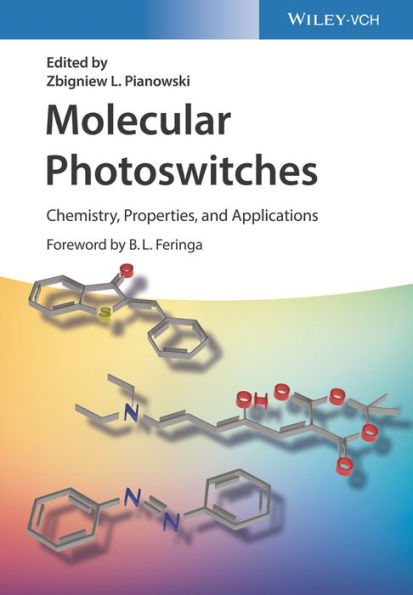
Molecular Photoswitches: Chemistry, Properties, and Applications, 2 Volume Set in Chattanooga, TN
Current price: $445.00
Barnes and Noble
Molecular Photoswitches: Chemistry, Properties, and Applications, 2 Volume Set in Chattanooga, TN
Current price: $445.00
Loading Inventory...
Size: Hardcover
A comprehensive overview about the emerging field of photoswitches and their applications in materials science and biology
Molecular Photoswitches
guides the reader through the basic molecular structures of photochromic compounds and their applications in the area of photoresponsive materials as well as in the biological context. The initial chapters describe individual classes of molecular photoswitches, introducing their principles of photochromism, typical switching wavelengths, thermal stability of photoisomers and other key information, which is ordinarily spread in the literature. These classes comprise i.a. azobenzenes, diazocines, arylazoheterocycles, arylhydrazones, indigoids, photochromic imines, or acylhydrazones. The book also covers:
Catalysis with molecular switches
Applications in photochromic porous materials, liquid crystals, or nanoparticles
Light-responsive molecular machines, logic devices, and molecular magnets
Photomodulation of biological systems: photoswitchable biopolymers, lightmodulated antibiotics, cytotoxins, ion channel inhibitors, light-propelled artificial muscles, and computationally designed photochromic proteins
This two-volume work is a valuable guide for researchers and non-experts working in the field of photochemistry, organic chemistry, catalysis, materials science, biology, and medicine.
Molecular Photoswitches
guides the reader through the basic molecular structures of photochromic compounds and their applications in the area of photoresponsive materials as well as in the biological context. The initial chapters describe individual classes of molecular photoswitches, introducing their principles of photochromism, typical switching wavelengths, thermal stability of photoisomers and other key information, which is ordinarily spread in the literature. These classes comprise i.a. azobenzenes, diazocines, arylazoheterocycles, arylhydrazones, indigoids, photochromic imines, or acylhydrazones. The book also covers:
Catalysis with molecular switches
Applications in photochromic porous materials, liquid crystals, or nanoparticles
Light-responsive molecular machines, logic devices, and molecular magnets
Photomodulation of biological systems: photoswitchable biopolymers, lightmodulated antibiotics, cytotoxins, ion channel inhibitors, light-propelled artificial muscles, and computationally designed photochromic proteins
This two-volume work is a valuable guide for researchers and non-experts working in the field of photochemistry, organic chemistry, catalysis, materials science, biology, and medicine.
A comprehensive overview about the emerging field of photoswitches and their applications in materials science and biology
Molecular Photoswitches
guides the reader through the basic molecular structures of photochromic compounds and their applications in the area of photoresponsive materials as well as in the biological context. The initial chapters describe individual classes of molecular photoswitches, introducing their principles of photochromism, typical switching wavelengths, thermal stability of photoisomers and other key information, which is ordinarily spread in the literature. These classes comprise i.a. azobenzenes, diazocines, arylazoheterocycles, arylhydrazones, indigoids, photochromic imines, or acylhydrazones. The book also covers:
Catalysis with molecular switches
Applications in photochromic porous materials, liquid crystals, or nanoparticles
Light-responsive molecular machines, logic devices, and molecular magnets
Photomodulation of biological systems: photoswitchable biopolymers, lightmodulated antibiotics, cytotoxins, ion channel inhibitors, light-propelled artificial muscles, and computationally designed photochromic proteins
This two-volume work is a valuable guide for researchers and non-experts working in the field of photochemistry, organic chemistry, catalysis, materials science, biology, and medicine.
Molecular Photoswitches
guides the reader through the basic molecular structures of photochromic compounds and their applications in the area of photoresponsive materials as well as in the biological context. The initial chapters describe individual classes of molecular photoswitches, introducing their principles of photochromism, typical switching wavelengths, thermal stability of photoisomers and other key information, which is ordinarily spread in the literature. These classes comprise i.a. azobenzenes, diazocines, arylazoheterocycles, arylhydrazones, indigoids, photochromic imines, or acylhydrazones. The book also covers:
Catalysis with molecular switches
Applications in photochromic porous materials, liquid crystals, or nanoparticles
Light-responsive molecular machines, logic devices, and molecular magnets
Photomodulation of biological systems: photoswitchable biopolymers, lightmodulated antibiotics, cytotoxins, ion channel inhibitors, light-propelled artificial muscles, and computationally designed photochromic proteins
This two-volume work is a valuable guide for researchers and non-experts working in the field of photochemistry, organic chemistry, catalysis, materials science, biology, and medicine.
You May Also Like
















More About Barnes and Noble at Hamilton Place
Barnes & Noble is the world’s largest retail bookseller and a leading retailer of content, digital media and educational products. Our Nook Digital business offers a lineup of NOOK® tablets and e-Readers and an expansive collection of digital reading content through the NOOK Store®. Barnes & Noble’s mission is to operate the best omni-channel specialty retail business in America, helping both our customers and booksellers reach their aspirations, while being a credit to the communities we serve.
2100 Hamilton Pl Blvd, Chattanooga, TN 37421, United States
Find Barnes and Noble at Hamilton Place in Chattanooga, TN
Visit Barnes and Noble at Hamilton Place in Chattanooga, TN
