
Home
Modern Pricing of Interest-Rate Derivatives: The LIBOR Market Model and Beyond
Barnes and Noble
Loading Inventory...
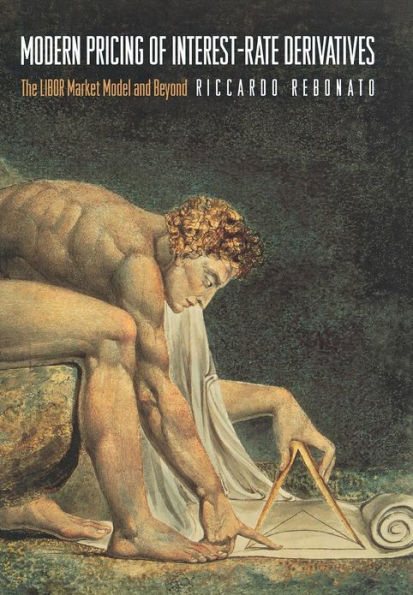
Modern Pricing of Interest-Rate Derivatives: The LIBOR Market Model and Beyond in Chattanooga, TN
Current price: $195.00
Barnes and Noble
Modern Pricing of Interest-Rate Derivatives: The LIBOR Market Model and Beyond in Chattanooga, TN
Current price: $195.00
Loading Inventory...
Size: Hardcover
In recent years, interestrate modeling has developed rapidly in terms of both practice and theory. The academic and practitioners' communities, however, have not always communicated as productively as would have been desirable. As a result, their research programs have often developed with little constructive interference. In this book, Riccardo Rebonato draws on his academic and professional experience, straddling both sides of the divide to bring together and build on what theory and trading have to offer.
Rebonato begins by presenting the conceptual foundations for the application of the LIBOR market model to the pricing of interestrate derivatives. Next he treats in great detail the calibration of this model to market prices, asking how possible and advisable it is to enforce a simultaneous fitting to several market observables. He does so with an eye not only to mathematical feasibility but also to financial justification, while devoting special scrutiny to the implications of market incompleteness.
Much of the book concerns an original extension of the LIBOR market model, devised to account for implied volatility smiles. This is done by introducing a stochasticvolatility, displaceddiffusion version of the model. The emphasis again is on the financial justification and on the computational feasibility of the proposed solution to the smile problem. This book is must reading for quantitative researchers in financial houses, sophisticated practitioners in the derivatives area, and students of finance.
Rebonato begins by presenting the conceptual foundations for the application of the LIBOR market model to the pricing of interestrate derivatives. Next he treats in great detail the calibration of this model to market prices, asking how possible and advisable it is to enforce a simultaneous fitting to several market observables. He does so with an eye not only to mathematical feasibility but also to financial justification, while devoting special scrutiny to the implications of market incompleteness.
Much of the book concerns an original extension of the LIBOR market model, devised to account for implied volatility smiles. This is done by introducing a stochasticvolatility, displaceddiffusion version of the model. The emphasis again is on the financial justification and on the computational feasibility of the proposed solution to the smile problem. This book is must reading for quantitative researchers in financial houses, sophisticated practitioners in the derivatives area, and students of finance.
In recent years, interestrate modeling has developed rapidly in terms of both practice and theory. The academic and practitioners' communities, however, have not always communicated as productively as would have been desirable. As a result, their research programs have often developed with little constructive interference. In this book, Riccardo Rebonato draws on his academic and professional experience, straddling both sides of the divide to bring together and build on what theory and trading have to offer.
Rebonato begins by presenting the conceptual foundations for the application of the LIBOR market model to the pricing of interestrate derivatives. Next he treats in great detail the calibration of this model to market prices, asking how possible and advisable it is to enforce a simultaneous fitting to several market observables. He does so with an eye not only to mathematical feasibility but also to financial justification, while devoting special scrutiny to the implications of market incompleteness.
Much of the book concerns an original extension of the LIBOR market model, devised to account for implied volatility smiles. This is done by introducing a stochasticvolatility, displaceddiffusion version of the model. The emphasis again is on the financial justification and on the computational feasibility of the proposed solution to the smile problem. This book is must reading for quantitative researchers in financial houses, sophisticated practitioners in the derivatives area, and students of finance.
Rebonato begins by presenting the conceptual foundations for the application of the LIBOR market model to the pricing of interestrate derivatives. Next he treats in great detail the calibration of this model to market prices, asking how possible and advisable it is to enforce a simultaneous fitting to several market observables. He does so with an eye not only to mathematical feasibility but also to financial justification, while devoting special scrutiny to the implications of market incompleteness.
Much of the book concerns an original extension of the LIBOR market model, devised to account for implied volatility smiles. This is done by introducing a stochasticvolatility, displaceddiffusion version of the model. The emphasis again is on the financial justification and on the computational feasibility of the proposed solution to the smile problem. This book is must reading for quantitative researchers in financial houses, sophisticated practitioners in the derivatives area, and students of finance.
You May Also Like















More About Barnes and Noble at Hamilton Place
Barnes & Noble is the world’s largest retail bookseller and a leading retailer of content, digital media and educational products. Our Nook Digital business offers a lineup of NOOK® tablets and e-Readers and an expansive collection of digital reading content through the NOOK Store®. Barnes & Noble’s mission is to operate the best omni-channel specialty retail business in America, helping both our customers and booksellers reach their aspirations, while being a credit to the communities we serve.
2100 Hamilton Pl Blvd, Chattanooga, TN 37421, United States
Find Barnes and Noble at Hamilton Place in Chattanooga, TN
Visit Barnes and Noble at Hamilton Place in Chattanooga, TN
