
Home
Modelling the Costs of Environmental Policy: A Dynamic Applied General Equilibrium Assessment
Barnes and Noble
Loading Inventory...
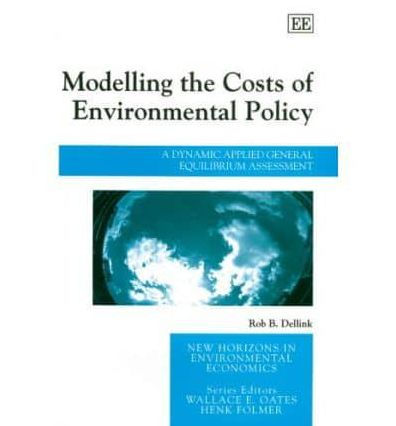
Modelling the Costs of Environmental Policy: A Dynamic Applied General Equilibrium Assessment in Chattanooga, TN
Current price: $176.00
Barnes and Noble
Modelling the Costs of Environmental Policy: A Dynamic Applied General Equilibrium Assessment in Chattanooga, TN
Current price: $176.00
Loading Inventory...
Size: OS
This important new book enhances our understanding of the dynamic interactions between economic activity, economic growth, pollution abatement and environmental policy. It addresses one main policy problem: how can the direct and indirect costs of environmental policy for multiple pollutants be properly assessed in an applied model?
Using an original methodology, the author constructs a multisectoral dynamic applied general equilibrium model. This new integrated model greatly improves the empirical analysis of the dynamic reactions of economic agents to pollution control, explicitly taking into account the direct and indirect effects of abatement on the economy and the environment. The author goes on to apply the model to study the costs of various environmental policies including climate change, acidification, eutrophication, smog formation and the dispersion of fine dust. He finds that if environmental policies can be implemented simultaneously and in a costeffective manner, the economic costs of these policies can be effectively limited through a combination of economic restructuring and adopting technical abatement measures.
Modelling the Costs of Environmental Policy
will prove essential and enlightening reading for scholars, students and researchers of environmental and resource economics, environmental policy and economic modelling.
Using an original methodology, the author constructs a multisectoral dynamic applied general equilibrium model. This new integrated model greatly improves the empirical analysis of the dynamic reactions of economic agents to pollution control, explicitly taking into account the direct and indirect effects of abatement on the economy and the environment. The author goes on to apply the model to study the costs of various environmental policies including climate change, acidification, eutrophication, smog formation and the dispersion of fine dust. He finds that if environmental policies can be implemented simultaneously and in a costeffective manner, the economic costs of these policies can be effectively limited through a combination of economic restructuring and adopting technical abatement measures.
Modelling the Costs of Environmental Policy
will prove essential and enlightening reading for scholars, students and researchers of environmental and resource economics, environmental policy and economic modelling.
This important new book enhances our understanding of the dynamic interactions between economic activity, economic growth, pollution abatement and environmental policy. It addresses one main policy problem: how can the direct and indirect costs of environmental policy for multiple pollutants be properly assessed in an applied model?
Using an original methodology, the author constructs a multisectoral dynamic applied general equilibrium model. This new integrated model greatly improves the empirical analysis of the dynamic reactions of economic agents to pollution control, explicitly taking into account the direct and indirect effects of abatement on the economy and the environment. The author goes on to apply the model to study the costs of various environmental policies including climate change, acidification, eutrophication, smog formation and the dispersion of fine dust. He finds that if environmental policies can be implemented simultaneously and in a costeffective manner, the economic costs of these policies can be effectively limited through a combination of economic restructuring and adopting technical abatement measures.
Modelling the Costs of Environmental Policy
will prove essential and enlightening reading for scholars, students and researchers of environmental and resource economics, environmental policy and economic modelling.
Using an original methodology, the author constructs a multisectoral dynamic applied general equilibrium model. This new integrated model greatly improves the empirical analysis of the dynamic reactions of economic agents to pollution control, explicitly taking into account the direct and indirect effects of abatement on the economy and the environment. The author goes on to apply the model to study the costs of various environmental policies including climate change, acidification, eutrophication, smog formation and the dispersion of fine dust. He finds that if environmental policies can be implemented simultaneously and in a costeffective manner, the economic costs of these policies can be effectively limited through a combination of economic restructuring and adopting technical abatement measures.
Modelling the Costs of Environmental Policy
will prove essential and enlightening reading for scholars, students and researchers of environmental and resource economics, environmental policy and economic modelling.
You May Also Like










More About Barnes and Noble at Hamilton Place
Barnes & Noble is the world’s largest retail bookseller and a leading retailer of content, digital media and educational products. Our Nook Digital business offers a lineup of NOOK® tablets and e-Readers and an expansive collection of digital reading content through the NOOK Store®. Barnes & Noble’s mission is to operate the best omni-channel specialty retail business in America, helping both our customers and booksellers reach their aspirations, while being a credit to the communities we serve.
2100 Hamilton Pl Blvd, Chattanooga, TN 37421, United States
Find Barnes and Noble at Hamilton Place in Chattanooga, TN
Visit Barnes and Noble at Hamilton Place in Chattanooga, TN
