
Home
Metal Catalyzed Reductive C-C Bond Formation: A Departure from Preformed Organometallic Reagents
Barnes and Noble
Loading Inventory...
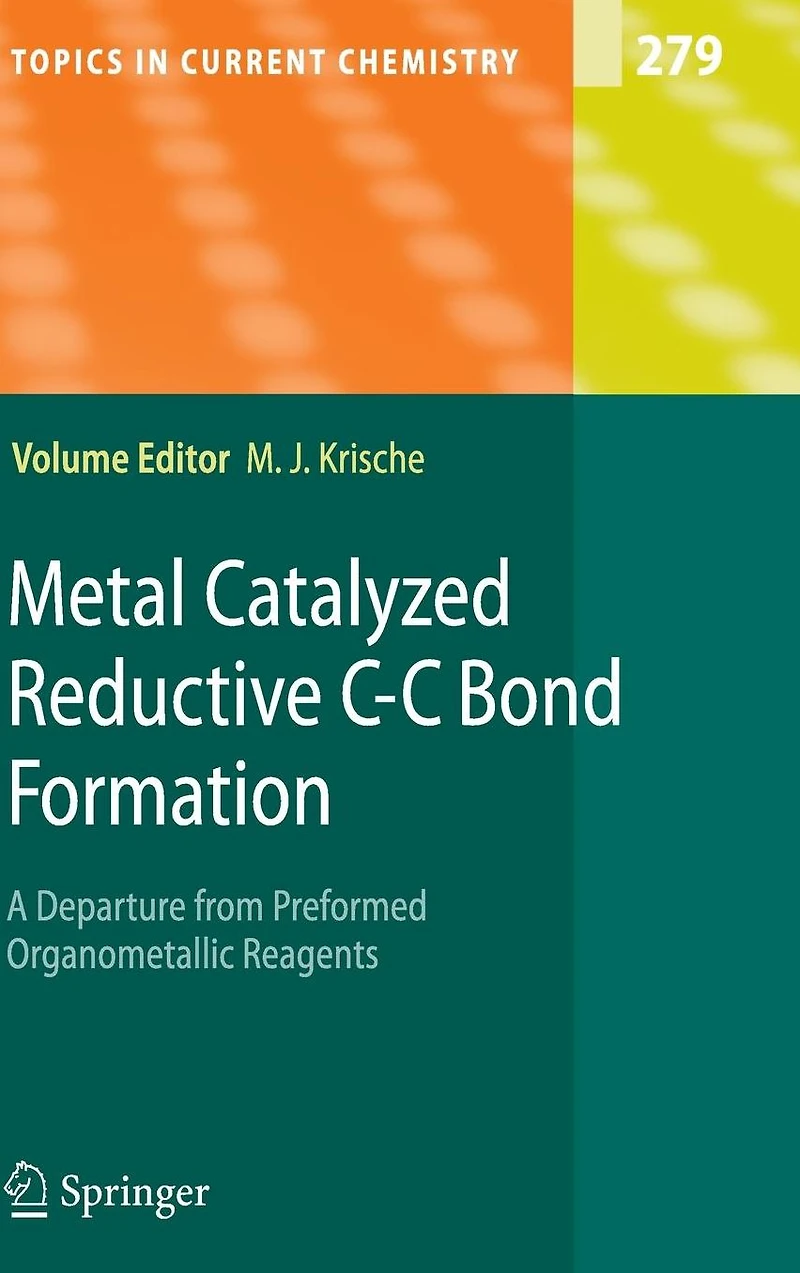
Metal Catalyzed Reductive C-C Bond Formation: A Departure from Preformed Organometallic Reagents in Chattanooga, TN
By Barnes & Noble
Current price: $379.99
Barnes and Noble
Metal Catalyzed Reductive C-C Bond Formation: A Departure from Preformed Organometallic Reagents in Chattanooga, TN
By Barnes & Noble
Current price: $379.99
Loading Inventory...
Size: Hardcover
TheprototypicalcatalyticreductiveC–Cbondformations,theFischer-Tropsch reaction [1] and alkene hydroformylation [2], were discovered in 1922 and 1938, respectively [3,4]. These processes, which involve reductive coupling to carbon monoxide, have long been applied to the industrial manufacture of commodity chemicals [5]. Notably, alkene hydroformylation, also known as the oxo-synthesis, has emerged as the largest volume application of homo- neous metal catalysis, accounting for the production of over 7 million metric tons of aldehyde annually. Despite the impact of these prototypical reductive C–C bond formations, this ?eld of research lay fallow for several decades. Eventually, the increased availability of mild terminal reductants, in part- ular silanes, led to a renaissance in the area of catalytic reductive C–C bond formation.Forexample,the?rstcatalyticreductiveC–Ccouplingsbeyond- droformylation, which involve the hydrosilylative dimerization of conjugated dienes [6–12], appeared in 1969 – approximately 16 years after the ?rst - ported metal-catalyzed alkene hydrosilylation [13]. Following these seminal studies, the ?eld of catalytic reductive C–C bond formation underwent exp- sivegrowth,culminatingintheemergenceofanevergrowingbodyofresearch encompassing a powerful set of transformations. To our knowledge, no thematic volumes devoted solely to metal-catalyzed reductive C–C bond formationhave been assembled. For the ?rst time, in this issue of Topics in Current Chemistry,wepresent acompilation ofmonographs from several leaders in this burgeoning area of research. This collection of reviews serves to capture the diversity of catalytic reductive C–C couplings presently available and, in turn, the remarkable range of reactivity embodied by such transformations. There is no indication that this ?eld has reached its zenithanditisthehopeofthepresentauthorthatthisvolumewillfuelfurther progress.
TheprototypicalcatalyticreductiveC–Cbondformations,theFischer-Tropsch reaction [1] and alkene hydroformylation [2], were discovered in 1922 and 1938, respectively [3,4]. These processes, which involve reductive coupling to carbon monoxide, have long been applied to the industrial manufacture of commodity chemicals [5]. Notably, alkene hydroformylation, also known as the oxo-synthesis, has emerged as the largest volume application of homo- neous metal catalysis, accounting for the production of over 7 million metric tons of aldehyde annually. Despite the impact of these prototypical reductive C–C bond formations, this ?eld of research lay fallow for several decades. Eventually, the increased availability of mild terminal reductants, in part- ular silanes, led to a renaissance in the area of catalytic reductive C–C bond formation.Forexample,the?rstcatalyticreductiveC–Ccouplingsbeyond- droformylation, which involve the hydrosilylative dimerization of conjugated dienes [6–12], appeared in 1969 – approximately 16 years after the ?rst - ported metal-catalyzed alkene hydrosilylation [13]. Following these seminal studies, the ?eld of catalytic reductive C–C bond formation underwent exp- sivegrowth,culminatingintheemergenceofanevergrowingbodyofresearch encompassing a powerful set of transformations. To our knowledge, no thematic volumes devoted solely to metal-catalyzed reductive C–C bond formationhave been assembled. For the ?rst time, in this issue of Topics in Current Chemistry,wepresent acompilation ofmonographs from several leaders in this burgeoning area of research. This collection of reviews serves to capture the diversity of catalytic reductive C–C couplings presently available and, in turn, the remarkable range of reactivity embodied by such transformations. There is no indication that this ?eld has reached its zenithanditisthehopeofthepresentauthorthatthisvolumewillfuelfurther progress.
You May Also Like











More About Barnes and Noble at Hamilton Place
Barnes & Noble is the world’s largest retail bookseller and a leading retailer of content, digital media and educational products. Our Nook Digital business offers a lineup of NOOK® tablets and e-Readers and an expansive collection of digital reading content through the NOOK Store®. Barnes & Noble’s mission is to operate the best omni-channel specialty retail business in America, helping both our customers and booksellers reach their aspirations, while being a credit to the communities we serve.
2100 Hamilton Pl Blvd, Chattanooga, TN 37421, United States
Find Barnes and Noble at Hamilton Place in Chattanooga, TN
Visit Barnes and Noble at Hamilton Place in Chattanooga, TN
