
Home
Medical Management of Chemical Casualties Handbook
Barnes and Noble
Loading Inventory...
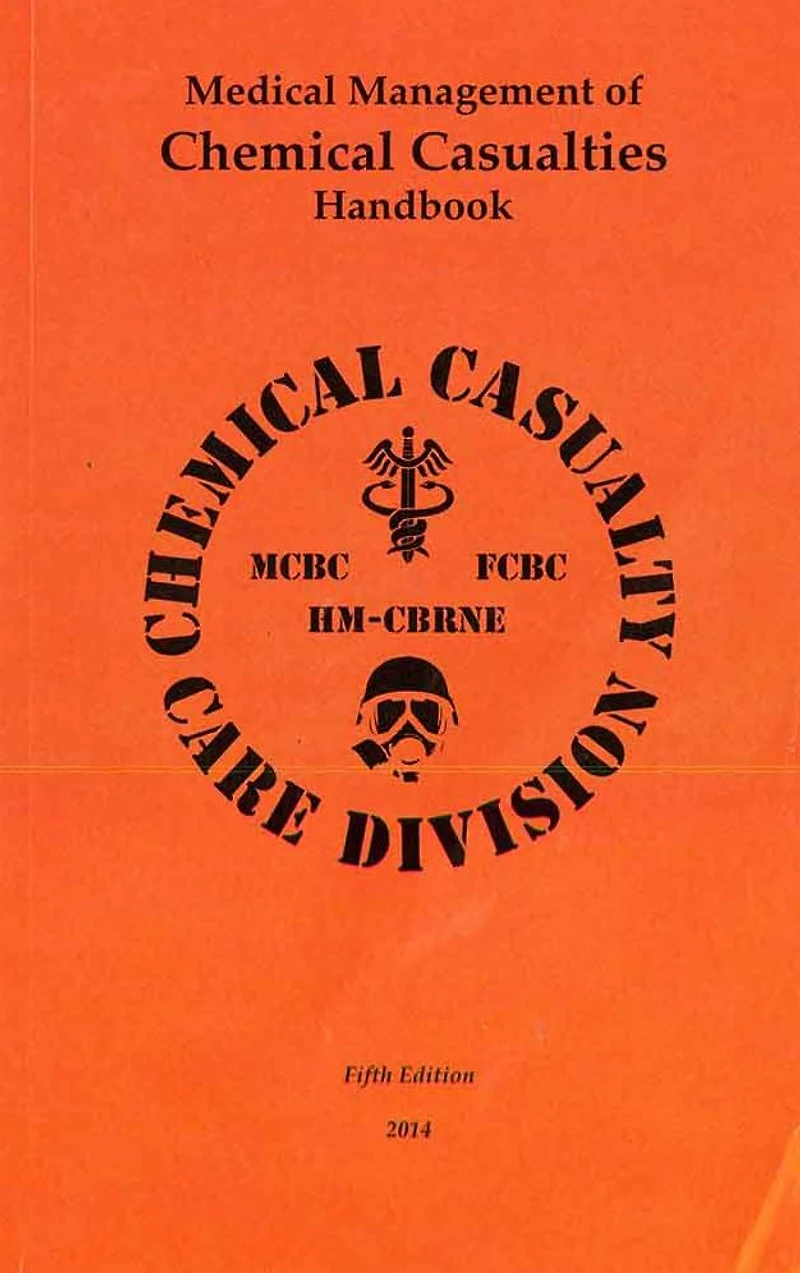
Medical Management of Chemical Casualties Handbook in Chattanooga, TN
By Barnes & Noble
Current price: $7.99
Barnes and Noble
Medical Management of Chemical Casualties Handbook in Chattanooga, TN
By Barnes & Noble
Current price: $7.99
Loading Inventory...
Size: EBook
NOTE: NO FURTHER DISCOUNT FOR THIS PRODUCT-- OVERSTOCK SALE -- Significantly reduced list price This is a manual for healthcare providers caring for victims of chemical attacks or accidents. It will increase the level of preparedness and response capability of military and civilian practitioners responsible for chemical casualty care. It describes each type of agent in detail in the medical management for each, along with detection and decontamination techniques and equipment. Chemical, biological, and mid-spectrum agents are often referred to as weapons of mass destruction, or WMDs, and the official military definition of WMD includes these three kinds of agents, Chemical agents, biological agents, toxins, and point sources of radiation may cause mass casualties while leaving structures intact; a better term for these kinds of weapons is mass-casualty weapons, or MCWs. Unconventional weapons is a term used to refer to chemical agents, biological agents, toxins, nuclear and thermonuclear bombs, radiological dispersal devices (or RDDs, also called “dirty bombs”), and point sources of radiation used as weapons. .The list of chemical warfare agents officially designated as such by the US military includes those chemicals that are intended to cause death or serious injury and also those intended to cause incapacitation, that is, temporary inability to perform one’s military duties. The former are called toxic agents and include (1) lung-damaging agents (also called pulmonary or choking agents); (2) “blood” agents (specifically, cyanide compounds); (3) vesicants (blistering agents); and (4) nerve agents. Those designed to produce only temporary incapacitation are referred to as incapacitating agents. This handbook will address each of these groupings of “official” chemical warfare agents as well as riot-control agents, which are technically not chemical warfare agents according to the US military definition, but are widely used in law enforcement for mass incapacitation. Chemical agents may have chemical names as well as common names. Chemical agents developed for military use may also have a NATO code. The NATO code is a one- to three-letter designation assigned after World War II to provide standard recognizable shorthand identification. For example, the chemical compound O-isopropyl methylphosphonofluoridate has the common name sarin and the NATO code GB. This handbook will use NATO codes as well as common names for chemical agents. Other related products:Physician References and Medical Handbooks resources collection can be found here: https://bookstore.gpo.gov/catalog/health-benefits/physician-references-m...Airborne Hazards Related to Deployment --Print Paperback format can be found here: https://bookstore.gpo.gov/products/sku/008-023-00154-5Quick Bio-Agents: USAMRIID's Pocket Reference Guide to Biological Select Agents & Toxins can be found here: https://bookstore.gpo.gov/products/sku/008-020-01619-5Other products products by the U.S. Army Medical Department (AMEDD) can be found here: https://bookstore.gpo.gov/agency/1141Other products produced by the U.S. Army Surgeon General Office can be found here: https://bookstore.gpo.gov/agency/1142Other products produced by the U.S. Army, Borden Institute can be found here: https://bookstore.gpo.gov/agency/1140
NOTE: NO FURTHER DISCOUNT FOR THIS PRODUCT-- OVERSTOCK SALE -- Significantly reduced list price This is a manual for healthcare providers caring for victims of chemical attacks or accidents. It will increase the level of preparedness and response capability of military and civilian practitioners responsible for chemical casualty care. It describes each type of agent in detail in the medical management for each, along with detection and decontamination techniques and equipment. Chemical, biological, and mid-spectrum agents are often referred to as weapons of mass destruction, or WMDs, and the official military definition of WMD includes these three kinds of agents, Chemical agents, biological agents, toxins, and point sources of radiation may cause mass casualties while leaving structures intact; a better term for these kinds of weapons is mass-casualty weapons, or MCWs. Unconventional weapons is a term used to refer to chemical agents, biological agents, toxins, nuclear and thermonuclear bombs, radiological dispersal devices (or RDDs, also called “dirty bombs”), and point sources of radiation used as weapons. .The list of chemical warfare agents officially designated as such by the US military includes those chemicals that are intended to cause death or serious injury and also those intended to cause incapacitation, that is, temporary inability to perform one’s military duties. The former are called toxic agents and include (1) lung-damaging agents (also called pulmonary or choking agents); (2) “blood” agents (specifically, cyanide compounds); (3) vesicants (blistering agents); and (4) nerve agents. Those designed to produce only temporary incapacitation are referred to as incapacitating agents. This handbook will address each of these groupings of “official” chemical warfare agents as well as riot-control agents, which are technically not chemical warfare agents according to the US military definition, but are widely used in law enforcement for mass incapacitation. Chemical agents may have chemical names as well as common names. Chemical agents developed for military use may also have a NATO code. The NATO code is a one- to three-letter designation assigned after World War II to provide standard recognizable shorthand identification. For example, the chemical compound O-isopropyl methylphosphonofluoridate has the common name sarin and the NATO code GB. This handbook will use NATO codes as well as common names for chemical agents. Other related products:Physician References and Medical Handbooks resources collection can be found here: https://bookstore.gpo.gov/catalog/health-benefits/physician-references-m...Airborne Hazards Related to Deployment --Print Paperback format can be found here: https://bookstore.gpo.gov/products/sku/008-023-00154-5Quick Bio-Agents: USAMRIID's Pocket Reference Guide to Biological Select Agents & Toxins can be found here: https://bookstore.gpo.gov/products/sku/008-020-01619-5Other products products by the U.S. Army Medical Department (AMEDD) can be found here: https://bookstore.gpo.gov/agency/1141Other products produced by the U.S. Army Surgeon General Office can be found here: https://bookstore.gpo.gov/agency/1142Other products produced by the U.S. Army, Borden Institute can be found here: https://bookstore.gpo.gov/agency/1140
You May Also Like








More About Barnes and Noble at Hamilton Place
Barnes & Noble is the world’s largest retail bookseller and a leading retailer of content, digital media and educational products. Our Nook Digital business offers a lineup of NOOK® tablets and e-Readers and an expansive collection of digital reading content through the NOOK Store®. Barnes & Noble’s mission is to operate the best omni-channel specialty retail business in America, helping both our customers and booksellers reach their aspirations, while being a credit to the communities we serve.
2100 Hamilton Pl Blvd, Chattanooga, TN 37421, United States
Find Barnes and Noble at Hamilton Place in Chattanooga, TN
Visit Barnes and Noble at Hamilton Place in Chattanooga, TN
