
Home
Matthew 1-13: Volume 1A
Barnes and Noble
Loading Inventory...
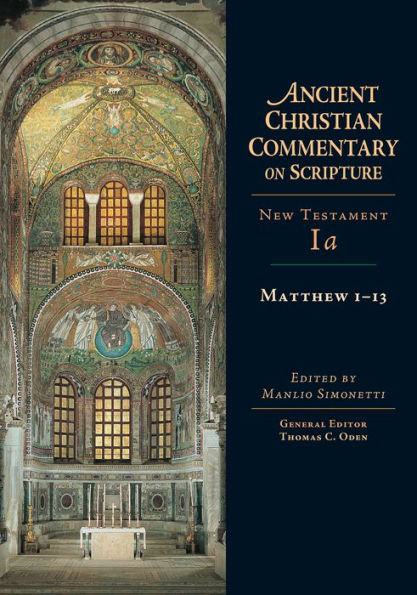
Matthew 1-13: Volume 1A in Chattanooga, TN
Current price: $79.99
Barnes and Noble
Matthew 1-13: Volume 1A in Chattanooga, TN
Current price: $79.99
Loading Inventory...
Size: Hardcover
The Gospel of Matthew stands out as a favorite biblical text among patristic commentators. The patristic commentary tradition on Matthew begins with Origen's pioneering twentyfivevolume commentary on the First Gospel in the midthird century. In the Latinspeaking West, where commentaries did not appear until about a century later, the first commentary on Matthew was written by Hilary of Poitiers in the midfourth century.
From that point, the First Gospel became one of the texts most frequently commented on in patristic exegesis. Outstanding examples are Jerome's fourvolume commentary and the valuable but anonymous and incomplete
Opus imperfectum in Matthaeum.
Then there are the Greek
catena
fragments derived from commentaries by Theodore of Heraclea, Apollinaris of Laodicea, Theodore of Mopsuestia and Cyril of Alexandria.
The ancient homilies also provide ample comment, including John Chrysostom's ninety homilies and Chromatius of Aquileia's fiftynine homilies on the Gospel of Matthew. In addition, there are various Sunday and feastday homilies from towering figures such as Augustine and Gregory the Great, as well as other fathers.
This rich abundance of patristic comment, much of it presented here in English translation for the first time by editor Manlio Simonetti, provides a bountiful and varied feast of ancient interpretation of the First Gospel.
From that point, the First Gospel became one of the texts most frequently commented on in patristic exegesis. Outstanding examples are Jerome's fourvolume commentary and the valuable but anonymous and incomplete
Opus imperfectum in Matthaeum.
Then there are the Greek
catena
fragments derived from commentaries by Theodore of Heraclea, Apollinaris of Laodicea, Theodore of Mopsuestia and Cyril of Alexandria.
The ancient homilies also provide ample comment, including John Chrysostom's ninety homilies and Chromatius of Aquileia's fiftynine homilies on the Gospel of Matthew. In addition, there are various Sunday and feastday homilies from towering figures such as Augustine and Gregory the Great, as well as other fathers.
This rich abundance of patristic comment, much of it presented here in English translation for the first time by editor Manlio Simonetti, provides a bountiful and varied feast of ancient interpretation of the First Gospel.
The Gospel of Matthew stands out as a favorite biblical text among patristic commentators. The patristic commentary tradition on Matthew begins with Origen's pioneering twentyfivevolume commentary on the First Gospel in the midthird century. In the Latinspeaking West, where commentaries did not appear until about a century later, the first commentary on Matthew was written by Hilary of Poitiers in the midfourth century.
From that point, the First Gospel became one of the texts most frequently commented on in patristic exegesis. Outstanding examples are Jerome's fourvolume commentary and the valuable but anonymous and incomplete
Opus imperfectum in Matthaeum.
Then there are the Greek
catena
fragments derived from commentaries by Theodore of Heraclea, Apollinaris of Laodicea, Theodore of Mopsuestia and Cyril of Alexandria.
The ancient homilies also provide ample comment, including John Chrysostom's ninety homilies and Chromatius of Aquileia's fiftynine homilies on the Gospel of Matthew. In addition, there are various Sunday and feastday homilies from towering figures such as Augustine and Gregory the Great, as well as other fathers.
This rich abundance of patristic comment, much of it presented here in English translation for the first time by editor Manlio Simonetti, provides a bountiful and varied feast of ancient interpretation of the First Gospel.
From that point, the First Gospel became one of the texts most frequently commented on in patristic exegesis. Outstanding examples are Jerome's fourvolume commentary and the valuable but anonymous and incomplete
Opus imperfectum in Matthaeum.
Then there are the Greek
catena
fragments derived from commentaries by Theodore of Heraclea, Apollinaris of Laodicea, Theodore of Mopsuestia and Cyril of Alexandria.
The ancient homilies also provide ample comment, including John Chrysostom's ninety homilies and Chromatius of Aquileia's fiftynine homilies on the Gospel of Matthew. In addition, there are various Sunday and feastday homilies from towering figures such as Augustine and Gregory the Great, as well as other fathers.
This rich abundance of patristic comment, much of it presented here in English translation for the first time by editor Manlio Simonetti, provides a bountiful and varied feast of ancient interpretation of the First Gospel.
You May Also Like




![The Universal Decorator, Ed. by F.B. Thompson. Pt.1-13 [Comprising Vols.1 and 2]](https://prodimage.images-bn.com/pimages/9781023671460_p0_v1_s600x595.jpg)








More About Barnes and Noble at Hamilton Place
Barnes & Noble is the world’s largest retail bookseller and a leading retailer of content, digital media and educational products. Our Nook Digital business offers a lineup of NOOK® tablets and e-Readers and an expansive collection of digital reading content through the NOOK Store®. Barnes & Noble’s mission is to operate the best omni-channel specialty retail business in America, helping both our customers and booksellers reach their aspirations, while being a credit to the communities we serve.
2100 Hamilton Pl Blvd, Chattanooga, TN 37421, United States
Find Barnes and Noble at Hamilton Place in Chattanooga, TN
Visit Barnes and Noble at Hamilton Place in Chattanooga, TN
