
Home
Managing Persistent Organic Pollutants India: Case Studies on Vapi and Surat, Gujarat
Barnes and Noble
Loading Inventory...
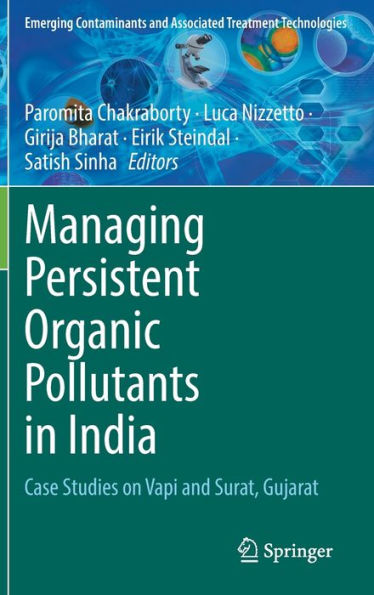
Managing Persistent Organic Pollutants India: Case Studies on Vapi and Surat, Gujarat in Chattanooga, TN
Current price: $139.99
Barnes and Noble
Managing Persistent Organic Pollutants India: Case Studies on Vapi and Surat, Gujarat in Chattanooga, TN
Current price: $139.99
Loading Inventory...
Size: Hardcover
Persistent Organic Pollutants (POPs) are a class of chemicals that are persistent, bio accumulative and toxic (PBT), which are restricted for use under the Skholm Convention. They adversely impact the environment, human and animal health. Most of the POPs are semi-volatile organic compounds (SVOCs) and known to have a long-range transport potential and are often deposited in colder climate and found in places away from the regions they are produced. POPs are usually hydrophobic (i.e., “water-hating”) and lipophilic (i.e., “fat-loving”) chemicals, due to which they bind to solids, particularly organic matter, and fatty tissues in both marine and terrestrial environments. As a result, POPs may move up the food chain. This book focuses on determining the sources, fate, analytical techniques of detecting POPs as well as their health impacts. It further dwells on the regulatory aspects, management of POPs, best environmental practices (BEPs), Indian and international case studies, gaps in understanding the regulatory aspects. A few key recommendations for the way forward form the concluding chapters of this book.
Persistent Organic Pollutants (POPs) are a class of chemicals that are persistent, bio accumulative and toxic (PBT), which are restricted for use under the Skholm Convention. They adversely impact the environment, human and animal health. Most of the POPs are semi-volatile organic compounds (SVOCs) and known to have a long-range transport potential and are often deposited in colder climate and found in places away from the regions they are produced. POPs are usually hydrophobic (i.e., “water-hating”) and lipophilic (i.e., “fat-loving”) chemicals, due to which they bind to solids, particularly organic matter, and fatty tissues in both marine and terrestrial environments. As a result, POPs may move up the food chain. This book focuses on determining the sources, fate, analytical techniques of detecting POPs as well as their health impacts. It further dwells on the regulatory aspects, management of POPs, best environmental practices (BEPs), Indian and international case studies, gaps in understanding the regulatory aspects. A few key recommendations for the way forward form the concluding chapters of this book.
You May Also Like











More About Barnes and Noble at Hamilton Place
Barnes & Noble is the world’s largest retail bookseller and a leading retailer of content, digital media and educational products. Our Nook Digital business offers a lineup of NOOK® tablets and e-Readers and an expansive collection of digital reading content through the NOOK Store®. Barnes & Noble’s mission is to operate the best omni-channel specialty retail business in America, helping both our customers and booksellers reach their aspirations, while being a credit to the communities we serve.
2100 Hamilton Pl Blvd, Chattanooga, TN 37421, United States
Find Barnes and Noble at Hamilton Place in Chattanooga, TN
Visit Barnes and Noble at Hamilton Place in Chattanooga, TN
