
Home
Managing for Learning: Measuring and Strengthening Education Management in Latin America and the Caribbean
Barnes and Noble
Loading Inventory...
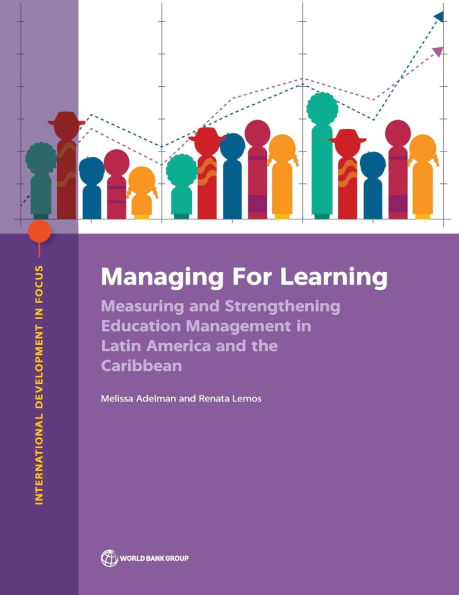
Managing for Learning: Measuring and Strengthening Education Management in Latin America and the Caribbean in Chattanooga, TN
Current price: $39.95
Barnes and Noble
Managing for Learning: Measuring and Strengthening Education Management in Latin America and the Caribbean in Chattanooga, TN
Current price: $39.95
Loading Inventory...
Size: OS
How can countries make sustainable gains in student learning at scale? This is a pressing question for Latin America and the Caribbean (LAC)and the developing world more broadlyas countries seek to build human capital to drive sustainable growth. Significant progress in access has expanded coverage such that nearly all children in the region attend primary school, but many do not gain basic skills and drop out before completing secondary school, in part due to low-quality service delivery. The preponderance of evidence shows that it is learningand not schooling in and of itselfthat contributes to individual earnings, economic growth, and reduced inequality. For LAC in particular, low levels of human capital are a critical factor in explaining the region’s relatively weak growth performance over the last half century. The easily measurable inputs are well-known, and the end goal is relatively clear, but raising student achievement at scale remains a challenge. Why? Part of the answer lies in managementthe managers, structures, and practices that guide how inputs into the education system are translated into outputs, and ultimately outcomes. While management is often mentioned as an important factor in education policy discussions, relatively little quantitative research has been done to define and measure it. And even less has been done to unpack how and how much management matters for education quality. This study presents new conceptual and empirical contributions that can be synthesized in four key messages: 1. Student learning is unlikely to improve at scale without better management. 2. Management quality can be measured and should be measured as a catalyst for improvement. 3. Management affects how well every level of an education system functions, from individual schools to central technical units, and how well they work together. 4. Several pathways to strengthening management are open to LAC countries now, with the potential for significant results. The study elaborates on each of these messages, synthesizing recent data and research and presenting the results of several new research initiatives from across the region.
How can countries make sustainable gains in student learning at scale? This is a pressing question for Latin America and the Caribbean (LAC)and the developing world more broadlyas countries seek to build human capital to drive sustainable growth. Significant progress in access has expanded coverage such that nearly all children in the region attend primary school, but many do not gain basic skills and drop out before completing secondary school, in part due to low-quality service delivery. The preponderance of evidence shows that it is learningand not schooling in and of itselfthat contributes to individual earnings, economic growth, and reduced inequality. For LAC in particular, low levels of human capital are a critical factor in explaining the region’s relatively weak growth performance over the last half century. The easily measurable inputs are well-known, and the end goal is relatively clear, but raising student achievement at scale remains a challenge. Why? Part of the answer lies in managementthe managers, structures, and practices that guide how inputs into the education system are translated into outputs, and ultimately outcomes. While management is often mentioned as an important factor in education policy discussions, relatively little quantitative research has been done to define and measure it. And even less has been done to unpack how and how much management matters for education quality. This study presents new conceptual and empirical contributions that can be synthesized in four key messages: 1. Student learning is unlikely to improve at scale without better management. 2. Management quality can be measured and should be measured as a catalyst for improvement. 3. Management affects how well every level of an education system functions, from individual schools to central technical units, and how well they work together. 4. Several pathways to strengthening management are open to LAC countries now, with the potential for significant results. The study elaborates on each of these messages, synthesizing recent data and research and presenting the results of several new research initiatives from across the region.
You May Also Like











More About Barnes and Noble at Hamilton Place
Barnes & Noble is the world’s largest retail bookseller and a leading retailer of content, digital media and educational products. Our Nook Digital business offers a lineup of NOOK® tablets and e-Readers and an expansive collection of digital reading content through the NOOK Store®. Barnes & Noble’s mission is to operate the best omni-channel specialty retail business in America, helping both our customers and booksellers reach their aspirations, while being a credit to the communities we serve.
2100 Hamilton Pl Blvd, Chattanooga, TN 37421, United States
Find Barnes and Noble at Hamilton Place in Chattanooga, TN
Visit Barnes and Noble at Hamilton Place in Chattanooga, TN
