
Home
Managing Energy, Nutrients, and Pests Organic Field Crops
Barnes and Noble
Loading Inventory...
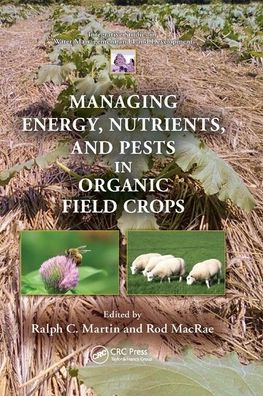
Managing Energy, Nutrients, and Pests Organic Field Crops in Chattanooga, TN
Current price: $84.99
Barnes and Noble
Managing Energy, Nutrients, and Pests Organic Field Crops in Chattanooga, TN
Current price: $84.99
Loading Inventory...
Size: Paperback
The use of organic management practices in field cropping continues to rise globally, and these methods have proven to be a viable way to produce food with reduced resource use and environmental damage.
Managing Energy, Nutrients, and Pests in Organic Field Crops
challenges the popular misconception that organic systems are weak at managing energy, nutrients, and pests and shows how innovative farm designs can enhance organic performance. It provides information for assessing the current state of knowledge on organic field cropping and for making the systems more viable.
Each chapter summarizes the latest data from a wide range of sources, creating a comprehensive and coherent picture of the issues and integrating agronomic, economic, and policy aspects. Many chapters also include recent research from the authors. Section I, Soil Health, examines the importance of phosphorus balance, soil fertility, and tillage reduction. Section II, Pest Management, focuses on integrated weed management and long-term approaches to insect management.
Section III, Integrating Approaches, addresses multiple field cropping challenges. Chapters cover the oldest organic rotational trials in Canada, the issue of using cereals bred for conventional systems and more targeted organic cereal breeding strategies, and case studies of a broad spectrum of farming experiences that explore the broader social and ecological landscape. The final section, Economics, Energy, and Policy, examines environmental issues not previously addressed in the text as well as consumer, economic, and rural community matters. It also presents a reprint of an article that describes policies and programs (and their costs) needed to advance adoption of organic farming in Ontario. The text wraps up with key conclusions and a discussion of overarching themes for the book, summarizing the strengths of the available tool box for organic producers and the challenges that remain.
Managing Energy, Nutrients, and Pests in Organic Field Crops
challenges the popular misconception that organic systems are weak at managing energy, nutrients, and pests and shows how innovative farm designs can enhance organic performance. It provides information for assessing the current state of knowledge on organic field cropping and for making the systems more viable.
Each chapter summarizes the latest data from a wide range of sources, creating a comprehensive and coherent picture of the issues and integrating agronomic, economic, and policy aspects. Many chapters also include recent research from the authors. Section I, Soil Health, examines the importance of phosphorus balance, soil fertility, and tillage reduction. Section II, Pest Management, focuses on integrated weed management and long-term approaches to insect management.
Section III, Integrating Approaches, addresses multiple field cropping challenges. Chapters cover the oldest organic rotational trials in Canada, the issue of using cereals bred for conventional systems and more targeted organic cereal breeding strategies, and case studies of a broad spectrum of farming experiences that explore the broader social and ecological landscape. The final section, Economics, Energy, and Policy, examines environmental issues not previously addressed in the text as well as consumer, economic, and rural community matters. It also presents a reprint of an article that describes policies and programs (and their costs) needed to advance adoption of organic farming in Ontario. The text wraps up with key conclusions and a discussion of overarching themes for the book, summarizing the strengths of the available tool box for organic producers and the challenges that remain.
The use of organic management practices in field cropping continues to rise globally, and these methods have proven to be a viable way to produce food with reduced resource use and environmental damage.
Managing Energy, Nutrients, and Pests in Organic Field Crops
challenges the popular misconception that organic systems are weak at managing energy, nutrients, and pests and shows how innovative farm designs can enhance organic performance. It provides information for assessing the current state of knowledge on organic field cropping and for making the systems more viable.
Each chapter summarizes the latest data from a wide range of sources, creating a comprehensive and coherent picture of the issues and integrating agronomic, economic, and policy aspects. Many chapters also include recent research from the authors. Section I, Soil Health, examines the importance of phosphorus balance, soil fertility, and tillage reduction. Section II, Pest Management, focuses on integrated weed management and long-term approaches to insect management.
Section III, Integrating Approaches, addresses multiple field cropping challenges. Chapters cover the oldest organic rotational trials in Canada, the issue of using cereals bred for conventional systems and more targeted organic cereal breeding strategies, and case studies of a broad spectrum of farming experiences that explore the broader social and ecological landscape. The final section, Economics, Energy, and Policy, examines environmental issues not previously addressed in the text as well as consumer, economic, and rural community matters. It also presents a reprint of an article that describes policies and programs (and their costs) needed to advance adoption of organic farming in Ontario. The text wraps up with key conclusions and a discussion of overarching themes for the book, summarizing the strengths of the available tool box for organic producers and the challenges that remain.
Managing Energy, Nutrients, and Pests in Organic Field Crops
challenges the popular misconception that organic systems are weak at managing energy, nutrients, and pests and shows how innovative farm designs can enhance organic performance. It provides information for assessing the current state of knowledge on organic field cropping and for making the systems more viable.
Each chapter summarizes the latest data from a wide range of sources, creating a comprehensive and coherent picture of the issues and integrating agronomic, economic, and policy aspects. Many chapters also include recent research from the authors. Section I, Soil Health, examines the importance of phosphorus balance, soil fertility, and tillage reduction. Section II, Pest Management, focuses on integrated weed management and long-term approaches to insect management.
Section III, Integrating Approaches, addresses multiple field cropping challenges. Chapters cover the oldest organic rotational trials in Canada, the issue of using cereals bred for conventional systems and more targeted organic cereal breeding strategies, and case studies of a broad spectrum of farming experiences that explore the broader social and ecological landscape. The final section, Economics, Energy, and Policy, examines environmental issues not previously addressed in the text as well as consumer, economic, and rural community matters. It also presents a reprint of an article that describes policies and programs (and their costs) needed to advance adoption of organic farming in Ontario. The text wraps up with key conclusions and a discussion of overarching themes for the book, summarizing the strengths of the available tool box for organic producers and the challenges that remain.
You May Also Like








More About Barnes and Noble at Hamilton Place
Barnes & Noble is the world’s largest retail bookseller and a leading retailer of content, digital media and educational products. Our Nook Digital business offers a lineup of NOOK® tablets and e-Readers and an expansive collection of digital reading content through the NOOK Store®. Barnes & Noble’s mission is to operate the best omni-channel specialty retail business in America, helping both our customers and booksellers reach their aspirations, while being a credit to the communities we serve.
2100 Hamilton Pl Blvd, Chattanooga, TN 37421, United States
Find Barnes and Noble at Hamilton Place in Chattanooga, TN
Visit Barnes and Noble at Hamilton Place in Chattanooga, TN
